

Read The Times Australia

Daily Bulletin

Young people hate making phone calls – could it be hurting their careers?

  • Written by: Narelle Hopkin (Towie), Academic chair of journalism, Murdoch University
Young people hate making phone calls – could it be hurting their careers?

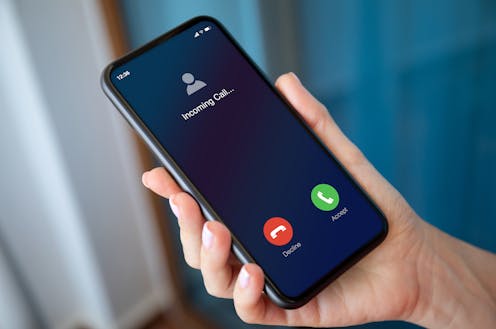
Ironically, younger generations are using smartphones for anything but actual phone calls.

Many people under 40 appear far more comfortable letting their fingers do the talking, using text or images, rather than speech, to communicate over the phone.

A 2023 survey of more than 1,000 Gen Z Australians aged between 18 and 26 found that almost 60% dread making or accepting a phone call. Another from the United States found that 81% of millennials get anxious before making a call.

Like spiders and heights, speaking on the phone – with all its real-time imperfections – is a modern-day phobia and fast becoming a lost art.

So what’s going on, and what impact might it have on young people’s careers?

People feel ambushed by phone calls

I head up the journalism school at Murdoch University. In few other fields of study is the ability to make timely, effective phone calls so critical for success.

To explore young people’s attitudes to phone use further, I carried out an informal survey of 15 students.

Anxious man bites nails holding phone to ear
Phone calls are a source of deep anxiety for many young people. Jonathan Borba/Unsplash

Presenting their responses at last year’s Journalism Education and Research Association of Australia conference, I suggested that “telephobia” may be causing the loss of a key communication skill in younger generations.

Among my students, many said they find it rude to receive voice calls out of the blue or without warning.

Some even said that they will not answer voice calls at all, even from a parent. It was easier to let them divert to voicemail, and respond later via text.

Getting a phone call from an unknown number can be even more nail-biting - why is this person calling instead of sending a text? Many said such cold calls trigger a deep fear that something is wrong.

Going on to find out there actually was no emergency made many feel ambushed – and annoyed – that a cold caller had caused unnecessary alarm.

But journalism students may still have an edge. In a podcasting class with intake from various majors, I found that commonplace interview tasks sent anxiety levels much higher than in other classes I have taught in almost a decade lecturing journalism students alone.

Something intangible but important is lost in text

Telephone and face-to-face interviews are well-known in both industry and academia to be more powerful than email.

The skill or confidence to ask uncomfortable questions is a key part of decent interviewing, with phone interviews a second choice to meeting with someone face-to-face.

Woman interviews another woman sat at small table
Something important is lost when we communicate over text instead of in-person. Christina/Unsplash

In-person conversations allow for connection, the building of trust and empathy and the transmission of non-verbal language.

Two studies from Canada back this up, finding people overestimate their persuasiveness when communicating via email. Participants made requests either in person or via email.

Both groups were equally confident about the success of their requests, but those made face-to-face were a staggering 34 times more effective.

The skill needs a greater focus

My colleagues across the Australian media have told me the incoming class of reporters often have more technical prowess than generations past. But many still need reminding to pick up the phone rather than send an email when securing or carrying out interviews.

In the classroom at Murdoch University, we have doubled the amount of time spent teaching the art of interviewing.

We’ve found that students are more successful, and their anxiety is lowered, when early lessons are devoted to practising phone calls. The aim is to try at least 10 phone calls in the classroom, starting with classmates and then moving onto strangers.

But across journalism schools and the wider workforce, it’s likely to remain an uphill battle.

According to communications researchers Leanna Kim and Sang-Hwa Oh, many new technologies hinder rather than promote voice calling, which may be causing even greater reliance on new devices.

Telephone anxiety was negatively associated with preference for phone calls, suggesting that using an alternative mode of communication, instead of a phone call, might not be simply a matter of convenience, but an outcome of escaping anxiety.

This is despite research showing an individual’s fear of an interaction being awkward often turns out to be overblown.

We are never going back to the days where the family landline had pride of place stuck in the hallway, and its own special chair to sit on. But voice calls will always play an important role in communication.

Younger generations just need to pick up the phone and let their voices be heard.

Authors: Narelle Hopkin (Towie), Academic chair of journalism, Murdoch University

Read more https://theconversation.com/young-people-hate-making-phone-calls-could-it-be-hurting-their-careers-232167

Business News

Designing Eco-Friendly Custom Water Bottles for Your Next Event

The Evolution of Sustainable Event Merchandise Event planning has undergone a massive transformation over the last decade. Gone are the days when organizers could hand out cheap, single use plastic...

Daily Bulletin - avatar Daily Bulletin

Why Choosing a Professional Florist Melbourne Makes Flower Delivery Impactful

Flowers have a great power to speak when humans cannot express their feelings with right words. Flowers are the best gifts when you are celebrating a birthday or welcoming a newborn child into your fa...

Daily Bulletin - avatar Daily Bulletin

The Business Case for Choosing Australian Fabricators Over Imported Alternatives

For a long time, you might have defaulted to overseas suppliers when sourcing fabricated metal components for a project. The unit price was lower on paper, and the maths seemed straightforward. That...

Daily Bulletin - avatar Daily Bulletin

Australian organisations are relying on business continuity plans built for a far more predictable world

Tariff escalations, supply chain fragility, geopolitical events, and the ongoing threat of cyber disruption have reshaped the risk environment facing Australian organisations. The problem is that ma...

Daily Bulletin - avatar Daily Bulletin

How to Rent a Car for Uber in Melbourne: What Every New Driver Needs to Know

Starting out as an Uber driver in Melbourne is not as complicated as it sounds but getting the vehicle right is where most new drivers get stuck. Uber has strict requirements around vehicle age, condi...

Daily Bulletin - avatar Daily Bulletin

When Should You Speak to a Lawyer About a Legal Issue?

Legal issues can begin with a simple question, then become harder to manage once formal steps are involved. Many people wait until a matter feels urgent before seeking guidance, even though earlier ...

Daily Bulletin - avatar Daily Bulletin

The strategic rise of Bali as Australia’s next essential healthcare support hub

As Australian healthcare providers grapple with unprecedented operational bottlenecks, a new nearshore model is quietly transforming patient care delivery. Forward-thinking organisations,  including...

Daily Bulletin - avatar Daily Bulletin

Cost Savings and Benefits of Using Used Pallets in Logistics

In today’s competitive logistics and supply chain industry, businesses are constantly looking for ways to reduce operational costs without compromising efficiency and reliability. One of the most prac...

Daily Bulletin - avatar Daily Bulletin

How Fulfilment Services in Australia Help Businesses Scale Efficiently

The growth of e-commerce and modern retail has transformed customer expectations. Consumers now expect fast shipping, accurate order processing, and seamless delivery experiences regardless of where...

Daily Bulletin - avatar Daily Bulletin

The Daily Magazine

Moving Out of a Rental in Melbourne? A Practical Moving Checklist

Moving out of a rental in Melbourne is one of those things that always feels further away than it ...

Why a Cordless Rebar Tying Machine Is a Smart Investment for Australian Construction Projects

Tying reinforcing steel by hand means spending hours bent over while making the same twisting moti...

How to Get a Document Notarised in Sydney: What to Bring, What It Costs and How Long It Takes

If an overseas bank, embassy, university, employer or land registry has asked you for a notarised ...

The 2026 Used-Car Market

For a few strange years, the used-car market rewrote its own rules. Supply shortages sent second-h...

Why CCTV Alone Is Not Enough for Modern Business Security

Cameras are usually the initial step that companies take to strengthen their physical security. If...

Why Every Workplace Should Take Emergency Preparedness Seriously

Emergency planning is one of those things many workplaces know they should think about, but it oft...

Why Clearer Communication Still Matters in a Digital-First Business

It’s never been easier for businesses to communicate, but that doesn’t mean they’re always communica...

What Happens After You Lodge a BYDA Enquiry? The Step Most Excavation Projects Miss

Every excavation project in Australia — from a backyard deck footing to a multi-storey commercial bu...

How to Choose the Right Dentist on the Gold Coast

Finding a dentist you trust is one of those decisions that quietly affects your health for years, ye...