

Science communicators need to stop telling everybody the universe is a meaningless void
- Written by: Chris Ellis, Medical Doctor. Interdisciplinary Lecturer. PhD Student, History and Philosophy of Science., University of Sydney

The scientific worldview has made great contributions to humanity’s flourishing. But, as science advances into territory once firmly held by religion – attempting to answer questions about the origins of the universe, life and consciousness – science communication often paints a fairly pessimistic picture of the world.
Take a few examples. An article in New Scientist claims our perception that pet dogs love us may be an illusion. Physicist Brian Greene sees humanity’s ultimate fate in the demise of the Solar System. Writer Yuval Noah Harari, in his bestselling book Sapiens, posits that life holds no inherent meaning. Philosopher David Benatar goes so far as to argue that being born is a bad thing.
Scientists themselves may not find the view of the universe presented above to be pessimistic. However, this may bring them into conflict with many things humanity values – or has evolved to value – such as meaning, purpose and free will.
The Copernican principle
One essential function of science communication is to mobilise people to act against some of humanity’s most pressing problems – think of the COVID pandemic, or climate change.
However, unlike most people, scientists and science communicators often tend to think humans are in a sense nothing special. This idea is known as the Copernican principle.
Read more: Copernicus' revolution and Galileo's vision: our changing view of the universe in pictures
The Copernican principle (named after the astronomer Nicolaus Copernicus, who realised Earth goes around the Sun) holds that humans are not special observers of the universe compared to any other beings who may exist elsewhere.
Going further, the principle has been extrapolated to mean that any attempt to ascribe meaning to human life or imply there is something exceptional about human relationships falls outside the realm of science. As a consequence, humans have no unique value – and any suggestion otherwise can be dismissed as unscientific.
Paradoxes in science communication
Although science does not deny the importance of human happiness and societal function, we would not expect a physicist, for example, to modify their theories of cosmology to make them more psychologically meaningful.
This leads us to two great paradoxes science communication often tries to straddle.
We live in a deterministic world without free will, yet we must choose to accept science and prevent climate change. And we must act now!
The universe is destined to end in a dead, freezing void and life has no meaning. But we must prevent climate change so our planet does not become a dead, overheated void – and we can continue our meaningless lives.
As a result of these paradoxes, those who do not align with science’s claims about the fundamental nature of the universe may not accept scientific arguments regarding climate change. If agreeing to stop using fossil fuels is linked to accepting your life has no meaning, it’s no wonder some are reluctant.
What’s worse, signing up to “science” may also mean accepting your religion is false, your spirituality is an illusion and your relationship with your dog is based on an evolutionary lie.
Science communication and beliefs
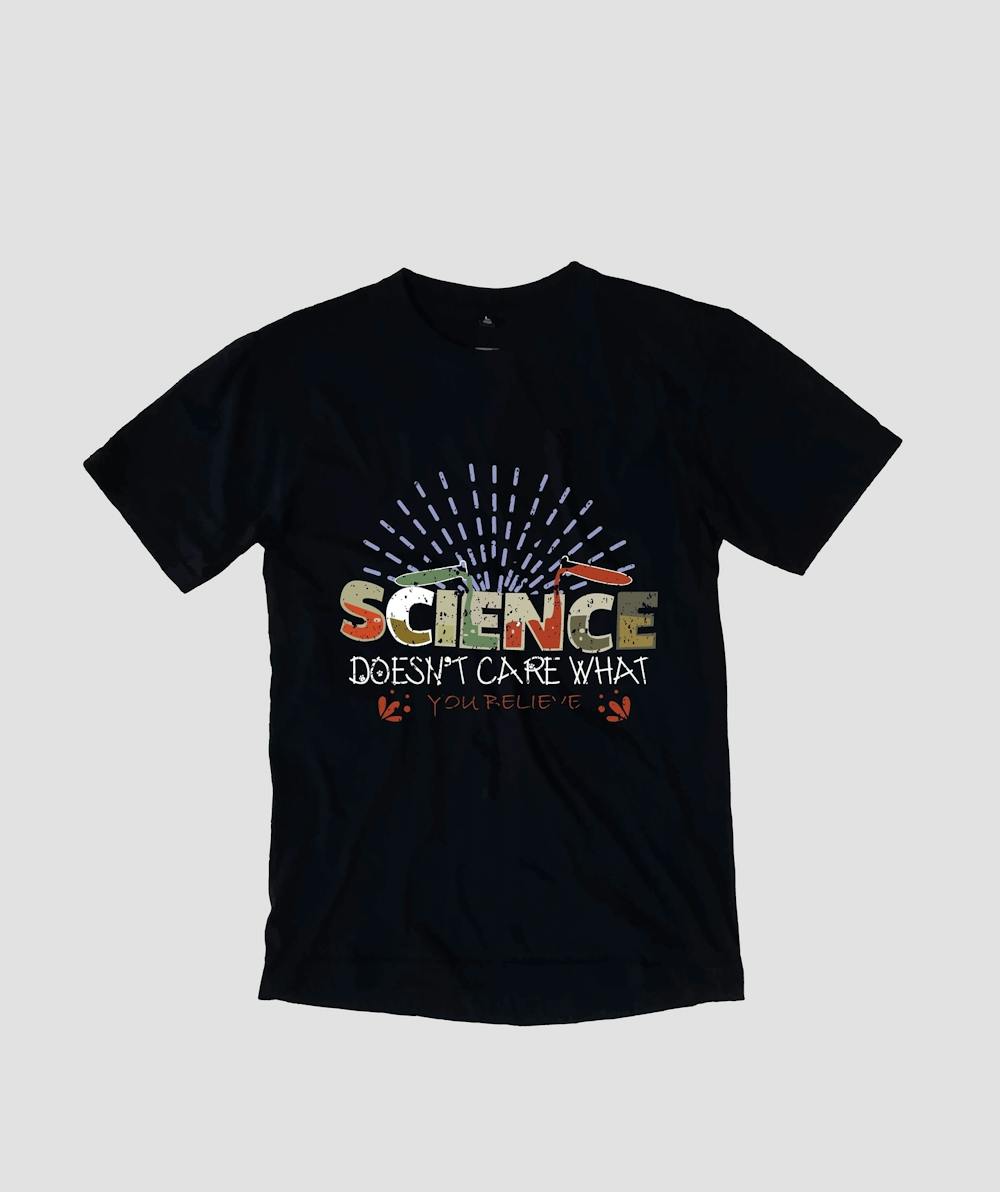
In words you might sometimes see on novelty T-shirts, commonly attributed to astronomer Neil deGrasse Tyson, “Science doesn’t care what you believe.” What Tyson actually said was a little less combative: “The good thing about science is that it’s true whether or not you believe in it.”
But if science, by its rational and objective nature, is not able to care what people believe, perhaps science communication should care.
Compare science communication to health communication, for example. The maternity ward at Royal North Shore Hospital in Sydney contains the word “welcome” in more than 20 languages. The admission paperwork asks for your religion so that care may be taken to avoid insensitivities and also to provide an appropriate spiritual guide if needed.
Public health messaging is adapted to its audience based on research in health anthropology.
Read more: The cultural assumptions behind Western medicine
All of this is done to achieve the best health outcomes and to try to create health care centred on people. This is despite the fact that a virus or a chronic disease care little for your religious or spiritual beliefs.
Just as the World Health Organization’s Social Determinants of Health Framework looks at non-medical factors that influence health outcomes, we also need to look at non-science factors when evaluating science communication outcomes.
The opposite poles of the debate
Proponents of science often see themselves in a battle against the forces of superstition and religion, one which geneticist Francis S. Collins has written is “overshadowed by the high-decibel pronouncements of those who occupy the poles of the debate”.
But if we are trying to use science communication to make the world a better place, we shouldn’t let the drama of this battle distract us from our ultimate goal.
Instead, science communicators would do well to take a more sensitive and anthropological approach to science communication. Understanding what people value and how to reach them may actually help the advancements of science make the world a better place.
We don’t have to change what science discovers, but we perhaps do not have to tell people their life has no meaning in the opening chapter of a popular science book. As Brian Greene put it, “we have developed strategies to contend with knowledge of our impermanence”, which provide us with hope as we “gesture toward eternity”.
Authors: Chris Ellis, Medical Doctor. Interdisciplinary Lecturer. PhD Student, History and Philosophy of Science., University of Sydney


 Daily Bulletin


