

Nuclear bombs, artificial intelligence and the madness of reason – in The Maniac, Benjamin Labatut examines the troubling dawn of the digital age
- Written by: Charles Barbour, Associate Professor, Philosophy, Western Sydney University
A little over 100 years ago, the great German sociologist Max Weber warned that the growth of modern science would result in the “disenchantment” of the world.
He meant a world without mystery, without the unknown or the transcendent, and therefore without meaning – a world governed by the grim law of what he called “instrumental rationality”, where everything is a means to an end and nothing an end in itself.
Weber feared that science and technology might reduce human existence to cold calculation and utilitarian practicality, and destroy any pursuits that do not have immediate, measurable, pragmatic effects.
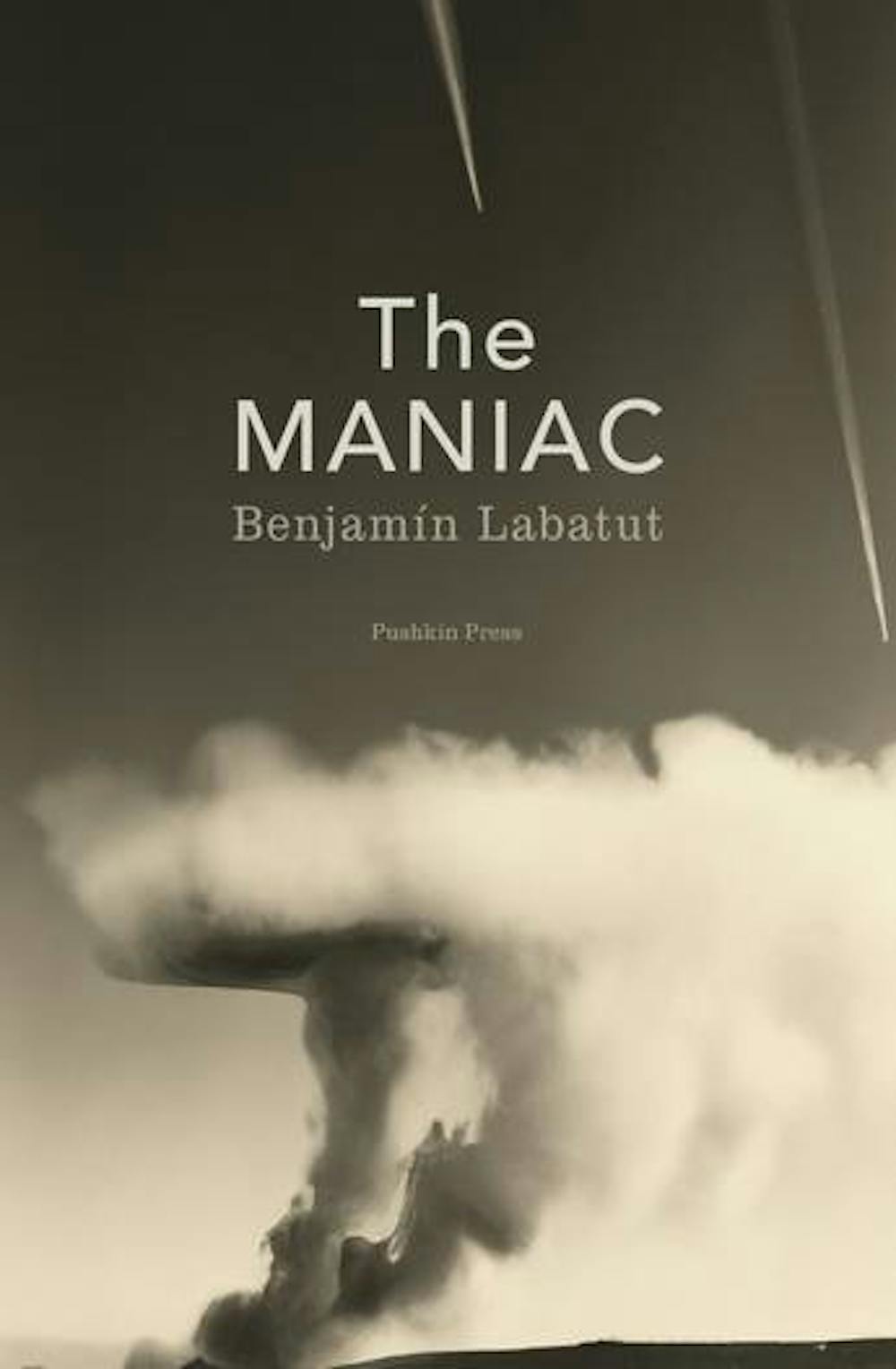
Review: The Maniac – Banjamin Labatut (Pushkin Press)
Benjamin Labatut’s The Maniac is a barely fictionalised account of scientific developments in the century since Weber issued his warning. And, in a strange way, it is about how wrong Weber proved to be.
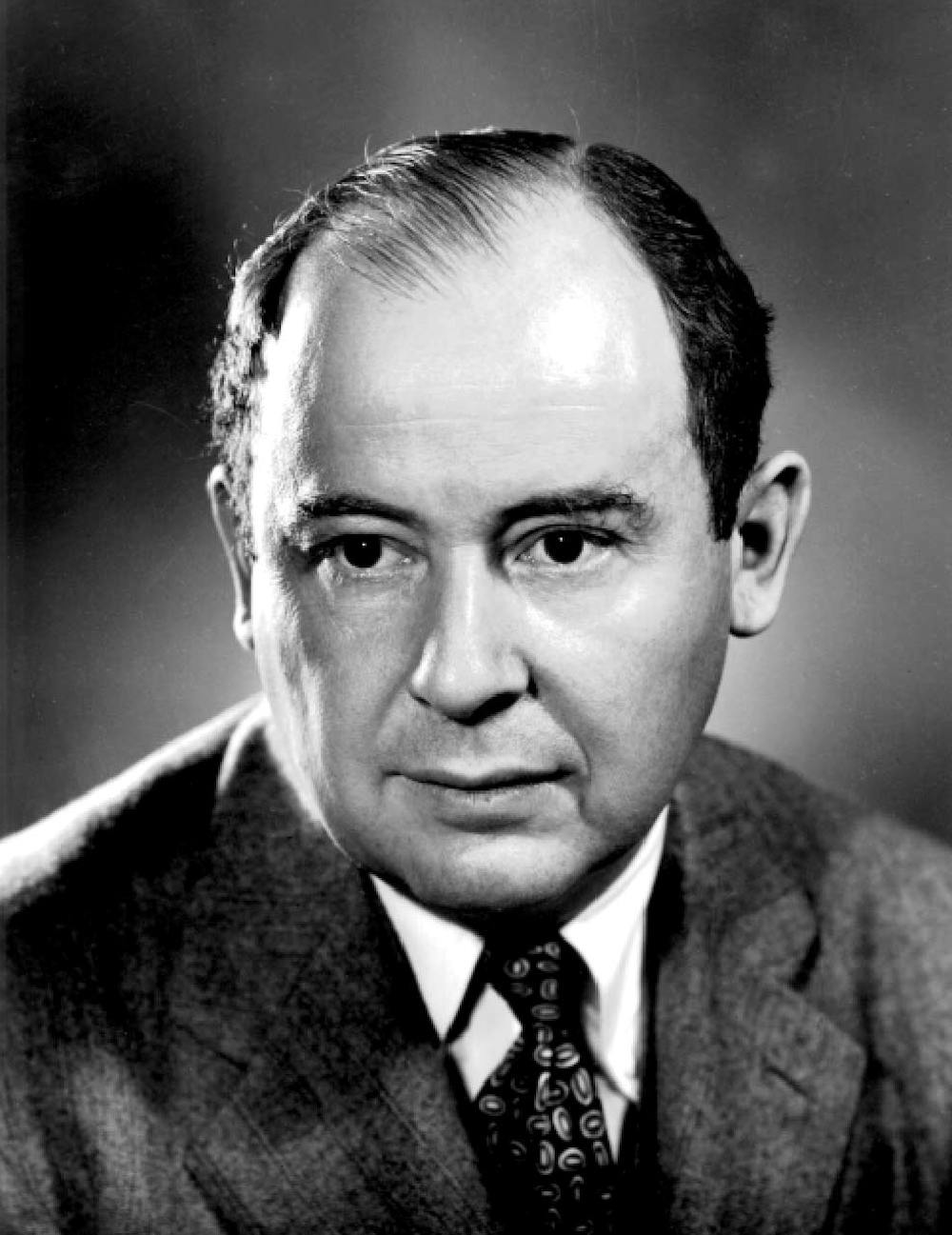 John von Neumann (1903-57).
Los Alamos National Library, via Wikimedia Commons, CC BY
He was also the father of Game Theory, which is key to neoliberal economics, but which he initially used to justify the Cold War strategy of Mutually Assured Destruction, or MAD. This proposed that the only way to prevent the annihilation of all human existence was to arm two superpowers with the capacity to do so many times over.
Von Neumann both predicted and helped advance the arrival of the digital age. He foresaw self-reproducing machines, artificial intelligence, and what he was the first to call the Singularity – that mythical moment when technology finally absorbs and subordinates humanity.
It is hard to imagine that an individual human mind could be behind so much of the world in which we all now live. As Labatut tells the story, almost everyone who met von Neumann immediately thought of him as a different species, a higher stage of human evolution, an alien being, even a god.
“There are two kinds of people in this world,” Labatut has von Neumann’s collaborator Eugene Wigner say early on in the novel: “Jansci von Neumann and the rest of us.”
“Most mathematicians prove what they can,” Wigner declares a little later. “Von Neumann proves what he wants.”
Read more:
Kurt Gödel: from loopholes and dictators to the incompleteness theorems
An Inhuman Mind
As if to reinforce this image of von Neumann as a god, Labatut never writes from von Neumann’s perspective or pretends to have access to the inner workings of his mind. Instead, he structures his novel as a series of almost breathless first-person accounts of those who knew or encountered him, like the testimony of witnesses to a miracle – or a catastrophe.
Thus, along with Wigner, we hear from von Neumann’s mother Margit Kann von Neumann, his brother Nicholas Augustus von Neumann, his first wife Mariette Kövesi, his early teacher George Pólya, the mathematician and engineer Theodore von Kármán, the US physicist Richard Feynman, the economist Oskar Morgenstern, and many more.
They all seem to have the same basic impression of the man: a bafflingly great genius, whose singular intellectual powers appeared to place him beyond good and evil, and led him to look down on mere human morality with callous indifference.
That explains the glee with which von Neumann threw himself into the military applications of his ideas, and the shamelessness with which he became, as Labatut puts it, “a mind for hire”, willing to “charge exorbitant fees to sit with people from IBM, RCA, the CIA, or the RAND Corporation, sometimes for no longer than a couple of minutes”.
If von Neumann was a god, then, he was by no means a benevolent Christian one. He was more like the Greek gods of Mount Olympus or the angry Yahweh of the Old Testament. Or perhaps he was simply a demon – wilful, arbitrary and capable of horrific acts of destruction.
John von Neumann (1903-57).
Los Alamos National Library, via Wikimedia Commons, CC BY
He was also the father of Game Theory, which is key to neoliberal economics, but which he initially used to justify the Cold War strategy of Mutually Assured Destruction, or MAD. This proposed that the only way to prevent the annihilation of all human existence was to arm two superpowers with the capacity to do so many times over.
Von Neumann both predicted and helped advance the arrival of the digital age. He foresaw self-reproducing machines, artificial intelligence, and what he was the first to call the Singularity – that mythical moment when technology finally absorbs and subordinates humanity.
It is hard to imagine that an individual human mind could be behind so much of the world in which we all now live. As Labatut tells the story, almost everyone who met von Neumann immediately thought of him as a different species, a higher stage of human evolution, an alien being, even a god.
“There are two kinds of people in this world,” Labatut has von Neumann’s collaborator Eugene Wigner say early on in the novel: “Jansci von Neumann and the rest of us.”
“Most mathematicians prove what they can,” Wigner declares a little later. “Von Neumann proves what he wants.”
Read more:
Kurt Gödel: from loopholes and dictators to the incompleteness theorems
An Inhuman Mind
As if to reinforce this image of von Neumann as a god, Labatut never writes from von Neumann’s perspective or pretends to have access to the inner workings of his mind. Instead, he structures his novel as a series of almost breathless first-person accounts of those who knew or encountered him, like the testimony of witnesses to a miracle – or a catastrophe.
Thus, along with Wigner, we hear from von Neumann’s mother Margit Kann von Neumann, his brother Nicholas Augustus von Neumann, his first wife Mariette Kövesi, his early teacher George Pólya, the mathematician and engineer Theodore von Kármán, the US physicist Richard Feynman, the economist Oskar Morgenstern, and many more.
They all seem to have the same basic impression of the man: a bafflingly great genius, whose singular intellectual powers appeared to place him beyond good and evil, and led him to look down on mere human morality with callous indifference.
That explains the glee with which von Neumann threw himself into the military applications of his ideas, and the shamelessness with which he became, as Labatut puts it, “a mind for hire”, willing to “charge exorbitant fees to sit with people from IBM, RCA, the CIA, or the RAND Corporation, sometimes for no longer than a couple of minutes”.
If von Neumann was a god, then, he was by no means a benevolent Christian one. He was more like the Greek gods of Mount Olympus or the angry Yahweh of the Old Testament. Or perhaps he was simply a demon – wilful, arbitrary and capable of horrific acts of destruction.
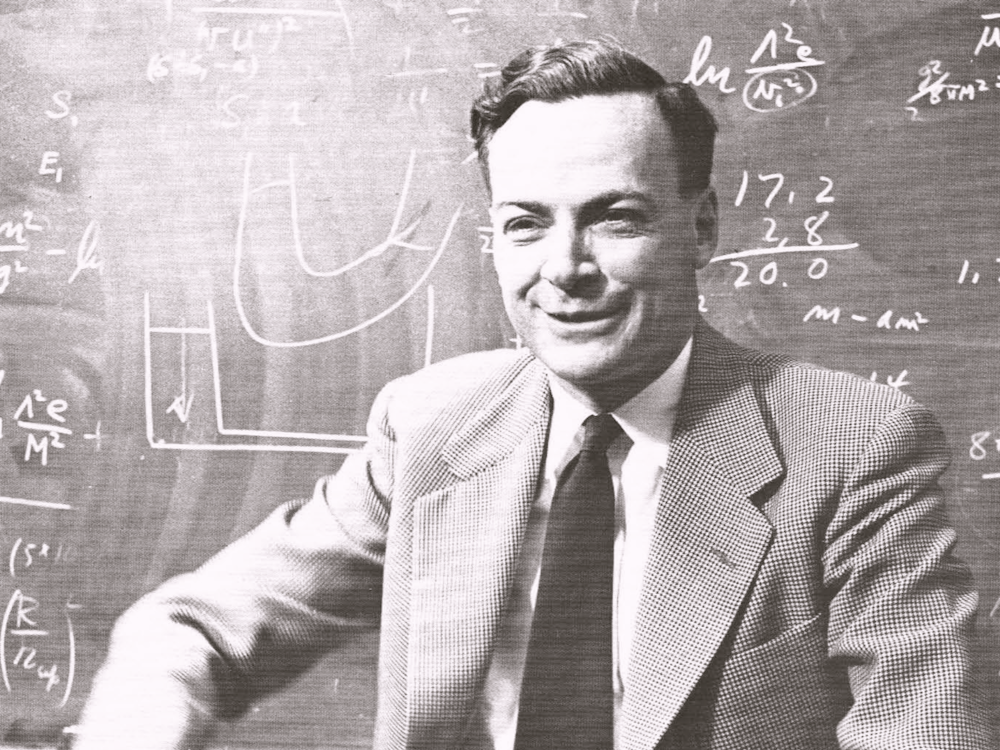 Richard Feynman.
Public domain, via Wikimedia Commons
Mechanical gods
On the other hand, and unlike most gods, von Neumann was not immortal. Like so many of those around him, he died tragically young, a victim of a virulent cancer that infiltrated his otherwise insuperable brain shortly after his 53rd birthday.
But towards the end of The Maniac, Labatut seems to suggest that the algorithms that now dominate so much of our lives could be seen as von Neumann’s offspring. They are mechanical gods not subject to the limits of flesh and blood.
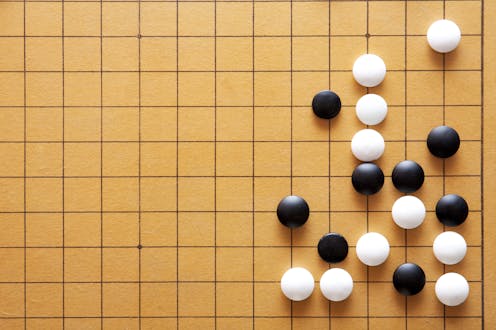
The novel thus has a kind of second act, in which Labatut leaves von Neumann behind and considers instead the history of the ancient game Go, and the moment when machines became capable of beating the best human players in the world, Lee Sedol and Ke Jie.
The idea here is that playing games is the most discretely human activity we can imagine, for it involves not simply the application of rules or the calculation of probabilities, but a kind of creativity and prevarication, cunning and intimidation that a machine should not be able to replicate.
That machines now consistently beat humans at the most complex games we can dream up appears to Labatut as a fundamental tipping point. We can only tremble before these new gods the same way our ancestors did before the old ones – in fear and awe.
Read more:
Economic theories that have changed us: game theory
The gift of fiction
Such apocalyptic fantasies notwithstanding, I would like to suggest that something else is going on here as well, just beneath the surface.
The Maniac is deceptively presented as a collection of facts and an account of events that really happened. But that is not at all what it is. It is a novel: the invention of another great mind, namely that of Labatut.
Richard Feynman.
Public domain, via Wikimedia Commons
Mechanical gods
On the other hand, and unlike most gods, von Neumann was not immortal. Like so many of those around him, he died tragically young, a victim of a virulent cancer that infiltrated his otherwise insuperable brain shortly after his 53rd birthday.
But towards the end of The Maniac, Labatut seems to suggest that the algorithms that now dominate so much of our lives could be seen as von Neumann’s offspring. They are mechanical gods not subject to the limits of flesh and blood.
The novel thus has a kind of second act, in which Labatut leaves von Neumann behind and considers instead the history of the ancient game Go, and the moment when machines became capable of beating the best human players in the world, Lee Sedol and Ke Jie.
The idea here is that playing games is the most discretely human activity we can imagine, for it involves not simply the application of rules or the calculation of probabilities, but a kind of creativity and prevarication, cunning and intimidation that a machine should not be able to replicate.
That machines now consistently beat humans at the most complex games we can dream up appears to Labatut as a fundamental tipping point. We can only tremble before these new gods the same way our ancestors did before the old ones – in fear and awe.
Read more:
Economic theories that have changed us: game theory
The gift of fiction
Such apocalyptic fantasies notwithstanding, I would like to suggest that something else is going on here as well, just beneath the surface.
The Maniac is deceptively presented as a collection of facts and an account of events that really happened. But that is not at all what it is. It is a novel: the invention of another great mind, namely that of Labatut.
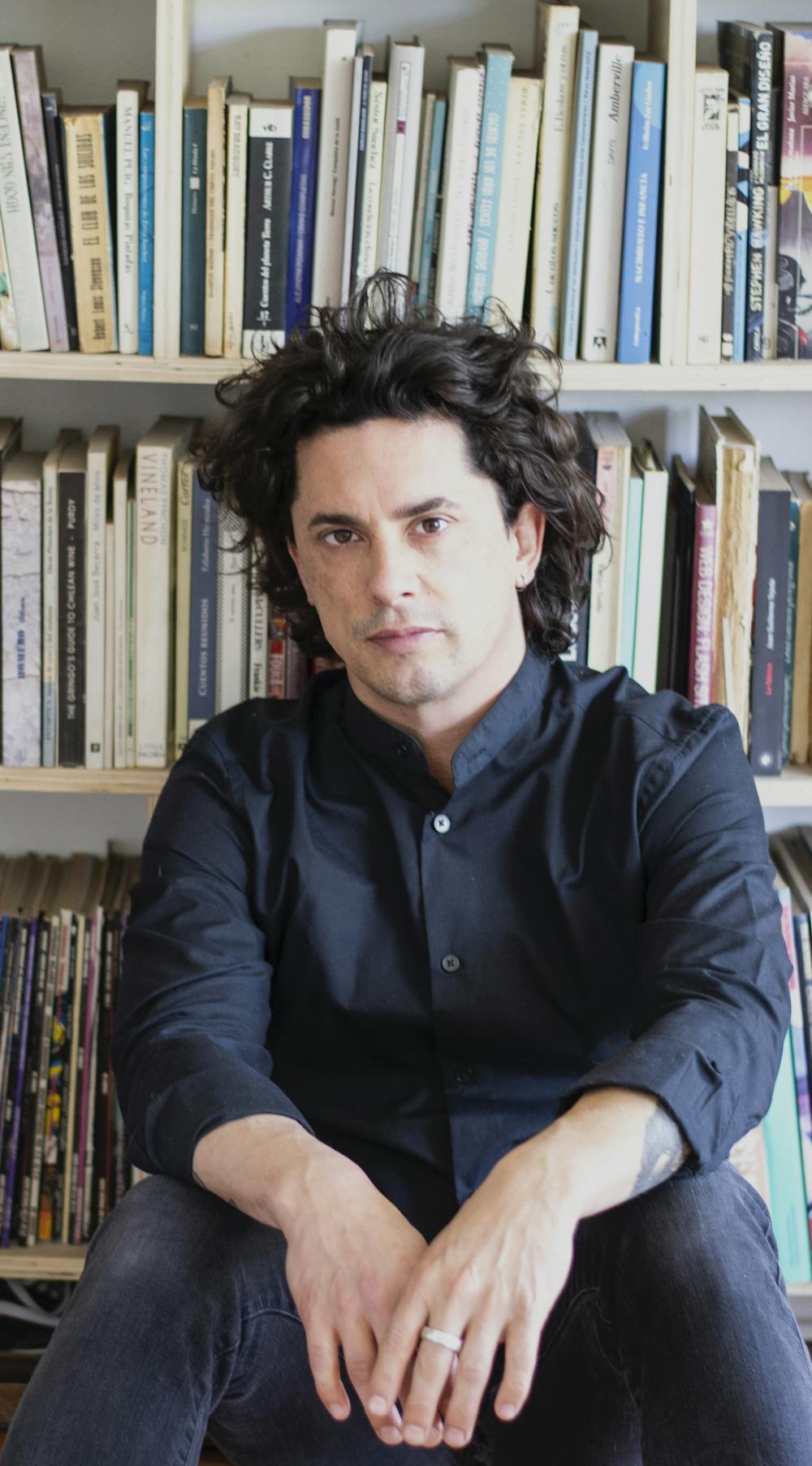 Benjamin Labatut.
AloysusAcker, via Wikimedia Commons, CC BY-SA
It places the facts of human experience within a fictional container. Profound scientific and technological discoveries are encompassed by something more profound: a story.
In that sense, the fictional form of The Maniac belies its apocalyptic content. Machines might be able to dominate the real world, but as Labatut’s novel attests, humans can invent the fiction that dominates that domination.
To put the same point differently, I have been writing here as if The Maniac tells us something about what the author takes to be true. But precisely because it is a novel and not a series of articles or a doctoral dissertation, there is no reason to make that assumption. What Labatut really believes is something I cannot know. The same will never be true of the productions of a computer or an algorithm.
“You insist that there is something that a machine cannot do,” von Neumann once declared, with characteristic arrogance. “If you tell me precisely what it is that a machine cannot do, then I can always make a machine which will do just that.”
“Well,” we might have retorted, “what it cannot do is anything without being told what to do.” What it cannot do is what Labatut’s novel, indeed all novels, all fictions, all stories do – tell us things that can never be verified, create truths that have no stable foundation, or weave entire worlds out of nothing at all.
Authors: Charles Barbour, Associate Professor, Philosophy, Western Sydney University
Benjamin Labatut.
AloysusAcker, via Wikimedia Commons, CC BY-SA
It places the facts of human experience within a fictional container. Profound scientific and technological discoveries are encompassed by something more profound: a story.
In that sense, the fictional form of The Maniac belies its apocalyptic content. Machines might be able to dominate the real world, but as Labatut’s novel attests, humans can invent the fiction that dominates that domination.
To put the same point differently, I have been writing here as if The Maniac tells us something about what the author takes to be true. But precisely because it is a novel and not a series of articles or a doctoral dissertation, there is no reason to make that assumption. What Labatut really believes is something I cannot know. The same will never be true of the productions of a computer or an algorithm.
“You insist that there is something that a machine cannot do,” von Neumann once declared, with characteristic arrogance. “If you tell me precisely what it is that a machine cannot do, then I can always make a machine which will do just that.”
“Well,” we might have retorted, “what it cannot do is anything without being told what to do.” What it cannot do is what Labatut’s novel, indeed all novels, all fictions, all stories do – tell us things that can never be verified, create truths that have no stable foundation, or weave entire worlds out of nothing at all.
Authors: Charles Barbour, Associate Professor, Philosophy, Western Sydney University


 Daily Bulletin


