

How term limits for Australian political leaders could build a stronger democracy
- Written by: Paul Strangio, Professor of Politics, Monash University
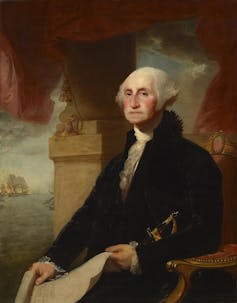
King George III reputedly said of the inaugural US president, George Washington, on learning the American had declined a third term of office, that he was “the greatest character of the age”. George III marvelled at Washington because, despite entreaties that he continue as president, Washington had voluntarily ceded power. He had resisted the temptation to become a quasi monarch.
By relinquishing office after two terms (eight years), Washington established an important and influential precedent in the fledgling American republic. His presidential successors faithfully abided by that precedent until Franklin Roosevelt, amid the exigency of the second world war, successfully stood for a third and then fourth term of office in 1940 and 1944 respectively.
Roosevelt’s break with the tradition of a maximum two term presidency was controversial. In its wake, the 22nd amendment to the American constitution was ratified in 1951, limiting the number of terms a person can be elected to the presidency to two. Washington’s principle had been codified.
Limiting the duration of a presidency is regarded in the US as one of the bulwarks against the development of an unhealthy concentration of authority in any one site. It is specifically a safeguard against one person accumulating too much power. It is one of the checks and balances built into the republic’s intricate liberal democratic constitutional architecture.
How does Australia compare?
Obviously, we do not have a presidency. America has a single-person executive with authority granted exclusively to the president. In contrast, our Westminster-derived system of parliamentary government is anchored in the principle of cabinet or collective rule. Executive authority is meant to be dispersed among a group of actors rather than solely vested in a supreme leader.
Yet for some time, close observers of government in Australia (and comparable parliamentary democracies) have described a phenomenon of presidentialisation. That is, there are forces concentrating power in the hands of the head of government, creating a kind of de facto presidency.
These forces include the dense growth of executive resources around the leader, most notably a personal advisory system – it is a machinery that no other government member comes close to having access to. Another is the increased habit of leaders to rule not through the cabinet as a whole but through small cabinet subcommittees, a practice that facilitates the leader’s domination of government decision making.
Read more: Strong political leaders are electoral gold – but the trick is in them knowing when to stand down
Then there is the relationship between government, the media and the public. Governments market their message predominantly through the leader and in turn, the media focus attention on the government head. In this environment, the public comes to think of government as an individual enterprise and increasingly makes assessments about politics on the basis of their view of the leader rather than the collective. This trend is badged the personalisation of politics.
If government in Australia has become so leader-centred (at both national and sub-national level), would it be healthy for our democracy to time limit their tenure? I can think of two recent examples where a leader has arguably stayed too long, has grown untouchable in their own government, producing adverse results.
The first is John Howard’s government of 1996 to 2007. The Howard government was at its best in its second term (1998 to 2001), when it legislated comprehensive taxation reform headlined by the introduction of the GST. Thereafter, it ran short of purpose. Instead, Howard seemed to become addicted to ruling for its own sake.
His administration resorted increasingly to whipping up crises (the Northern Territory intervention, for example) and sowing division as a means to garner political support. Supreme within his government and convinced of his own indispensability, Howard stymied a succession to Peter Costello while finally overreaching by imposing a radical industrial relations regime.
The second is Daniel Andrews’ Victorian government, in office since 2014. Over that period, Andrews has built an impressive edifice of progressive measures – just one example being his government leading the nation in treaty-making with First Nations communities.
Yet that record of enlightened reform has always coexisted somewhat uneasily with the premier’s controlling hard man ruling style. More unsettling, with Andrews shortly to become Victoria’s third longest serving premier, his forcefulness has morphed into something darker and oppressive. His is now an unsmiling leadership unsoftened by conciliation or humility. Witness, for instance, his imperious responses to IBAC findings, his high-handed freezing out of certain journalists and his defiant lack of contrition for the Commonwealth Games cancellation fiasco.
Backed by a mighty advisory apparatus, Andrews dominates his party and government to a chilling degree. Their leader for nearly 13 years, his colleagues are cowed by him.
Long-term leadership is not intrinsically a bad thing. To the contrary, good leaders grow in office becoming better at statecraft. But there does seem a point when prolonged possession of power dulls capacity for self-reflection and self-restraint. Hubris follows. The challenge is confining leaders to their governing sweet spot.
In a parliamentary system like ours there is, of course, no practical means for importing the device of time limits for leaders. Yet in its absence we ought to expect parties, rather than genuflecting before strong leaders, to have the mettle to restrain them.
And, finally, we as voters have a role in checking leaders by demanding from them a heavier burden of proof when they ask for additional tenure come election time.
Authors: Paul Strangio, Professor of Politics, Monash University


 Daily Bulletin


