

What makes a good life? Existentialists believed we should embrace freedom and authenticity
- Written by: Oscar Davis, Indigenous Fellow - Assistant Professor in Philosophy and History, Bond University
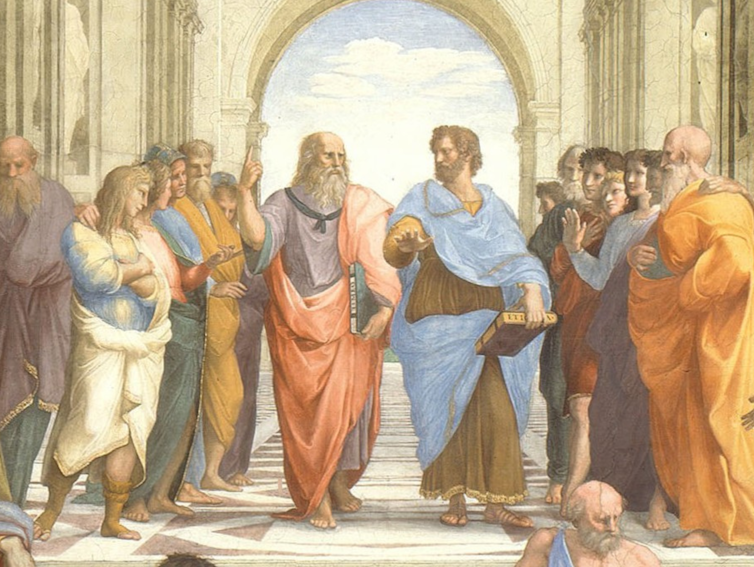
How do we live good, fulfilling lives?
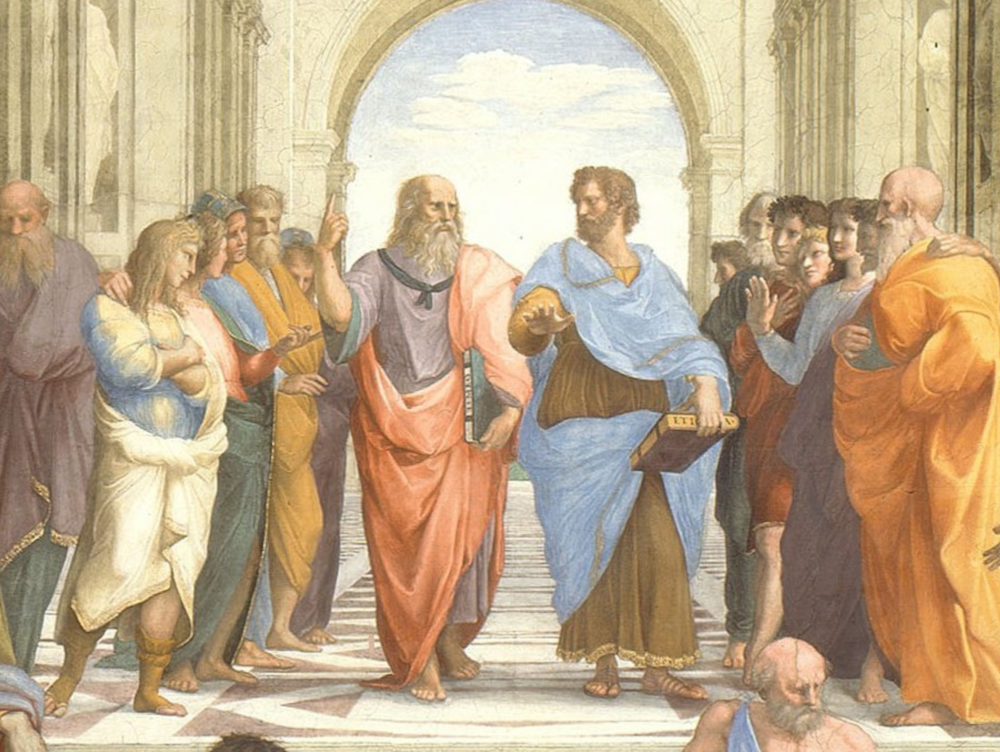
Aristotle first took on this question in his Nicomachean Ethics – arguably the first time anyone in Western intellectual history had focused on the subject as a standalone question.
He formulated a teleological response to the question of how we ought to live. Aristotle proposed, in other words, an answer grounded in an investigation of our purpose or ends (telos) as a species.
Our purpose, he argued, can be uncovered through a study of our essence – the fundamental features of what it means to be human.
Ends and essences
“Every skill and every inquiry, and similarly every action and rational choice, is thought to aim at some good;” Aristotle states, “and so the good has been aptly described as that at which everything aims.”
To understand what is good, and therefore what one must do to achieve the good, we must first understand what kinds of things we are. This will allow us to determine what a good or a bad function actually is.
For Aristotle, this is a generally applicable truth. Take a knife, for example. We must first understand what a knife is in order to determine what would constitute its proper function. The essence of a knife is that it cuts; that is its purpose. We can thus make the claim that a blunt knife is a bad knife – if it does not cut well, it is failing in an important sense to properly fulfil its function. This is how essence relates to function, and how fulfilling that function entails a kind of goodness for the thing in question.
Of course, determining the function of a knife or a hammer is much easier than determining the function of Homo sapiens, and therefore what good, fulfilling lives might involve for us as a species.
Aristotle argues that our function must be more than growth, nutrition and reproduction, as plants are also capable of this. Our function must also be more than perception, as non-human animals are capable of this. He thus proposes that our essence – what makes us unique – is that humans are capable of reasoning.
What a good, flourishing human life involves, therefore, is “some kind of practical life of that part that has reason”. This is the starting point of Aristotle’s ethics.
We must learn to reason well and develop practical wisdom and, in applying this reason to our decisions and judgements, we must learn to find the right balance between the excess and deficiency of virtue.
It is only by living a life of “virtuous activity in accordance with reason”, a life in which we flourish and fulfil the functions that flow from a deep understanding of and appreciation for what defines us, that we can achieve eudaimonia – the highest human good.
Read more: Friday essay: how philosophy can help us become better friends
Existence precedes essence
Aristotle’s answer was so influential that it shaped the development of Western values for millennia. Thanks to philosophers and theologians such as Thomas Aquinas, his enduring influence can be traced through the medieval period to the Renaissance and on to the Enlightenment.
During the Enlightenment, the dominant philosophical and religious traditions, which included Aristotle’s work, were reexamined in light of new Western principles of thought.
Beginning in the 18th century, the Enlightenment era saw the birth of modern science, and with it the adoption of the principle nullius in verba – literally, “take nobody’s word for it” – which became the motto of the Royal Society. There was a corresponding proliferation of secular approaches to understanding the nature of reality and, by extension, the way we ought to live our lives.
One of the most influential of these secular philosophies was existentialism. In the 20th century, Jean-Paul Sartre, a key figure in existentialism, took up the challenge of thinking about the meaning of life without recourse to theology. Sartre argued that Aristotle, and those who followed in Aristotle’s footsteps, had it all back-to-front.
 Jean Paul Sartre (1967)
Wikimedia Commons, CC BY-SA
Jean Paul Sartre (1967)
Wikimedia Commons, CC BY-SA
Existentialists see us as going about our lives making seemingly endless choices. We choose what we wear, what we say, what careers we follow, what we believe. All of these choices make up who we are. Sartre summed up this principle in the formula “existence precedes essence”.
The existentialists teach us that we are completely free to invent ourselves, and therefore completely responsible for the identities we choose to adopt. “The first effect of existentialism,” Sartre wrote in his 1946 essay Existentialism is a Humanism, “is that it puts every man in possession of himself as he is, and places the entire responsibility for his existence squarely upon his own shoulders.”
Crucial to living an authentic life, the existentialists would say, is recognising that we desire freedom above everything else. They maintain we ought never to deny the fact we are fundamentally free. But they also acknowledge we have so much choice about what we can be and what we can do that it is a source of anguish. This anguish is a felt sense of our profound responsibility.
The existentialists shed light on an important phenomenon: we all convince ourselves, at some point and to some extent, that we are “bound by external circumstances” in order to escape the anguish of our inescapable freedom. Believing we possess a predefined essence is one such external circumstance.
But the existentialists provide a range of other psychologically revealing examples. Sartre tells a story of watching a waiter in a cafe in Paris. He observes that the waiter moves a little too precisely, a little too quickly, and seems a little too eager to impress. Sartre believes the waiter’s exaggeration of waiter-hood is an act – that the waiter is deceiving himself into being a waiter.
In doing so, argues Sartre, the waiter denies his authentic self. He has opted instead to assume the identity of something other than a free and autonomous being. His act reveals he is denying his own freedom, and ultimately his own humanity. Sartre calls this condition “bad faith”.
Read more: Finding your essential self: the ancient philosophy of Zhuangzi explained
An authentic life
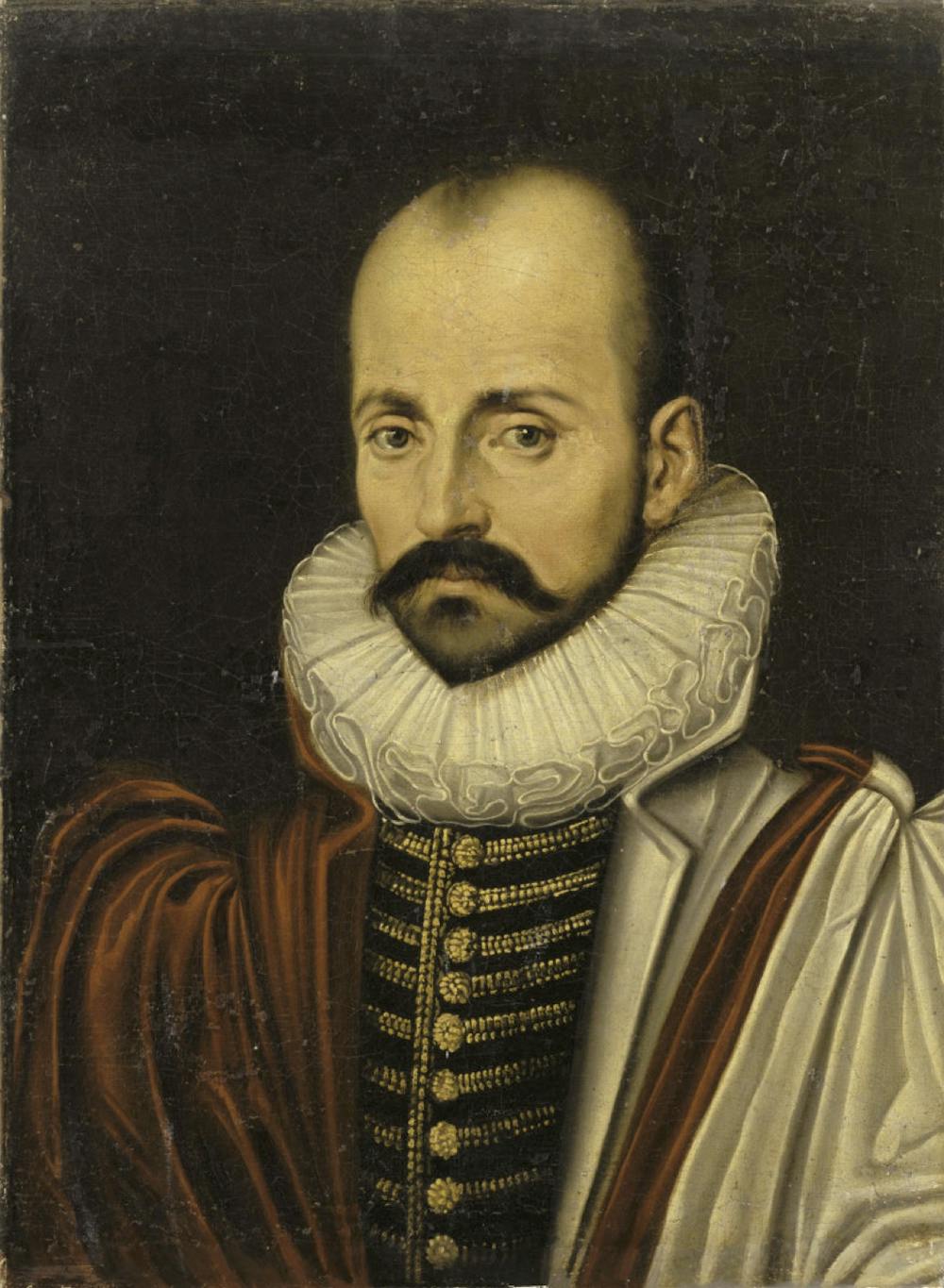 Michel de Montaigne – artist unknown c.1570.
Wikimedia Commons
Michel de Montaigne – artist unknown c.1570.
Wikimedia Commons
Contrary to Aristotle’s conception of eudaimonia, the existentialists regard acting authentically as the highest good. This means never acting in such a way that denies we are free. When we make a choice, that choice must be fully ours. We have no essence; we are nothing but what we make for ourselves.
One day, Sartre was visited by a pupil, who sought his advice about whether he should join the French forces and avenge his brother’s death, or stay at home and provide vital support for his mother. Sartre believed the history of moral philosophy was of no help in this situation. “You are free, therefore choose,” he replied to the pupil – “that is to say, invent”. The only choice the pupil could make was one that was authentically his own.
We all have feelings and questions about the meaning and purpose of our lives, and it is not as simple as picking a side between the Aristotelians, the existentialists, or any of the other moral traditions. In his essay, That to Study Philosophy is to Learn to Die (1580), Michel de Montaigne finds what is perhaps an ideal middle ground. He proposes “the premeditation of death is the premeditation of liberty” and that “he who has learnt to die has forgot what it is to be a slave”.
In his typical style of jest, Montaigne concludes: “I want death to take me planting cabbages, but without any careful thought of him, and much less of my garden’s not being finished.”
Perhaps Aristotle and the existentialists could agree that it is just in thinking about these matters – purposes, freedom, authenticity, mortality – that we overcome the silence of never understanding ourselves. To study philosophy is, in this sense, to learn how to live.
Authors: Oscar Davis, Indigenous Fellow - Assistant Professor in Philosophy and History, Bond University


 Daily Bulletin


