

The Greens aren't grandstanding on a new coal and gas ban – they're negotiating well
- Written by: Rebecca Pearse, Lecturer, Australian National University
This fortnight, Australia’s parliament is considering an amendment to the safeguard mechanism, which is the main way we’ve tried to cut emissions over the last nine years. As you may already know, it hasn’t done what it was meant to do.
The mechanism was meant to force our largest greenhouse gas polluters to buy carbon credits if they emitted over a baseline. But almost no one ever paid, as the baselines were set very high. That’s why Labor wants to tighten up Australia’s overly flexible carbon trading scheme as part of this bill.
But to pass it, the government needs support from most of the crossbench, which is unlikely, or from the Greens, given the Coalition has refused to support it. Australia’s third largest party has offered to “support the bill tomorrow” – if the Albanese government agrees to stop all new coal and gas projects.
Labor won’t agree to this. But it will need to negotiate to have any chance of success.
Are the Greens grandstanding, as some commentators have suggested? Hardly: they’re negotiating hard to try to get the best outcome for the climate.
Read more: Grattan on Friday: Adam Bandt is wedged by Greens' overreach on emissions legislation
The trouble with negotiating strong carbon market rules
If the Greens were in power, they might choose a different approach. But they are limited by what Labor is offering: the ability to improve the rules of Australia’s carbon market.
In 2023, our methods of driving down emissions are still limited. Labor has decided to focus on improving the safeguard mechanism, which is a baseline-and-credit carbon offset scheme first legislated by the Abbott Coalition government in 2014.
Because of very loose baselines given to the 215 major emitters covered by the scheme, emissions actually grew. The previous government also bought carbon credits through the flawed Emissions Reduction Fund.
What Labor proposes is to make the mechanism function more like the carbon market set up by the Rudd/Gillard Labor governments over a decade ago.
How? By adding rules to allow new flexibility options for crediting and trading of carbon rights. The current safeguard bill also adds a “reserve” carbon budget for new fossil fuel projects, which would allow them to be built.
At the same time, the Chubb review into our carbon offset laws is recommending more oversight into the scheme following integrity questions.
In sum, though, climate change minister Chris Bowen’s proposed amendments are still too flexible.
If Labor gets its amendments through unchanged, big industrial emitters will likely be able to avoid actually having to reduce how much carbon dioxide and methane they can pump into the skies through loose baselines and unlimited offsets.
Is ‘no new coal and gas’ viable?
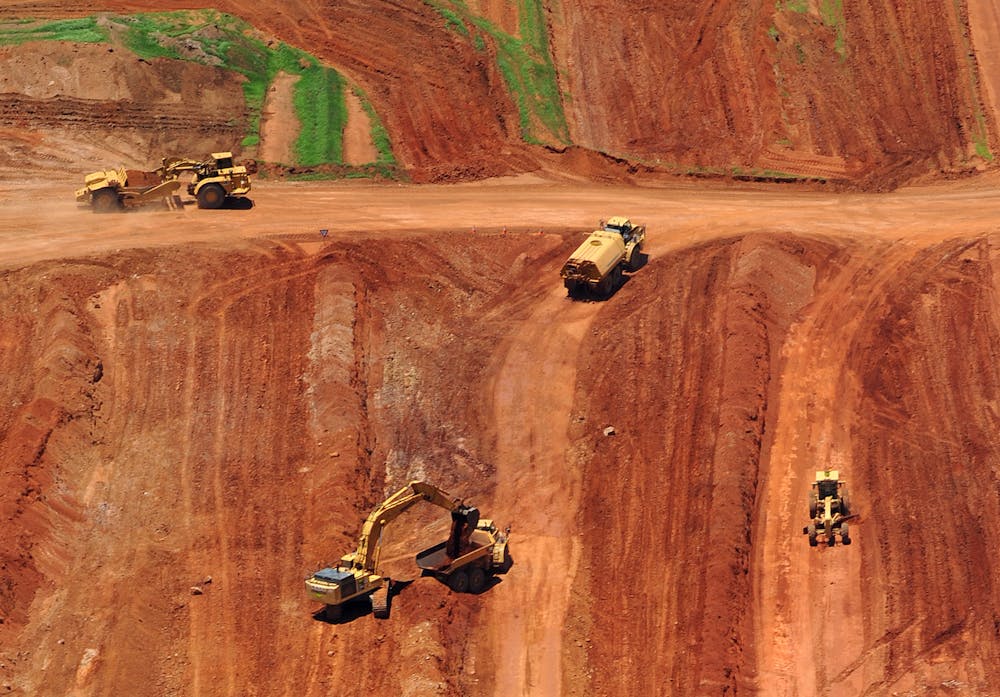
Since the early 2000s, the environment movement have campaigned for “no new coal”. As the gas industry surged in the 2010s, environmentalists called for limits on fracking and exports.
It’s entirely reasonable for the Greens to push the government to come clean about plans for emissions-intensive industries. Mining workers want to know what the future will hold. Labor voters are also wondering.
The Greens want a managed transition plan out of thermal coal by 2030 and coking coal (used for steelmaking) by 2040, with packages to help workers change jobs. They want Australia to be the first major fossil fuel exporter to limit production.
That’s what they want. But what can they get, given carbon-pricing mechanisms like the safeguard mechanism leave these decisions to the market?
This week, the Greens and the Coalition are forcing the government to release its modelling of the future of emissions-intensive industries.
How big does the government expect fossil fuel production facilities to be in the future? How much will big emitters rely on offsetting rather than reductions at the source?
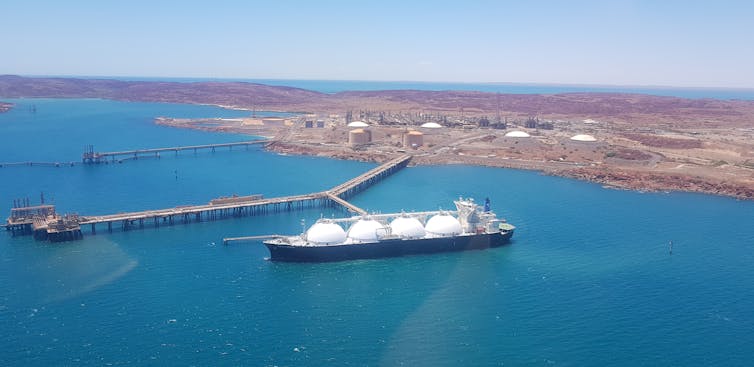
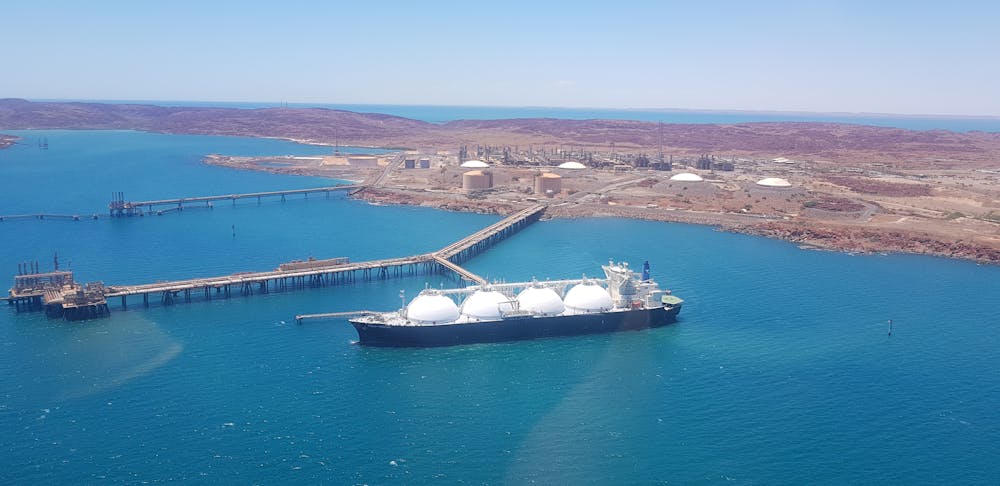 In the last 15 years, Australia’s gas exports have skyrocketed.
Shutterstock
In the last 15 years, Australia’s gas exports have skyrocketed.
Shutterstock
Trading offset reform for no new coal and gas?
Crossbencher David Pocock is pushing for reforms on carbon offsets. But the Greens have offered to “put aside” their concerns about offsets if Labor moves to ban new fossil fuel projects.
If the Greens were successful in strengthening safeguard rules to introduce a zero-carbon limit on all new coal and gas mines, new fossil fuel projects would have to find carbon offsets for 100% of their emissions each year. But if Labor keeps refusing this approach, compromise may have to come elsewhere.
Greens leader Adam Bandt says they are making “an offer, not an ultimatum”. They want to bargain.
What could this look like?
Labor might seek to group Pocock and the 12 Green senators together to negotiate limits on permissible carbon offsets. If so, the Greens would end up where they were in 2009–11, trying to ensure carbon market rules minimise use of offsets.
What are the most likely deals we could see?
We could see four other compromises. In order of likelihood, they are:
Pausing new coal and gas mine approvals until environmental laws are stronger
Our biodiversity and environment laws are not up to the task. Labor has pledged to fix them.
Making federal environmental laws stronger is arguably a clearer way to reducing fossil fuel expansion. Why? These laws overlay state planning laws which keep churning out new mining licences. The Greens will want influence here.
The ‘climate trigger’
The Greens want to create a climate trigger modelled on the “water trigger” negotiated by former independent MP Tony Windsor.
A climate trigger, if it got up, would mean future projects would be assessed on greenhouse impact. But it wouldn’t be the same as a direct ban on new coal and gas. The Greens have a climate trigger bill before parliament, which would permit the climate change minister to reject large mines.
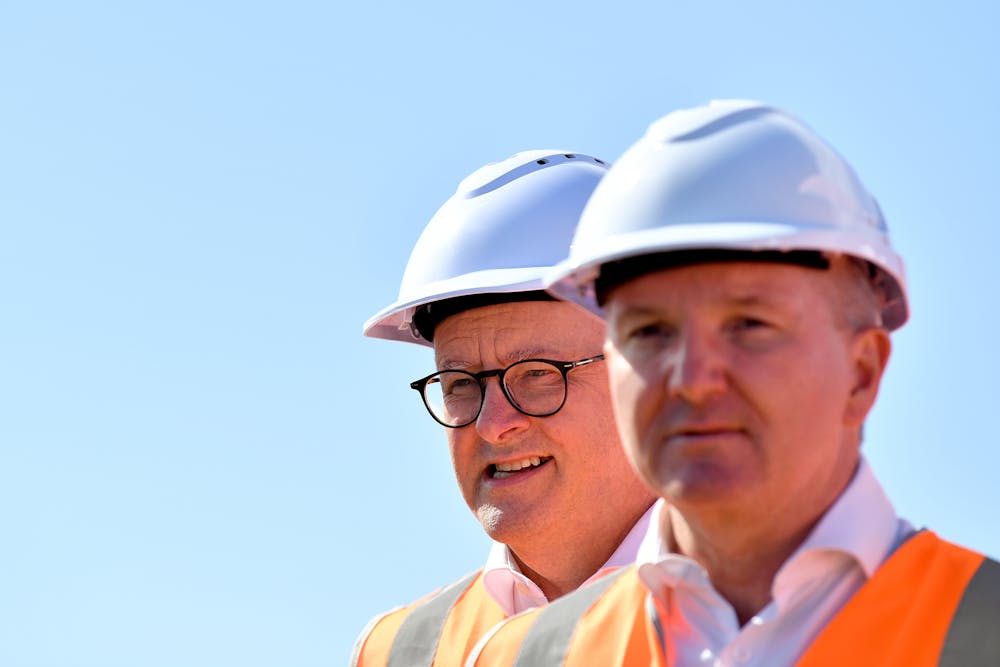 Climate change minister Chris Bowen and Prime Minister Anthony Albanese want to amend the safeguard mechanism. The Greens want faster action on fossil fuels.
Replacing offsets
Offsets are often rubbery. But there are other ways to finance carbon cuts. A decarbonisation fund could permit democratic decision-making about carbon and biodiversity improvements.
Given carbon offset credits have political risks for the government and corporations, there’s merit to returning to fixed carbon pricing.
Negotiate with the states about fossil fuel industry transition
Labor could offer to negotiate with the states about managing the path away from coal and gas. Talking about what we have to do to stay in our carbon budget could foster parliamentary good faith and end finger pointing.
Climate wars – or real progress?
The Greens have a long history of pushing back against weak climate policy. Labor, in turn, has a history of criticising what they see as doctrinaire refusal. But when the cameras are off, these two parties have managed to achieve compromise and progress. It’s happened before, and it will most likely happen again.
Authors: Rebecca Pearse, Lecturer, Australian National University


 Daily Bulletin


