

Read The Times Australia

Daily Bulletin

The rich history of our love affair with luxury

  • Written by: Peter McNeil, Distinguished Professor of Design History, UTS, University of Technology Sydney
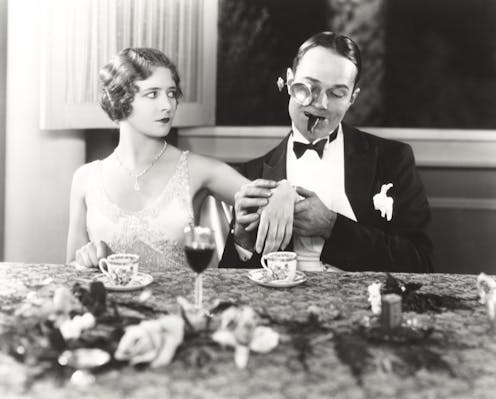
The rich history of our love affair with luxury

In today’s world it could be said, to a certain degree, that even a relatively impoverished person engages with luxury, in some way.

If you enjoy regulated heating or cooling at home, regular lighting, chicken meat, or eat chocolates, you are engaging with formats that once indicated luxury.

But what is, and is not, considered to be a luxury, changes with the times.

Decadence and luxury

When we describe a dessert as “decadent” today, we must remember it really means decaying, a concept related to the “Romans of the decadence” whose lavish lifestyles are held up as proof of why the Empire had to fail.

The Romans saw luxury as quintessentially foreign and therefore alien to the true and olden spirit of the Roman polis. This is why luxury was often represented as coming from “the Orient”, the source of rare scents, spices, gems, ivories and enslaved peoples.

As a result, the Romans introduced sumptuary laws, which were prescriptions to manage conspicuous consumption of things like expensive clothing and jewellery worn by social groups, but also the amount spent on banquets and even funerals.

This was necessary, because the ancient Romans enjoyed conspicuous luxury. They liked to eat food whose ingredients resembled another. They enjoyed delicacies such as fattened fowls, peacock, oysters, ham, wild boar and fig-peckers, the latter eaten whole, sometimes all combined together in a crusted paté, even though this was forbidden by the new laws. There were even luxuries in enslaved peoples. The poet Juvenal commented satirically that clearly it was better to have a bevy of pretty pageboys (exoleti) arranged according to their nationality, size and hair colour serving the drinks rather than coarse household help.

There is a long continuity in this type of consumption. In the 19th century, for example, there was a premium on tall footmen matching in size and the Victorians loved elaborate feasts with multiple courses.

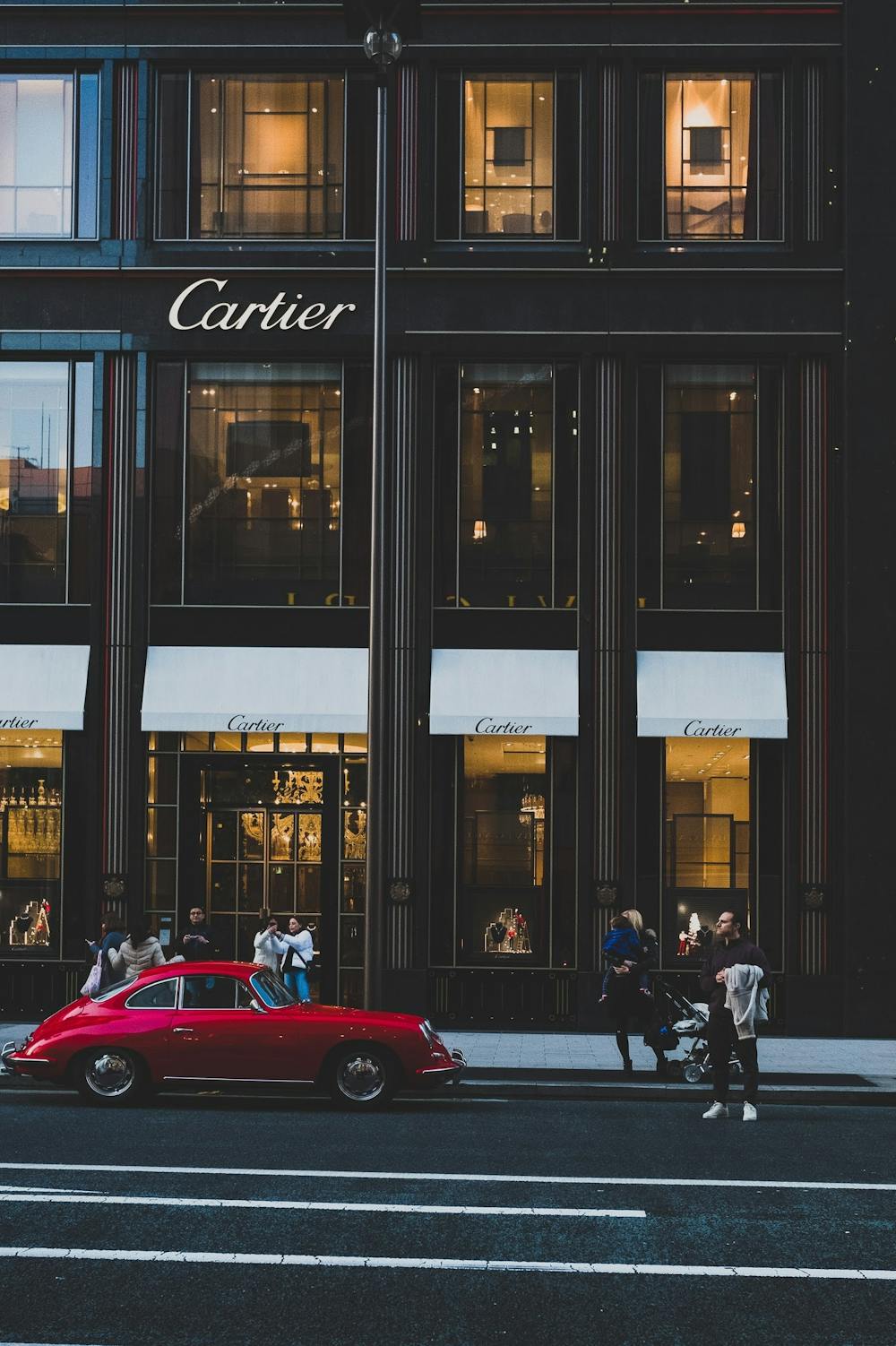
Marissa Grootes/ Unsplash Follow the money By the mid 19th century, wealth from new industries created enormous fortunes at a time when taxation and labour costs were low. North Americans became the richest people in the world. Clare Booth Luce, formerly married to the chairman of Time- Life, said: In America money is a thing less valued in the spending than in the earning. It is less a symbol of luxury than of ‘success’, less of corruption than of virtue. While Americans were good at making money, they seemed to need Europeans to spend it. The raft of rich American women who began to marry into the European aristocracy in the late 19th century were known as the “dollar princesses”, the term coming from a popular song. The British aristocracy were, of course, in turn marrying into this American wealth. Between 1890 and 1914, half the world’s capital flowed through London. The Dollar Princesses paid for enormous renovations and modernisation of stately homes, were photographed with dozens of trunks as they moved across the Atlantic, and patronised the luxury establishments of jewellers, couturiers, florists and caterers. The arrival of the wealthy Americans heiresses coincided with a series of challenges to the British aristocracy including the introduction of death duties, the rise in income tax and The Great Unrest of 1912. Living in style Between the end of the 19th century and the start of the first world war, luxury was widely reported and commented upon in diaries and memoirs. The house parties about which so much was written were characterised by excessive meals of great refinement, elaborate flowers and large numbers of visible servants. Much luxury was French. Edward VII was a famed Francophile. The Entente Cordiale of 1904 benefited British French trade and travel. Louis Vuitton opened in Bond St in 1900. His new flat trunks for cars were stackable, replacing older domed tops designed to repel water. Cartier opened in London in 1902. Faberge also had a new London store. The Paris Ritz opened in 1898 and the London Ritz Hotel in 1905, decorated in a newly fashionable white and gilt Louis XVI style. Service Stripes This was a period when wealthy women were laden with jewels: Kenneth Clark, the art historian, noted of a New York party in 1930 that the women “even brought pieces of jewellery in their hands and laid them down on the dinner table. This could have happened in the Middle Ages.” Mrs Greville, one of the wealthiest women in England (daughter of a Scottish brewer), loved her jewels, owning pieces that could be traced back to Marie Antoinette and the Empress Josephine. The late Queen Mother, a great lover of luxury and thoroughly Edwardian figure, inherited key pieces of jewellery from Mrs Greville in 1942, a friend from the time she was still Duchess of York. But, as Elizabeth wrote in her diaries, she did not wear the lavish Cartier and Boucheron pieces until 1947, so as to not appear “out of sync” with the austerity movement immediately after the war. Profligate luxury risks looking out of step with public morals. Simon Launay/ Unsplash The Queen Mother wore all Mrs Greville’s jewels at her 80th Birthday party – and the owner of them now is Camilla, the Queen Consort. As Camilla is the grand-daughter of Edward VII’s mistress Mrs Keppel, the story comes full circle. Mrs Greville left an estate in the 1940s worth approximately £39 million or 67 million AUD. This is not much money if we compare it to the fortunes held by global billionaires today. Gina Reinhart has between A$28.8 and A$31.4 billion. She lives discreetly part of the year in Dalkeith Perth in her late father’s home, in Singapore at a gated community, and on an ocean liner. Luxury today Today, luxury is seen as the embodiment of growing income inequality within states and communities, and also between different nations in the world. This is not new, although in the past luxury and inequality were seen as part of how a hierarchical society was structured: acknowledged, rather than seen as a problem. Luxury is not the cause of inequality, though it might be one of its effects. When societies aims towards income and social equality (as some postwar societies did), luxury – or at least the public discussion of luxury – seems to disappear. By contrast, societies like the present, in which 1% of the population owns 49% of the world’s wealth, lead luxury to the fore. Authors: Peter McNeil, Distinguished Professor of Design History, UTS, University of Technology Sydney

Read more https://theconversation.com/the-rich-history-of-our-love-affair-with-luxury-192732

Business News

Reducing Sales Friction Through Centralized Content Delivery

Sales friction appears whenever buyers or sales teams face unnecessary obstacles in the buying journey. It can happen when information is hard to find, when messaging feels inconsistent, when product ...

Daily Bulletin - avatar Daily Bulletin

Why Choosing the Right Bollard Supplier Matters for Australian Businesses and Public Spaces

From busy CBD streetscapes to sprawling warehouse loading docks, bollards have become one of the most essential safety and security fixtures across Australia. Whether protecting pedestrians from veh...

Daily Bulletin - avatar Daily Bulletin

Why Modular Content Is Transforming Modern Marketing Teams

Modern marketing teams are expected to produce more content than ever before. They need to support websites, landing pages, email campaigns, social channels, product pages, sales enablement material...

Daily Bulletin - avatar Daily Bulletin

Everything You Need to Know About Getting Support from Optus

Whether you've been an Optus customer for years or you've just switched over, at some point you'll probably need to contact their support team. Maybe your bill looks different from what you expected. ...

Daily Bulletin - avatar Daily Bulletin

The Marketing Strategy That’s Quietly Draining Sydney Business Owners’ Bank Accounts

Sydney businesses are investing more in digital marketing than ever before. The intention is clear. More visibility should mean more leads, more customers, and steady growth. However, many business ...

Daily Bulletin - avatar Daily Bulletin

Why Mining Hose Solutions Are Essential For High-Performance Industrial Operations

In environments where the ground itself is constantly shifting, breaking, and being reshaped, every component must be built to endure. Mining operations are among the most demanding in the industria...

Daily Bulletin - avatar Daily Bulletin

The Reason Talented Teams Underperform

If you’re in business, you might have seen it before. A team of capable and smart people just suddenly slows down, and things start spiraling out of control. On paper, everything looks perfect, but ...

Daily Bulletin - avatar Daily Bulletin

Why More Aussie Tradies Are Moving Away From Paid Ads

Across Australia, a lot of tradies are busy. There’s no shortage of demand in industries like plumbing, electrical, landscaping, and building. But being busy doesn’t always mean running a smooth or...

Daily Bulletin - avatar Daily Bulletin

Why Careers In The Defence Industry Are Growing Rapidly

The defence sector has evolved far beyond traditional roles, opening doors to a wide range of opportunities across technology, engineering, intelligence, and operations. This is where defense industry...

Daily Bulletin - avatar Daily Bulletin

The Daily Magazine

Australia’s Best Walking Trails and the Shoes You Need to Tackle Them

Australia is not short on spectacular walks. You can follow ocean cliffs in Victoria, cross ancien...

Why Pre-Purchase Building Inspections Are Essential Before Buying a Home in Australia

source Have you ever walked through an open home and started picturing your furniture, family d...

5 Signs Your Car Needs Immediate Attention Before It Breaks Down

Car problems rarely appear without warning. In most cases, your vehicle gives clear signals before...

Ensuring Safety and Efficiency with Professional Electrical Solutions

For businesses in Newcastle, a safe and fully functioning workplace remains a key part of day-to-d...

Choosing The Right Bin Hire Solution For Hassle-Free Waste Management

When it comes to managing waste efficiently, finding the right solution can save both time and eff...

Why Cleanliness Is Critical In Childcare Environments

Children explore the world with curiosity, often touching surfaces, sharing toys, and interacting ...

What to Look for in a Reliable Australian Engineering Partner

Choosing an engineering partner is rarely just about technical capability. Most businesses can fin...

How to Choose a Funeral Home That Supports Families with Care

Choosing a funeral home is rarely something families do under ideal circumstances. It often happen...

Why Premium Coffee Matters in Modern Hospitality Venues

In hospitality, details shape perception long before a guest consciously evaluates them.  Lightin...