

Read The Times Australia

Daily Bulletin

What do we owe future generations? And what can we do to make their world a better place?

  • Written by: Michael Noetel, Senior Lecturer in Psychology, Australian Catholic University
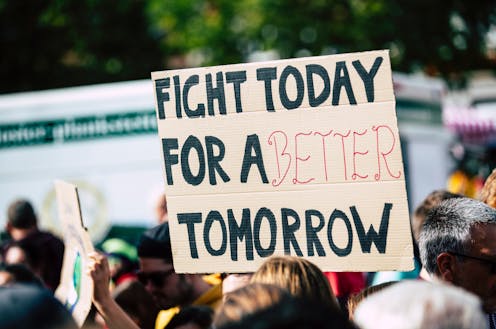
What do we owe future generations? And what can we do to make their world a better place?

Your great grandchildren are powerless in today’s society. As Oxford philosopher William MacAskill says:

They cannot vote or lobby or run for public office, so politicians have scant incentive to think about them. They can’t bargain or trade with us, so they have little representation in the market, And they can’t make their views heard directly: they can’t tweet, or write articles in newspapers, or march in the streets. They are utterly disenfranchised.

But the things we do now influence them: for better or worse. We make laws that govern them, build infrastructure for them and take out loans for them to pay back. So what happens when we consider future generations while we make decisions today?

Review: What We Owe the Future – William MacAskill (OneWorld)

This is the key question in What We Owe the Future. It argues for what MacAskill calls longtermism: “the idea that positively influencing the longterm future is a key moral priority of our time.” He describes it as an extension of civil rights and women’s suffrage; as humanity marches on, we strive to consider a wider circle of people when making decisions about how to structure our societies.

MacAskill makes a compelling case that we should consider how to ensure a good future not only for our children’s children, but also the children of their children. In short, MacAskill argues that “future people count, there could be a lot of them, and we can make their lives go better.”

Read more: Friday essay: 'I feel my heart breaking today' – a climate scientist's path through grief towards hope

Future people count

It’s hard to feel for future people. We are bad enough at feeling for our future selves. As The Simpsons puts it: “That’s a problem for future Homer. Man, I don’t envy that guy.”

We all know we should protect our health for our own future. In a similar vein, MacAskill argues that we all “know” future people count.

Concern for future generations is common sense across diverse intellectual traditions […] When we dispose of radioactive waste, we don’t say, “Who cares if this poisons people centuries from now?”

Similarly, few of us who care about climate change or pollution do so solely for the sake of people alive today. We build museums and parks and bridges that we hope will last for generations; we invest in schools and longterm scientific projects; we preserve paintings, traditions, languages; we protect beautiful places.

There could be a lot of future people

Future people count, and MacAskill counts those people. The sheer number of future people might make their wellbeing a key moral priority. According to MacAskill and others, humanity’s future could be vast: much, much more than the 8 billion alive today.

While it’s hard to feel the gravitas, our actions may affect a dizzying number of people. Even if we last just 1 million years, as long as the average mammal – and even if the global population fell to 1 billion people – then there would be 9.1 trillion people in the future.

The future of humanity could be unimaginably large, so those people deserve some moral weight.

We might struggle to care, because these numbers can be hard to feel. Our emotions don’t track well against large numbers. If I said a nuclear war would kill 500 million people, you might see that as a “huge problem”. If I instead said that the number is actually closer to 5 billion, it still feels like a “huge problem”. It does not emotionally feel 10 times worse. If we risk the trillions of people who could live in the future, that could be 1,000 times worse – but it doesn’t feel 1,000 times worse.

MacAskill does not argue we should give those people 1,000 times more concern than people alive today. Likewise, MacAskill does not say we should morally weight a person living a million years from now exactly the same as someone alive 10 or 100 years from now. Those distinctions won’t change what we can feasibly achieve now, given how hard change can be.

Instead, he shows if we care about future people at all, even those 100 years hence, we should simply be doing more. Fortunately, there are concrete things humanity can do.

Read more: Labor's climate change bill is set to become law – but 3 important measures are missing

We can make the lives of future people better

Another reason we struggle to be motivated by big problems is that they feel insurmountable. This is a particular concern with future generations. Does anything I do make a difference, or is it a drop in the bucket? How do we know what to do when the long-run effects are so uncertain?
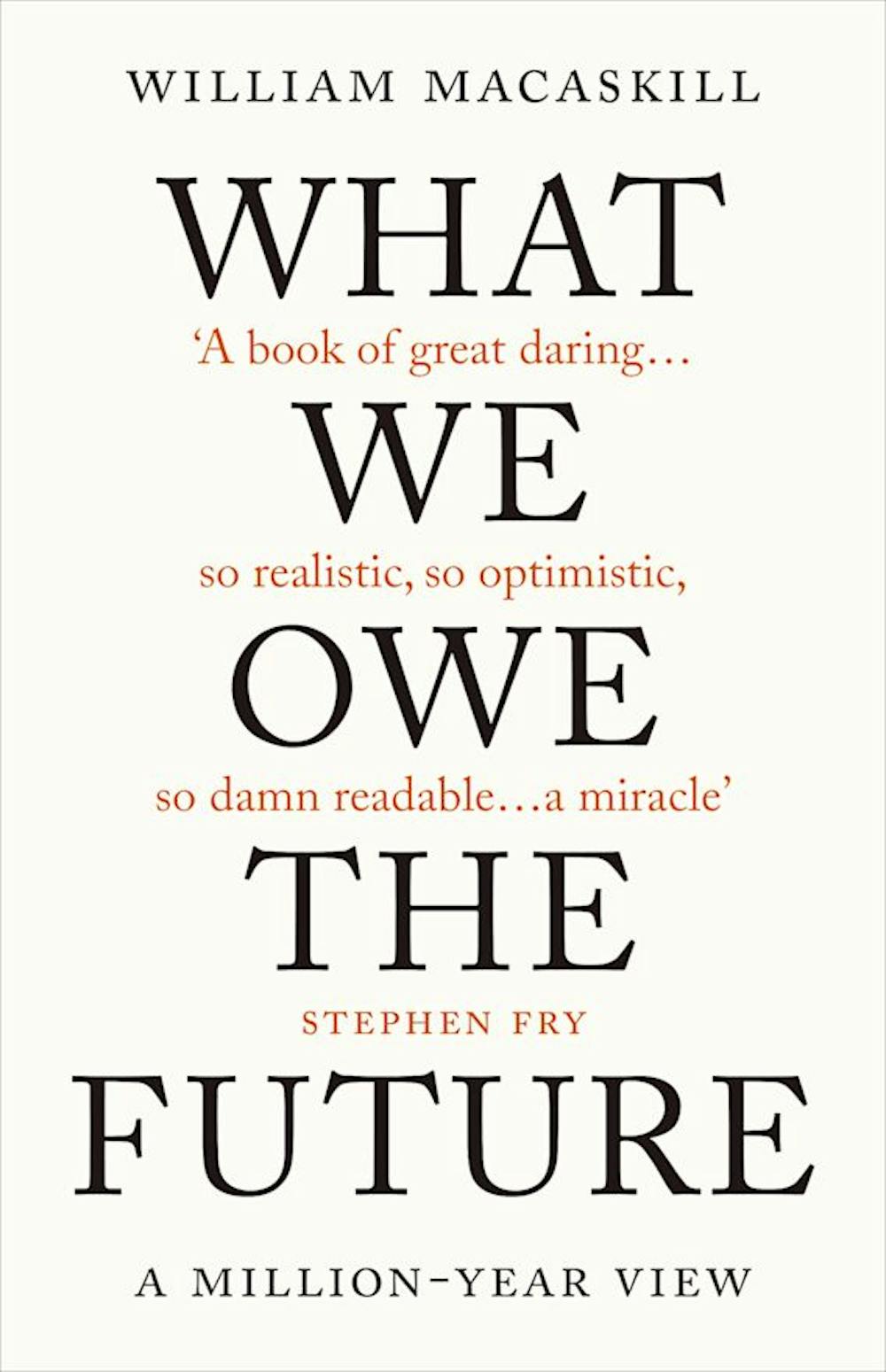
book cover of What We Owe the Future
Even present-day problems can feel hard to tackle. At least for those problems we can get fast, reliable feedback on progress. Even with that advantage, we struggle. For the second year in a row, we did not make progress toward our sustainable development goals, like reducing war, poverty, and increasing growth. Globally, 4.3% of children still die before the age of five. COVID-19 has killed about 23 million people. Can we – and should we – justify focusing on future generations when we face these problems now? MacAskill argues we can. Because the number of people is so large, he also argues we should. He identifies some areas where we could do things that protect the future while also helping people who are alive now. Many solutions are win-win. For example, the current pandemic has shown that unforeseen events can have a devastating effect. Yet, despite the recent pandemic, many governments have done little to set up more robust systems that could prevent the next pandemic. MacAskill outlines ways in which those future pandemics could be worse. Most worrying are the threats from engineered pathogens, which […] could be much more destructive than natural pathogens because they can be modified to have dangerous new properties. Could someone design a pathogen with maximum destructive power—something with the lethality of Ebola and the contagiousness of measles? He gives examples, like militaries and terrorist groups, that have tried to engineer pathogens in the past. The risk of an engineered pandemic wiping us all out in the next 100 years is between 0.1% and 3%, according to estimates laid out in the book. That might sound low, but MacAskill argues we would not step on a plane if you were told “it ‘only’ had a one-in-a-thousand chance of crashing and killing everyone on board”. These threaten not only future generations, but people reading this – and everyone they know. MacAskill outlines ways in which we might be able to prevent engineered pandemics, like researching better personal protective equipment, cheaper and faster diagnostics, better infrastructure, or better governance of synthetic biology. Doing so would help save the lives of people alive today, reduce the risk of technological stagnation and protect humanity’s future. The same win-wins might apply to decarbonisation, safe development of artificial intelligence, reducing risks from nuclear war, and other threats to humanity. Read more: Even a 'limited' nuclear war would starve millions of people, new study reveals Things you can do to protect future generations Some “longtermist” issues, like climate change, are already firmly in the public consciousness. As a result, some may find MacAskill’s book “common sense”. Others may find the speculation about the far future pretty wild (like all possible views of the longterm future). MacAskill strikes an accessible balance between anchoring the arguments to concrete examples, while making modest extrapolations into the future. He helps us see how “common sense” principles can lead to novel or neglected conclusions. For example, if there is any moral weight on future people, then many common societal goals (like faster economic growth) are vastly less important than reducing risks of extinction (like nuclear non-proliferation). It makes humanity look like an “imprudent teenager”, with many years ahead, but more power than wisdom: Even if you think [the risk of extinction] is only a one-in-a-thousand, the risk to humanity this century is still ten times higher than the risk of your dying this year in a car crash. If humanity is like a teenager, then she is one who speeds around blind corners, drunk, without wearing a seat belt. Sam Harris talks to William MacAskill about longtermism and effective altruism.Our biases toward present, local problems are strong, so connecting emotionally with the ideas can be hard. But MacAskill makes a compelling case for longtermism through clear stories and good metaphors. He answers many questions I had about safeguarding the future. Will the future be good or bad? Would it really matter if humanity ended? And, importantly, is there anything I can actually do? The short answer is yes, there is. Things you might already do help, like minimising your carbon footprint – but MacAskill argues “other things you can do are radically more impactful”. For example, reducing your meat consumption would address climate change, but donating money to the world’s most effective climate charities might be far more effective. Beyond donations, three other personal decisions seem particularly high impact to me: political activism, spreading good ideas, and having children […] But by far the most important decision you will make, in terms of your lifetime impact, is your choice of career. MacAskill points to a range of resources – many of which he founded – that guide people in these areas. For those who might have flexibility in their career, MacAskill founded 80,000 Hours, which helps people find impactful, satisfying careers. For those trying to donate more impactfully, he founded Giving What We Can. And, for spreading good ideas, he started a social movement called Effective Altruism. Longtermism is one of those good ideas. It helps us better place our present in humanity’s bigger story. It’s humbling and inspiring to see the role we can play in protecting the future. We can enjoy life now and safeguard the future for our great grandchildren. MasAskill clearly shows that we owe it to them. Authors: Michael Noetel, Senior Lecturer in Psychology, Australian Catholic University

Read more https://theconversation.com/what-do-we-owe-future-generations-and-what-can-we-do-to-make-their-world-a-better-place-189591

Business News

How Telematics Helps Australian Companies Improve Productivity

Operating a commercial fleet in Australia is a uniquely demanding endeavour. Between the sprawling urban sprawl of cities like Sydney and Melbourne and the immense, unforgiving stretches of the Outb...

Daily Bulletin - avatar Daily Bulletin

Inside the Icon: The BridgeMuseum Officially Opens at the Sydney Harbour Bridge

A bold new way to experience one of Australia’s most recognisable landmarks has arrived, with BridgeClimb Sydney officially opening the all-new BridgeMuseum.  Located inside the Sydney Harbour Brid...

Daily Bulletin - avatar Daily Bulletin

Is Your Brand Showing Up in AI Search? Most Melbourne Brands Aren't.

The New Front Door Nobody Told You About Something changed. Quietly. Without a press release. The way buyers find businesses in Australia has been rewired. Not replaced, rewired. Google isn't dead...

Daily Bulletin - avatar Daily Bulletin

How Australian Businesses Can Measure SEO ROI

SEO can feel vague when you are staring at a dashboard full of numbers that do not clearly connect to revenue. The key is to measure the right signals in the right order, then tie them back to outcome...

Daily Bulletin - avatar Daily Bulletin

How Commercial Roller Shutters Improve Site Security Without Slowing Operations

Security upgrades can be frustrating when they make everyday work harder. A door that takes too long to open, creates bottlenecks at shift change, or fails at the worst time can turn “better protectio...

Daily Bulletin - avatar Daily Bulletin

Why a Document Destruction Service Still Matters for Modern Businesses

Businesses generate large volumes of information every day, from staff records and contracts to invoices, reports and customer files. While attention often focuses on how documents are stored, the way...

Daily Bulletin - avatar Daily Bulletin

Bicycle Rack Safety and Space-Smart Storage

Bike storage problems usually show up as small annoyances first: tangled handlebars, scratched frames, and bikes that topple when you pull one out. Over time, those issues become safety risks, especia...

Daily Bulletin - avatar Daily Bulletin

How to Tell if a Childcare Centre Is a Good Fit for Your Child

Choosing childcare can feel like you’re making a huge decision with limited information. Tours are short, centres are often on their best behaviour, and your child might act differently in a new space...

Daily Bulletin - avatar Daily Bulletin

Car Import Timeline: What Usually Happens at Each Stage

Importing a car into Australia can feel confusing because multiple agencies and checkpoints are involved, and the timeline is shaped as much by paperwork quality as it is by shipping speed. The most u...

Daily Bulletin - avatar Daily Bulletin

The Daily Magazine

Gold Migration Lawyers in Liquidation: How the Closure Affects Your ART Appeal

If your appeal was with Gold Migration Lawyers, a recent change to how the Tribunal decides cases ...

The pressure cooker: life in urban Australia in 2026

Australian cities have always been demanding. Long commutes, rising housing costs, busy schedules a...

What Actually Makes a Good Criminal Lawyer in Melbourne

Most people only think about this question once. That is usually too late. Most people charged wi...

Why Working With A Chatswood Tutor Can Improve Academic Performance

Academic expectations continue increasing for students across primary school, high school, and senio...

Is It Worth Getting Solar Panels in Melbourne?

The real question is not whether solar works in Melbourne. It works. The question is what it is co...

How A Diploma Of Project Management Builds Practical Skills For Modern Work Environments

Developing the ability to plan, execute, and deliver outcomes efficiently is a key requirement in to...

How to Choose the Right Football for Every Level

Choosing a football may seem straightforward, but the right option depends on who will be using it a...

What to Ask a Wedding Photographer Before You Book

Booking a wedding photographer can feel deceptively simple: you like the photos, you like the vibe...

Why Stress Relief For Dogs Is Essential For Emotional Balance And Long-Term Wellbeing

Managing emotional health is just as important as physical care when it comes to pets, which is why ...