

Caring for Country means tackling the climate crisis with Indigenous leadership: 3 things the new government must do
- Written by: Bhiamie Williamson, Research Associate & PhD Candidate, Australian National University
The election of a new Australian government offers a once-in-a-generation opportunity to promote the self-determination of Indigenous peoples to Care for Country.
Indigenous peoples have been leading Australia’s response to the climate crisis, such as by harbouring deep-time knowledge of the land and water, and managing the land through cultural burning. Yet climate change continues to erode our cultural heritage and threatens our ongoing connection to Country.
In its pre-election budget, the former Coalition government committed A$636 million to expand the Indigenous ranger program and Indigenous Protected Areas. The new parliament, with its greater hunger for climate action, can think even bigger and create a new, exciting and just agenda.
I have previously written about ways everyday Australians can support Indigenous people to heal Country. Here, I lay out practical steps and big ideas that expand the realms of possibility in this new parliamentary era.
What Indigenous people have at stake
Climate change and industrial development - dams, land clearing, mining, urban development and more - are bringing more native wildlife to the edge of extinction and are degrading the environment they, and we, rely on.
This environmental damage impacts the ability of Indigenous peoples to remain connected to Country, as our ancestors have before us.
Compounding this is the disproportionate impact bushfires, floods and other disasters have on Indigenous peoples.
For example, 6.2% of those affected by the recent flooding in regional areas outside Sydney were Aboriginal and Torres Strait Islander people, despite making up just 3.3% of the general population.
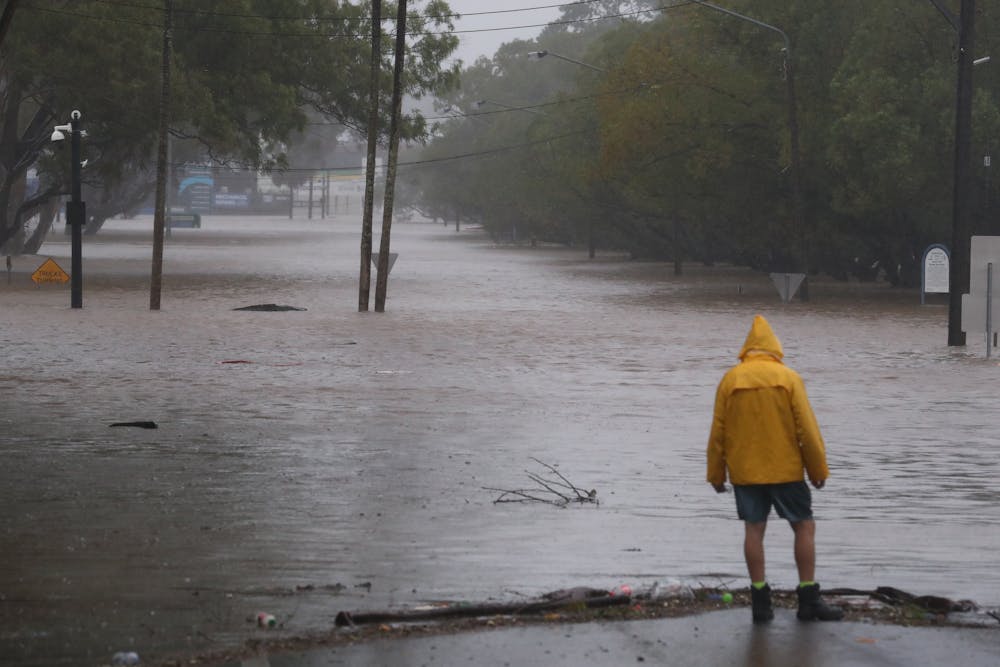
Adding to this is damage feral animals, invasive weeds, and unmanaged fire inflict on biodiversity, cultural values, and the overall health of ecosystems.
These crises disrupt Indigenous peoples ways of life. They degrade or destroy our cultural heritage and natural resources such as plants, grasses, native timber, and clean running water, which provide a basis for our peoples to practice culture.
In this way, Indigenous peoples have much at stake in a changing climate, perhaps more so than others, and in ways that are different to all others.
Read more: Strength from perpetual grief: how Aboriginal people experience the bushfire crisis
Caring for Country
Indigenous peoples have enormous capacity to make Australia more resilient to the climate crisis, as we have an extraordinary database of cultural knowledge reaching back to ancient climate change events.
In Victoria, Gunditjmara people have kept knowledge of Australia’s last volcanic eruption, estimated to have occurred 37,000 years ago. While off the coast of Western Australia, Aboriginal groups maintain knowledge of camps their ancestors occupied off the continental shelf.
Deep History of Sea Country: Investigating the seabed in Western Australia.Our peoples continue to draw on and apply this long history of knowledge to manage land and seascapes today.
Contemporary Caring for Country programs – ranger groups, Indigenous Protected Areas, and co-management arrangements – are now key elements in defending Australia’s biodiversity from further degradartion.
This includes developing extensive management plans to protect native species, managing invasive weeds and feral animals, and exploring economic development opportunities such as renewable energy investment.
Aboriginal ranger groups have also had a demonstrable impact in reducing bushfires and protecting biodiversity throughout northern and central Australia using cultural burning. Indeed, Indigenous fire management here is one of Australia’s most effective emissions reduction practices.
And during the 2019-2020 bushfires in western Victoria, Gunditjmara people and local fire authorities worked together to respond to a large bushfire, safeguarding both Gunditjmara and non-Indigenous values.
 People participate in a workshop on Aboriginal fire-stick farming in Bungendore, Australia, 2020.
Kyodo via AP Images
People participate in a workshop on Aboriginal fire-stick farming in Bungendore, Australia, 2020.
Kyodo via AP Images
Where to now?
The significant increase in funding for Caring for Country programs in the pre-election budget was welcomed by all sides of politics. Now, with a new Labor government, we must ensure this immense and generational opportunity is not squandered.
Caring for Country programs are complex operations. What works for one community, at one point in time, may not work in others. Yet the programs I’ve observed generally share three common pillars:
Environmental management: restoring ecosystems for greater biodiversity and to mitigate against threats
Community development: ensuring we have the infrastructure, skills, capabilities, and funding to implement projects
Indigenous governance: supporting and resourcing groups to come together, discuss important matters, and make and enact decisions
Expanding Caring for Country programs requires the knowledge and skills of these three interrelated pillars. This has traditionally been the strong point of a properly resourced federal environment department, one with collegial relationships with front-line Indigenous land managers.
This work also requires a “two-toolbox” approach: harnessing Indigenous and western science, and working together respectfully and collaboratively. These skills should be front of mind for a federal public service seeking to support Caring for Country.
 Rangers on sea patrol in north-east Arnhem Land (2015)
AAP Image/Dr Marcus Barber and Ishmael Marika
Rangers on sea patrol in north-east Arnhem Land (2015)
AAP Image/Dr Marcus Barber and Ishmael Marika
Time to think big
As people uniquely impacted by – and with demonstrable knowledge and practices to mitigate against – climate change, Indigenous peoples must be at the table in all climate change talks.
We cannot allow climate change mitigation and adaptation to become another colonial process of dispossession and disempowerment.
Everyone stands to lose when Indigenous people are locked out of climate change discussions including, for instance, in recent reports from the Intergovernmental Panel on Climate Change.
Excluding our voices will inevitably mean opportunities will pass us by, or negatively impact us, even when we’re expected to contribute our knowledge and skills to support larger climate mitigation and adaptation efforts.
 The Albanese government has promised greater action on climate change. They must expand Indigenous management programs to make this a reality.
AP Photo/Rick Rycroft
The Albanese government has promised greater action on climate change. They must expand Indigenous management programs to make this a reality.
AP Photo/Rick Rycroft
Here are three practical ways the new parliament can address climate change and promote Indigenous self-determination and development simulatenously:
Formally recognising Caring for Country as a key pillar in Australia’s response to the climate crisis through policies and legislation
Committing all Australian national parks and protected areas to have some form of joint management with Traditional Owners within ten years
Drawing these and other opportunities together in a National Indigenous Climate Mitigation and Adaptation Strategy.
These changes will take time. But supporting them will lay a foundation of stone and establish a generation of unbridled opportunity.
The door is open for an ambitious parliament to consider climate change and justice as tandem pursuits. Doing so opens opportunities to address climate change, heal Country and, perhaps most importantly, heal the relationships between Indigenous and non-Indigenous peoples.
Authors: Bhiamie Williamson, Research Associate & PhD Candidate, Australian National University


 Daily Bulletin


