Business Blockbuster - Helpng business to be more visible on Google

Daily Bulletin

Could I have had COVID and not realised it?

  • Written by: Ashwin Swaminathan, Senior Lecturer, Australian National University

Could I have had COVID and not realised it?

It seems not a day goes by without learning someone in our inner circle of family, friends and colleagues has COVID. When we ask how unwell our acquaintance is, the responses vary from “they’re really crook” to “you wouldn’t even know they had it”.

This is in line with studies that report moderate to severe illness in a minority of people (usually older with other risk factors) and that up to one in three positive people exhibit no symptoms.

Given the ubiquitous presence of this highly infectious coronavirus in our community and the high rate of asymptomatic illness, those who have not been diagnosed with COVID might wonder, “how would I know if I had been infected?” And, “does it matter if I have?”.

Read more: Has Australia really had 60,000 undiagnosed COVID-19 cases?

How COVID is diagnosed

Most people know they’ve had COVID because they had a fever or upper respiratory tract symptoms and/or were exposed to an infected person AND had a swab test (PCR or rapid antigen) that detected the COVID virus (SARS-CoV-2) in the upper airway.

At the beginning of 2022, many people with consistent symptoms or high-risk exposures were not able to access PCRs or RATs to confirm their diagnosis, but instead presumed themselves positive and quarantined.

It is possible to diagnose past infection in those who never tested positive. A blood test can look for SARS-CoV-2 antibodies (also known as immunoglobulins). When we are infected with SARS-CoV-2, our immune system launches a precision counter strike by producing antibodies against viral targets, specifically the Spike (S) and Nucleocapsid (N) proteins. COVID vaccination induces a similar immune response against the S protein only. The S antibody “neutralises” the invader by preventing the virus from attaching to human cells.

These antibodies can be detected within one to three weeks after infection and persist for at least six months – potentially much longer. A blood test that shows antibodies to S and N proteins indicates someone has been previously infected. Detection of antibodies to the S protein only indicates vaccination (but not infection).

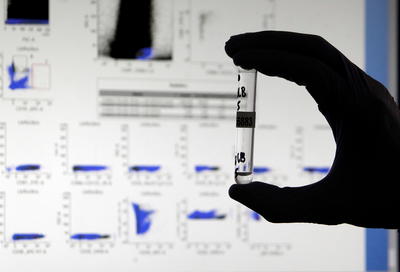
hand holds testtube with graphs in background
Tests can detect antibodies against COVID in patients who have had the virus. EPA/Pep Morell

Read more: How accurate is your RAT? 3 scenarios show it's about more than looking for lines

The problem with antibody tests

Before you rush off to get a COVID antibody test, there are a few notes of caution. There is still much to learn about the characteristics of the immune response to COVID infection. Not everyone mounts a detectable antibody response following infection and levels can decline to undetectable levels after several months in some people.

Because there are other circulating seasonal coronaviruses (such as those that cause the common cold), tests may also pick up antibodies to non-SARS-CoV-2 strains, leading to “false positive” results.

Commercial and public hospital pathology labs can perform SARS-CoV-2 antibody testing, but the interpretation of results should be undertaken carefully.

So, antibody testing should really only be done when there’s a good reason to: say, when confirming past infection or effectiveness of vaccination is important for the current care of an individual. Diagnosing a post-infectious complication or eligibility for a specific treatment, for example. It could also be useful for contact tracing or for assessing the background population rate of infection.

Antibody testing a population “Seroprevalence studies” test for the presence of SARS-CoV-2 antibodies in repositories of stored blood that are representative of the general population, such as from a blood bank. This data helps to understand the true extent of COVID infection and vaccination status in the community (and informs our assessment of population susceptibility to future infection and reinfection). It’s more useful than daily reported case numbers, which are skewed towards symptomatic individuals and those with access to swab testing. New research from the World Health Organization, which is yet to be reviewed by other scientists, reported the results of a meta-analysis of over 800 seroprevalence studies performed around the world since 2020. They estimated that by July 2021, 45.2% of the global population had SARS-CoV-2 antibodies due to past infection or vaccination, eight times the estimate (5.5%) from a year earlier. There are plans to conduct fresh seroprevalence studies in Australia in the coming year, which will update local data and help us understand to what extent the Omicron wave has washed through the population. Does it matter if I have had COVID and didn’t know? For most people, knowing your COVID infection status is unlikely to be more than a topic of dinnertime conversation. While some studies have pointed to a less robust and durable antibody response following mild or asymptomatic infection compared with severe illness, it is not known how this influences protection from reinfection. Certainly, the knowledge we have antibodies from past infection should not deter us from being fully up-to-date with COVID vaccination, which remains the best protection against severe illness. There are reports of people with mild or asymptomatic COVID infection developing long COVID – persistent or relapsing symptoms that last several months after initial infection. Symptoms can include shortness of breath, physical and mental fatigue, exercise intolerance, headaches, and muscle and joint pain. However, the likelihood of developing this condition appears higher in those who suffer a heavier initial bout of COVID illness. This might be linked with higher viral load at that time. woman with masks walks across street Being up-to-date with COVID vaccinations is still the best protection against severe illness. AAP Image/Diego Fedele Read more: Here's why you might need a 4th COVID vaccine dose this winter Bottom line As we enter the third year of the COVID pandemic and given that up to one in three infections may be asymptomatic, it is likely many of us have been infected without knowing it. If you are experiencing lingering fatigue, brain fog or other symptoms that could be long COVID, you should talk to your GP. Otherwise, knowing our COVID infection status is unlikely to be of much practical benefit. Antibody testing should be reserved for specific medical or public health indications. Being up-to-date with COVID vaccination is still our best defence against severe illness moving forward. Authors: Ashwin Swaminathan, Senior Lecturer, Australian National University

Read more https://theconversation.com/could-i-have-had-covid-and-not-realised-it-178630

Business News

The Growing Demand for Durable Plastic Packaging Supplies Across Australia

Why Do Australian Businesses Need Reliable Plastic Packaging Supplies? Businesses need packaging that can withstand everyday handling, storage, and distribution without creating avoidable delays. Pla...

Daily Bulletin - avatar Daily Bulletin

Office Cleaning Melbourne: Choosing the Right Scope for Your Office

A well-planned office cleaning Melbourne arrangement starts with a clear understanding of the premises and the people who use it. An office may include private work areas, shared desks, reception, mee...

Daily Bulletin - avatar Daily Bulletin

How Businesses Can Prepare for Unexpected Power Outages

Power failures can occur quickly. The supply may be interrupted by bad weather, issues with the electricity network, damaged equipment or local construction work. This can be just a hassle for a fam...

Daily Bulletin - avatar Daily Bulletin

How Chatswood Tutoring Can Fit Into a Student’s Weekly Routine

Create a Predictable Weekly Structure A consistent weekly routine can make study easier to manage when students are balancing several subjects. Chatswood tutoring can provide a fixed learning point a...

Daily Bulletin - avatar Daily Bulletin

The Rise of Digital Marketplaces in the Australian Trade Sector

For decades, the Australian trade and construction sector operated almost entirely on word-of-mouth recommendations and local community networks. Small business owners typically relied on local newspa...

Daily Bulletin - avatar Daily Bulletin

How Immigration Lawyers Can Help

Introduction Visa decisions can shape employment, family life, study plans, travel, and future residence. A small omission can lead to delay, added expense, or refusal. Immigration lawyers assess l...

Daily Bulletin - avatar Daily Bulletin

How Industrial Drying Equipment Supports Efficient Processing

Many industrial processes require moisture to be removed from compressed air, products or process materials before they move to the next stage. Excess moisture can affect equipment performance, produc...

Daily Bulletin - avatar Daily Bulletin

Practical Ways a Whiteboard Can Improve Workplace Communication

Effective communication helps teams stay organised, share ideas and keep track of important information. While digital tools are now common in many workplaces, a whiteboard continues to provide a simp...

Daily Bulletin - avatar Daily Bulletin

Designing Eco-Friendly Custom Water Bottles for Your Next Event

The Evolution of Sustainable Event Merchandise Event planning has undergone a massive transformation over the last decade. Gone are the days when organizers could hand out cheap, single use plastic...

Daily Bulletin - avatar Daily Bulletin

The Daily Magazine

Plumbing Call-Out Fees in Perth Explained

When you hire a plumber to fix a problem with a dripping tap, leaking pipe, or whatever it might be...

Workshop Tool Maintenance: A Practical Guide to Drills, Sanders and Table Saws

A drill that strips every screw head. A sander that leaves swirl marks however long you work the pan...

How Architecture and Engineering Firms Can Improve Project Profitability

Project profitability remains one of the most persistent challenges for architecture and engineering...

The Blossoming World of Fresh Flower Delivery: An In-Depth Exploration

In recent years, the demand for fresh flower delivery in Sydney has soared, driven in part by the ...

How Penrith SMEs Can Keep Stock and Equipment Working for the Business

For Penrith SMEs in 2026, efficient inventory starts with reliable stock data: what is on hand, wher...

Cybersecurity Services and Solutions for Complete Digital Protection

Businesses leverage Cybersecurity solutions for protection against digital threats of the modern era...

What Australian Entrepreneurs Should Know About Streamlining Their Financial Processes

Running a small business in Australia demands much more than just delivering a great product or serv...

Supporting Joint Health in Young and Growing Horses

Anyone who has raised a foal through to a rising three-year-old knows how deceptively fast the gro...

Why Is My Switchboard Buzzing? What a Humming Breaker Is Telling You

Most people never hear their switchboard. It sits quietly in a cupboard, a hallway or a meter box ou...