

Why Australia’s tough national security laws cannot stop foreign interference in our elections
- Written by: Sarah Kendall, PhD Candidate in Law, The University of Queensland
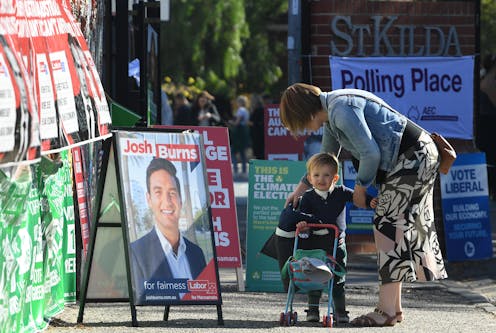
ASIO chief Mike Burgess recently revealed the security agency had detected and disrupted a foreign interference plot in the lead-up to an Australian election. He warned Australia was seeing foreign interference attempts “at all levels of government, in all states and territories”.
These types of threats have long been anticipated. In fact, in 2018, the federal government took the unprecedented step of passing nine new laws to counter foreign interference in politics. These serious national security crimes carry penalties ranging from ten to 20 years in jail. Similar crimes are not found in many other countries.
But are tough national security laws what we need? Will these do enough – or anything at all – to deter the threat of electoral interference in Australia?
What is foreign electoral interference?
First, it helps to define exactly what electoral interference is.
[ASIO] defines this as a covert or threatening action on behalf of a foreign power which aims to affect political processes or is detrimental to Australia’s interests.
So, when foreign individuals or powers covertly seek to influence our politics and this has a detrimental impact on our interests (or benefits the interests of the foreign power), this is foreign interference.
This kind of conduct could take many forms. For example, it could mean a person who has connections with a foreign government (let’s say China) identifies Australian candidates who might support the interests of China or be vulnerable to inducements.
This person then seeks to advance the candidates’ political prospects without disclosing his or her links to the Chinese government.
This could occur through generous monetary support, placing favourable stories in foreign language media platforms, or providing other forms of assistance (such as hiring political consultants and advertising agencies).
The aim of political interference is to get candidates into positions of power and generate a sense of obligation and indebtedness that could subsequently be exploited by the foreign government.
Going back to our example, this could mean a person with links to the Chinese government encouraging candidates to hire certain people as political staffers, vote in a certain way, or pass on information about a party’s position on defence policy, human rights or foreign investment.
This kind of conduct can seriously damage our sovereignty and undermine our democracy. Burgess warns the threat is emanating from various countries – it should be noted, he didn’t specify China – and both sides of politics are being targeted.
Crimes of foreign interference
Australia’s new laws make it a crime to engage in covert, deceptive or threatening conduct on behalf of a foreign government or entity with the intention of:
influencing an Australian political or democratic process
supporting a foreign intelligence agency
prejudicing Australia’s national security.
These offences capture all kinds of foreign interference in our electoral process (as well as any preparations for this kind of conduct). This gives law enforcement and intelligence agencies the power to intervene before any interference actually occurs, and to prosecute those people responsible.
While these crimes are similar to laws passed in the US and UK following the September 11 terrorist attacks, they are more far-reaching. And because Australia does not have a federal bill of rights, the laws have limited checks and balances.
Read more: Government needs to slow down on changes to spying and foreign interference laws
Prosecuting (and deterring) perpetrators
But how easy would it be to actually prosecute offenders?
The foreign interference crimes apply to conduct that occurs in Australia. So, if the perpetrator was in Australia at the time they engaged in interference, then prosecuting them would be relatively straightforward, provided there was sufficient evidence.
This occurred with former Liberal candidate Duong Di Sanh, who was the first person charged with a foreign interference offence in Australia. He is still awaiting trial and the nature of his alleged interference has not been disclosed.
But a person does not have to be physically in Australia to hire a political consultant for a potential candidate, for example. If an offender is outside Australia at the time of the interference, they could still be charged with a crime. However, prosecuting them would be challenging.
The person would first have to be extradited back to Australia. Some countries do not have an extradition treaty with Australia (or it is not yet in force), such as China. And even if the country is an ally, extradition may be difficult. The attempted extradition of Julian Assange from the UK to the US for espionage crimes is one example of this.
Another problem is the anonymity of the internet and covert nature of foreign interference, which mean it might not even be possible to identify who was responsible for the interference – and therefore who to prosecute.
So, how can we counter the threat?
These examples show why our criminal laws are inadequate to counter the threat of foreign interference.
Not everyone who engages in interference will be prosecuted and punished. And the failure to punish offenders might undermine the deterrence effect of the laws, as others may continue to attempt interference without fear of being caught.
So, what can we do to protect ourselves and our nation?
Reforming the laws will not be very helpful because the problems of extradition and identification of perpetrators will arise no matter how the offences are worded. These problems will also arise even if our allies (and other countries) enact similar foreign interference crimes.
According to Burgess, awareness is the most effective defence against foreign interference. Interference attempts are much less likely to succeed if we understand the tactics being used to undermine our sovereignty and democracy.
We must all be aware of what foreign interference looks like. But politicians have a special role to play – they must be aware who they are dealing with, and why.
They must understand the risks of foreign interference, ask the right questions of supporters (including querying what their motives are), be transparent about what type of support they have received, and stay alert to favours being asked of them that conflict with Australia’s interests.
Because of how wide-reaching the threat of foreign interference is, security can no longer be the sole responsibility of agencies like ASIO. It is something we are now all responsible for.
Authors: Sarah Kendall, PhD Candidate in Law, The University of Queensland


 Daily Bulletin


