

Read The Times Australia

Daily Bulletin

If all 2030 climate targets are met, the planet will heat by 2.7℃ this century. That's not OK

  • Written by: Andrew King, ARC DECRA fellow, The University of Melbourne
If all 2030 climate targets are met, the planet will heat by 2.7℃ this century. That's not OK

If nations make good on their latest promises to reduce emissions by 2030, the planet will warm by at least 2.7℃ this century, a report by the United Nations Environment Programme (UNEP) has found. This overshoots the crucial internationally agreed temperature rise of 1.5℃.

Released today, just days before the international climate change summit in Glasgow begins, UNEP’s Emissions Gap Report works out the difference between where greenhouse emissions are projected to be in 2030 and where they should be to avoid the worst climate change impacts.

It comes as the Morrison government yesterday officially committed to a target of net-zero emissions by 2050. The government made no changes to its paltry 2030 target to reduce emissions by between 26% and 28% below 2005 levels, but announced that Australia is set to beat this, and reduce emissions by up to 35%.

The UNEP report was conducted before Australia’s new 2050 target was announced, but even with this new pledge, global pledges will undoubtedly still be short of what’s needed.

The report found global targets for net-zero emissions by mid-century could cut another 0.5℃ off global warming. While this is a big improvement, it will still see temperatures rise to 2.2℃ this century. If we don’t close the global emissions gap, what will Australia, and the rest of world, be forced to endure?

Pledges are falling short

As of August 30 (the date the UNEP report reviewed to), 120 countries had made new or updated pledges and announcements to cut emissions.

The US, for example, has set an ambitious new target of reducing emissions by 50-52% below 2005 levels in 2030. Similarly, the European Union will cut carbon emissions by at least 55% by 2030, compared with 1990 levels.

But the UNEP report shows all these pledges are falling short. It finds we must take an extra 28 million tonnes of carbon dioxide equivalent off annual emissions by 2030, over what’s already promised.

Read more: Morrison's climate plan has 35% 2030 emissions reduction 'projection' but modelling underpinning 2050 target yet to be released

The UNEP also found that while effectively delivering on net-zero targets by mid-century could mitigate the predicted temperature rise, current plans are vague, with many delaying action until after 2030, which is too late. These net-zero targets, including Australia’s, are also based on technologies that don’t exist on a large-scale yet, such as carbon capture and storage.

UNEP’s findings echo a briefing note by Australian climate scientists on Monday, who say even if global emissions reach net-zero by mid-century, there’s still a high chance temperatures will exceed 2℃ this century if we neglect to increase short-term action.

When the UNEP report was conducted, 49 countries plus the EU had pledged a net-zero target, which accounts for a third of the global population and half of global emissions. Eleven of these targets are enshrined in law, which accounts for 12% of global emissions.

Emissions Gap Report 2021/The Conversation, CC BY-ND Did COVID-19 make a difference? While carbon emissions fell by 5-6% in 2020, this was due to widespread lockdowns and other restrictions worldwide, rather than long-lived changes in how society functions. The report notes that as restrictions ease, emissions are expected to sharply rise again this year to a level only slightly lower than in 2019. To avoid the worst climate change effects, a sustainable year-on-year reduction in carbon emissions is required. What does this mean for Australia? To date, the world has warmed by about 1.2℃ since pre-industrial levels, and we’re already experiencing significant climate change impacts and worsening extreme weather events. The western North America heatwave in late June this year saw temperature records and heat-related deaths spike. This event would have been virtually impossible without human-caused greenhouse gas emissions warming the planet. Similarly, the extreme rainfall that led to recent floods in central Europe which tore through towns in July were very likely enhanced by global warming.
Large parts of western Germany and central Europe were hit by flash floods in the night of 14 to 15 July, following days of continuous rain that destroyed buildings and swept away cars. EPA/SASCHA STEINBACH

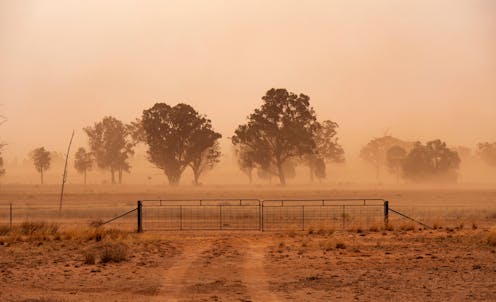
In Australia, we’ve seen our own share of extreme events in recent years that were intensified by climate change, including record hot summers and the devastating bushfires of 2019 and 2020.

Meeting the Paris Agreement and keeping global warming below 2℃ or even 1.5℃ would still lead to continued sea level rise and worsening heatwaves on land and in our oceans.

If we fail to meet the Paris Agreement and warm the world by closer to 3℃ by 2100, then the impacts of climate change worsen considerably.

Read more: Seriously ugly: here's how Australia will look if the world heats by 3°C this century

Warm water coral reefs, including the Great Barrier Reef, are already stressed by frequent bleaching events and might be on the brink already. Most coral reefs would likely not survive sustained 1.5℃ warming, much less likely 2℃ global warming, let alone 3℃ of warming. However, limiting warming to 1.5℃ rather 2℃ makes a huge difference for many other ecosystems.

Historically hot summers, such as the Angry Summer of 2012 and 2013 and the Black Summer of 2019 and 2020, would be cooler than most Australian summers in a 2-3℃ warmer world. Parts of Sydney and Melbourne would likely see 50℃ temperatures during heatwaves.
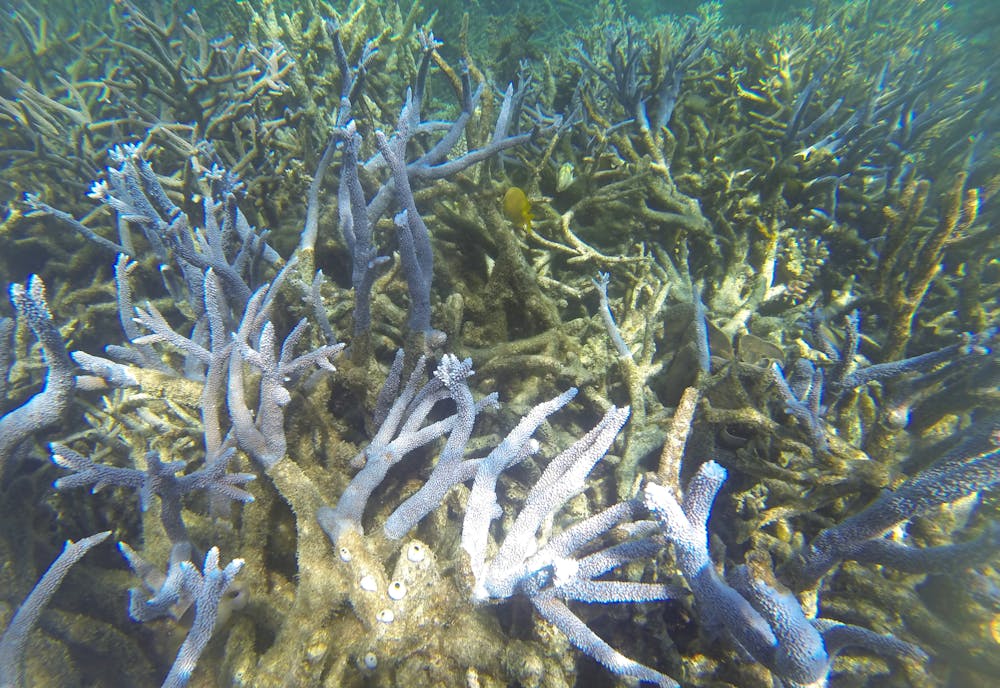
Corals will not likely survive more than 2℃ global warming. Shutterstock

And at 2-3℃ global warming, most of the continent would experience more short bursts of extreme rainfall that causes flash flooding, Meanwhile, droughts are projected to worsen, especially in the southwest and southeast of the continent.

While Australia would experience major climate change impacts if the world fails to meet the Paris Agreement, the outlook is much worse and more devastating for less wealthy nations. Intensified heatwaves, more extreme rain events and droughts would make life harder for many, as developing nations don’t have the resources to adapt.

A big task for COP26

It is imperative we avoid the impacts of climate change that come with a 2 to 3℃ average temperature rise.

To have any chance at meeting the goals of the Paris Agreement, all countries will need to significantly increase their ambition and pledge much greater reductions in carbon emissions in Glasgow.

Wealthy, high-emitting countries should lead the way with stronger pledges, and agree on terms to finance climate mitigation and adaptation in developing countries.

Time is fast running out to avert more dangerous climate changes, and the world cannot afford a missed opportunity at COP26.

Read more: A successful COP26 is essential for Earth's future. Here's what needs to go right

Authors: Andrew King, ARC DECRA fellow, The University of Melbourne

Read more https://theconversation.com/if-all-2030-climate-targets-are-met-the-planet-will-heat-by-2-7-this-century-thats-not-ok-170458

Business News

How Immigration Lawyers Can Help

Introduction Visa decisions can shape employment, family life, study plans, travel, and future residence. A small omission can lead to delay, added expense, or refusal. Immigration lawyers assess l...

Daily Bulletin - avatar Daily Bulletin

How Industrial Drying Equipment Supports Efficient Processing

Many industrial processes require moisture to be removed from compressed air, products or process materials before they move to the next stage. Excess moisture can affect equipment performance, produc...

Daily Bulletin - avatar Daily Bulletin

Practical Ways a Whiteboard Can Improve Workplace Communication

Effective communication helps teams stay organised, share ideas and keep track of important information. While digital tools are now common in many workplaces, a whiteboard continues to provide a simp...

Daily Bulletin - avatar Daily Bulletin

Designing Eco-Friendly Custom Water Bottles for Your Next Event

The Evolution of Sustainable Event Merchandise Event planning has undergone a massive transformation over the last decade. Gone are the days when organizers could hand out cheap, single use plastic...

Daily Bulletin - avatar Daily Bulletin

Why Choosing a Professional Florist Melbourne Makes Flower Delivery Impactful

Flowers have a great power to speak when humans cannot express their feelings with right words. Flowers are the best gifts when you are celebrating a birthday or welcoming a newborn child into your fa...

Daily Bulletin - avatar Daily Bulletin

The Business Case for Choosing Australian Fabricators Over Imported Alternatives

For a long time, you might have defaulted to overseas suppliers when sourcing fabricated metal components for a project. The unit price was lower on paper, and the maths seemed straightforward. That...

Daily Bulletin - avatar Daily Bulletin

Australian organisations are relying on business continuity plans built for a far more predictable world

Tariff escalations, supply chain fragility, geopolitical events, and the ongoing threat of cyber disruption have reshaped the risk environment facing Australian organisations. The problem is that ma...

Daily Bulletin - avatar Daily Bulletin

How to Rent a Car for Uber in Melbourne: What Every New Driver Needs to Know

Starting out as an Uber driver in Melbourne is not as complicated as it sounds but getting the vehicle right is where most new drivers get stuck. Uber has strict requirements around vehicle age, condi...

Daily Bulletin - avatar Daily Bulletin

When Should You Speak to a Lawyer About a Legal Issue?

Legal issues can begin with a simple question, then become harder to manage once formal steps are involved. Many people wait until a matter feels urgent before seeking guidance, even though earlier ...

Daily Bulletin - avatar Daily Bulletin

The Daily Magazine

Choosing an ELISA Format That Matches Your Target

A colorimetric ELISA ends with a plate that has developed color, and the instinct is to read more ...

Why Accurate Measurements Matter When Ordering Flatpack Cabinets

Ordering flatpack cabinets can make a renovation or storage project more manageable, but the proce...

How Long Does Interstate Freight Take in Australia?

If you have ever arranged for stock, equipment or materials to travel from one Australian state to a...

How AEC Firms Can Scale Faster Without Sacrificing Project Quality

Growth presents a fundamental dilemma for architecture, engineering, and construction firms: expan...

What Makes an Aesthetic Clinic Worth Going Back To?

Trying an aesthetic clinic for the first time can feel like a bit of a gamble. You can read review...

Elevate Your Morning Routine with Cafe-Style Coffee at Home with the Right Coffee Machine

There's something magical about that first sip of coffee in the morning. It’s more than just a bev...

Top Garment Steamers for Busy Professionals in Australia

The gap between garment steamers built for a quick touch-up and ones built to keep pace with a wor...

Correct Sleeping Posture to Minimize Back Strain

Most people don’t pay much attention to how they sleep until they start waking up with a stiff bac...

Why Product Longevity Matters for Sustainable Australian Buildings

Sustainability in building design is often associated with recycled materials, renewable resources a...