

Cash or freedoms: what will work in the race to get Australia vaccinated against COVID-19?
- Written by: Anthony Scott, Professor, The University of Melbourne
The race to vaccinate Australians is heating up as the supply of vaccines starts to increase and lockdowns continue.
Labor this week suggested a A$300 cash payment for people fully vaccinated by December. Meanwhile, “Operation COVID Shield”, the newly published national COVID vaccine campaign plan, includes support for “freedom incentives” put forward by the Coalition.
Let’s take a look at how effective the evidence suggests these measures might be in getting more Australians vaccinated.
Read more: Paying Australians $300 to get vaccinated would be value for money
Vaccine hesitancy
Vaccination is a key weapon in our armoury as we navigate the pandemic. We know it’s very effective in protecting people from illness and death, and also reduces transmission of COVID-19.
At this stage, only 19.8% of Australians over 16 have been fully vaccinated.
Although insufficient supply has been the main reason for the slow rollout to date, vaccine hesitancy is an increasingly important issue as we strive for herd immunity.
The latest data from our Taking the Pulse of the Nation Survey shows vaccine hesitancy in Australia has fallen to 21.5% since the recent outbreaks, from a high of 33% in late May.
Among that 21.5%, 11.8% of Australians remain unwilling to be vaccinated, while 9.7% are unsure.
So can financial or non-financial incentives bring these figures down and in turn speed up Australia’s vaccination rollout?
Read more: Just the facts, or more detail? To battle vaccine hesitancy, the messaging has to be just right
Splashing the cash
The government has proclaimed cash incentives will have minimal impact on vaccination rates — although the review of the evidence they conducted hasn’t been published.
There is in fact evidence from a range of settings showing cash payments do have one-off effects in terms of persuading people to visit a health professional.
Our survey research has shown 54% of those willing to be vaccinated, but waiting, said they would get vaccinated as soon as possible if offered cash.
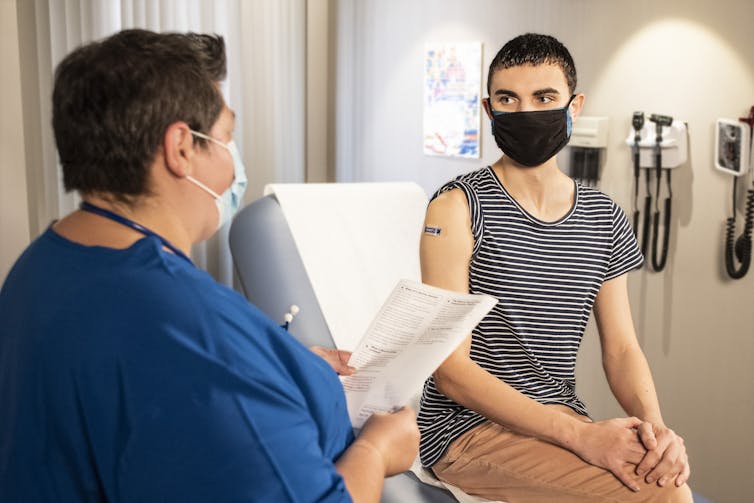 Cash incentives are likely to encourage people who are willing to get vaccinated, but haven’t done so yet.
CDC/Unsplash
Cash incentives are likely to encourage people who are willing to get vaccinated, but haven’t done so yet.
CDC/Unsplash
Further analysis shows those willing and eligible to be vaccinated (people over 50 at the time these data were collected) were more likely to respond to cash payments if they were male, and if the amount was at least A$100. Overall, half said they would get vaccinated sooner if offered A$100 or more. So Labor’s plan of A$300 would be effective for this group.
However, for people who are unwilling or unsure about vaccination, cash payments may make only a small difference. Just 10% of this group said they would respond to cash.
This is because there are many reasons people may be unsure or don’t want to get vaccinated. These include a lack of access to unbiased advice and information, strong beliefs about vaccination including around vaccine safety, and medical conditions. To increase vaccination in this group, we need to consider different approaches.
Vaccination as a ticket to freedom
We’re likely to see non-financial incentives offered to fully vaccinated Australians as time goes on. These might be in the form of exemptions from health restrictions, or more lenient rules, around, for example, travel and social activities.
We know holding our vaccination records in our smartphones might provide us with more freedom, earlier. The United Kingdom now allows fully vaccinated travellers from the United States and the European Union to enter without quarantine, accepting the risk that even people who are vaccinated can still carry and spread the virus.
Our survey found roughly 70% of Australians think fully vaccinated people should be allowed to participate, without restriction, in sporting events, concerts, interstate travel, religious events, going to restaurants and movies, and the like. Around half believe those who remain unvaccinated once vaccination is available to everyone should be banned from these activities.
Slightly fewer think international travel should be unrestricted even when fully vaccinated.
Of people unwilling or unsure about vaccination, 18-28% stated they would get vaccinated if they were banned from these activities. This suggests that, compared to cash payments, non-financial incentives might be more likely to work for those who are unwilling or unsure about vaccination.
Where to next?
Both Labor’s and the Coalition’s incentive policies would have some impact on vaccination rates, but the devil is in the detail.
Cash payments are likely to be effective for those who are already willing to be vaccinated, but have not yet done so. This would speed up the rate of vaccination.
Cash is less likely to influence those who are unwilling or are unsure, though it could still work for some of these people.
Allowing fully vaccinated people more freedoms will likely increase the vaccination rates among those yet to get the jab, including those who are unsure or unwilling.
Reaching this group is the holy grail, giving us a better shot of attaining the elusive, but crucial, herd immunity. Incentives matter.
Read more: Media reports about vaccine hesitancy could contribute to the problem
Authors: Anthony Scott, Professor, The University of Melbourne


 Daily Bulletin


