

Secret history: the release of the Mountbatten archives and the fight to access royal diaries
- Written by: Jenny Hocking, Emeritus Professor, Monash University
An immense trove of the most important royal historical material for decades has quietly been released in the United Kingdom. These are the diaries of Lord Louis Mountbatten and his wife Lady Edwina, from the 1920s until 1968.
As the last great-grandchild and godchild of Queen Victoria, uncle of Prince Philip and adored great-uncle of Prince Charles, Mountbatten exercised a “Rasputin-like influence” in the court of Queen Elizabeth.
Read more: The queen's gambit — new evidence shows how Her Majesty wields influence on legislation
He had a long, typically aristocratic, naval officer career from head of combined operations during the second world war to admiral of the fleet. He was also the last viceroy of India, presiding over transition and partition. All this gave Mountbatten an unmatched insight into the royal family and its intersections with the highest levels of wartime and post-imperial governance.
But the release of this material doesn’t just shed light on the royal family. It again highlights the significant barriers to accessing our history; specifically, the claimed “convention of royal secrecy” that imposes strict secrecy over royal communications across the Commonwealth nations.
A four-year battle
The release of the Mountbatten diaries is entirely due to the work of historian and Mountbatten biographer Andrew Lownie, who fought for four years to get public access to the previously secret diaries.
They are held in the Broadlands Archives, purchased by Southampton University from the Mountbatten family in 2010 for £2.8 million ($A5.3 million) using public funds. At the time, the university said it would “preserve the collection in its entirety for future generations to use and enjoy” and “ensure public access”.
The university’s catalogue gives their legal status as “public records”, and states they were “open on transfer”. Yet the papers were closed after an officious university historian warned the government the papers contained “many references to the royal family”.
Lownie’s initial request for access under the UK’s freedom of information regime was rejected by the university, citing a cabinet directive preventing the release of the diaries and letters. A successful appeal followed, which the university ignored until threatened with a contempt action.
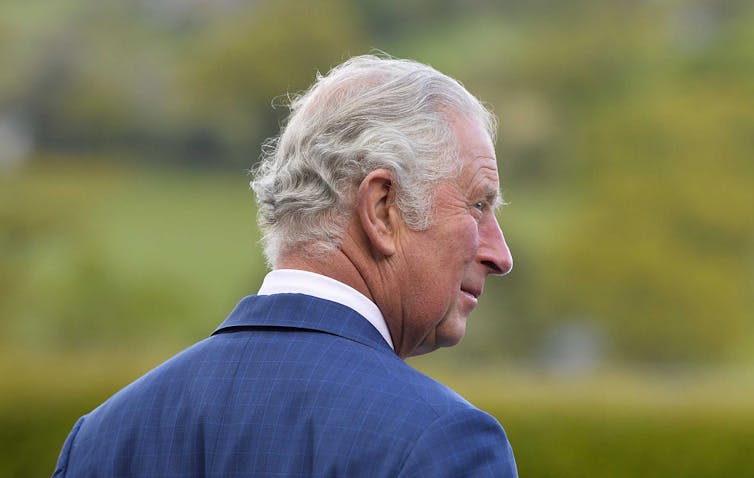 Prince Charles was especially close to his uncle Lord Mountbatten.
Mark Marlow/EPA/AAP
Prince Charles was especially close to his uncle Lord Mountbatten.
Mark Marlow/EPA/AAP
Finally, late last month, 22 MPs signed a motion tabled in the House of Commons calling for “their publication without further obfuscation and delay”. The university finally released many — though not all — of the diaries.
Lownie, meanwhile, has spent £250,000 (A$472,000) of his own money in pursuit of public access to the Mountbatten archives, which were always purportedly a public resource.
A fascinating window
Former US ambassador to India John Kenneth Galbraith has previously described Mountbatten’s unabashed use of royal privilege for personal advancement:
no one was ever better served by the accident of birth or put royal connection to greater use.
So the Mountbatten archive will provide a fascinating window into a rare familial link to the final years of a fading, disintegrating, European royalty and its intersection with key episodes in British political history.
Many of Mountbatten’s (at times conflicting) roles attracted significant controversy, on which the diaries and letters in particular will shed great light. This includes the fiasco of the raid on the French coast at Dieppe in 1942. As Galbraith also noted, this was
widely believed the single most ill-advised, costly and generally disastrous operation of the war.
There is also the contentious, brutal, partition of India. And his unconventional “open marriage”, including Edwina’s close relationship with the first post-independence Prime Minister of India, Jawaharlal Nehru. All of these will be re-evaluated in light of this remarkable shared archive.
Yet, several files Lownie is particularly interested in are missing from the public release.
These include the 1947 and 1948 diaries covering the Mountbattens’ involvement in pre-Independence India, transition and partition, among “scores of files” not yet released. These crucial historical documents covering a contentious time in British imperial history remain locked away and the fight for public access to them continues.
‘Eeerily similar’ to the palace letters
Lownie’s case has been described as “eerily similar” to the long-running palace letters case I took against the National Archives of Australia, in its denial of access to archival documents relating to the royal family, “the effect being that public knowledge of key constitutional and political events is limited”.
Read more: The big reveal: Jenny Hocking on what the 'palace letters' may tell us, finally, about The Dismissal
The denial of access to royal documents shields royal activities from the consideration of history, simply because of their absence from the public record, profoundly distorting the history itself.
Our own history gives us a clear example of this. The queen did not want the palace letters — her correspondence with governor-general Sir John Kerr about the dismissal of the Whitlam government — to be made public. And the National Archives of Australia and federal government unsuccessfully fought against public access to the letters all the way to the High Court. With their release, the history of the dismissal of the Whitlam government has changed dramatically.
As Australian National University historian Frank Bongiorno recently concluded:
the claim the palace had no involvement in the dismissal is now unsustainable. The palace was indeed a player.
Backlog at the archives
Unfortunately, the routine removal of royal material from the public archival record under the claimed “convention of royal secrecy” is just one means of denying access to key historical records.
The failure to deal with everyday requests for access to documents is, for the individual researcher and for history, more prevalent and no less severe.
The National Archives of Australia recently revealed the extent of this denial of access through institutional inaction, in answers to independent senator Rex Patrick in Senate estimates. Although the archives is statutorily required to deal with requests for access within 90 days, it has a backlog of over 20,000 requests that are at least one year overdue. More than half of those were submitted five to ten years ago.
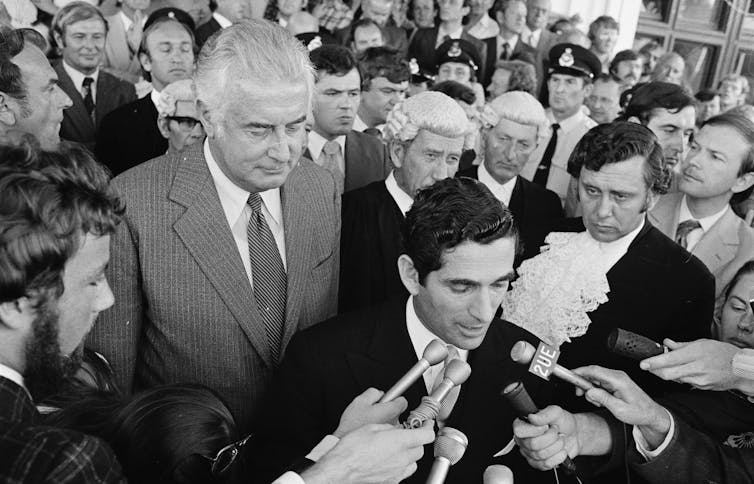 The palace letter have been released but there is still a huge backlog of requests to access documents at the National Archives of Australia.
Supplied/AAP
The palace letter have been released but there is still a huge backlog of requests to access documents at the National Archives of Australia.
Supplied/AAP
Even more shocking is that 256 of these unfulfilled access requests are more than a decade old. Several applications for access which I submitted nine to ten years ago are still drifting somewhere in this archival black hole. I’ve written three books since then, and I’m still waiting for the archival documents intended for them.
My experience is, regrettably, by no means unique. As Patrick notes:
These chronic delays have had a severe impact on historical research and the understanding of our nation’s past […] Numerous research projects have been abandoned because of the failure of the archives to provide timely access.
These figures are an extraordinary indictment of Australia’s national archives’ failure to meet its core statutory function “to make Commonwealth records available for public access”. Little wonder it has ceased publishing figures on the access clearance backlog in its annual report.
Still waiting
Lownie has done us all a great public service in his efforts to bring the Mountbatten archives to public view. However, it should not be up to individual historians to take arduous legal action to ensure public archives — whether in universities or government-funded national archives — adhere to their requirements to make official records publicly available.
Read more: How a British royal's monumental errors made India's partition more painful
This includes royal communications between governors-general and the monarch, as our High Court ruled in the palace letters case in 2020.
The National Archives of Australia has said that, as a result of the High Court’s decision, it would also release the royal correspondence of all governors-general from Richard Casey to Bill Hayden (1965 to 1996), thirty years of exceptionally significant archival records.
More than a year later, we are still waiting for their release.
Authors: Jenny Hocking, Emeritus Professor, Monash University


 Daily Bulletin


