

Should pregnant women have a COVID vaccine? The evidence says it's safe and effective
- Written by: Hannah Dahlen, Professor of Midwifery, Associate Dean Research and HDR, Midwifery Discipline Leader, Western Sydney University
Having a baby brings enough stress and uncertainty without having to deal with a pandemic. Added to that is the difficult decision to have a recently developed vaccine or not.
Last week, pregnant women of all ages were added to Australia’s priority phase 1b of the COVID vaccine rollout. Pregnant women are now eligible for Pfizer.
But some are unclear if they should get vaccinated. Our survey (still ongoing) of 519 women who had a baby 12 months ago asked their intention to be vaccinated. We found 62% said they would, 12% wouldn’t and 26% were unsure, mainly due to fears over safety during pregnancy and breastfeeding.
Increasingly, international evidence supports the safety of COVID vaccines for pregnant women and demonstrates it is effective at preventing severe disease. Here’s what it says so far.
Read more: Generation COVID: pregnancy, birth and postnatal life in the pandemic
What does the new advice say?
The peak medical body for Australian obstetricians and gynaecologists recently updated its advice in a joint statement with the Australian Technical Advisory Group on Immunisation (ATAGI), the government’s vaccine advisory group.
The two groups recommend:
pregnant women are routinely offered Pfizer mRNA vaccine (Cominarty) at any stage of pregnancy […] because the risk of severe outcomes from COVID-19 is significantly higher for pregnant women and their unborn baby.
There are also other benefits. During pregnancy, antibodies that pass through the umbilical cord may offer protection to the baby. We don’t know how long this protection lasts.
The statement also recommends breastfeeding women should get vaccinated. Evidence suggests antibodies pass to the baby through breastmilk and may protect the baby.
Why the change?
The main reason the advice has changed is new data from recently published studies.
A study from the United States of 827 pregnant women who had mRNA vaccines such as Pfizer, mostly in their third trimester, found no safety concerns.
The rates of miscarriage (12.6%), stillbirth (one baby), preterm birth (9.4%) small babies (3.2%) and abnormalities in the baby (2.2%) were similar to what would be expected in an unvaccinated group of women.
This study is still under way and includes nearly 4,000 pregnant women in total, many of whom were yet to give birth when this paper was published.
In July, a paper from Israel looked at 7,530 pregnant women who were vaccinated and 7,530 unvaccinated pregnant women. Rates of COVID were higher among unvaccinated pregnant women (202) than vaccinated pregnant women (118).
Of the pregnant women who were vaccinated, 68 reported possible vaccine-related side effects, such as headache, body aches, pain at the injection site, but none were severe or prolonged or different to non-pregnant people. There was no difference in any other pregnancy outcomes.
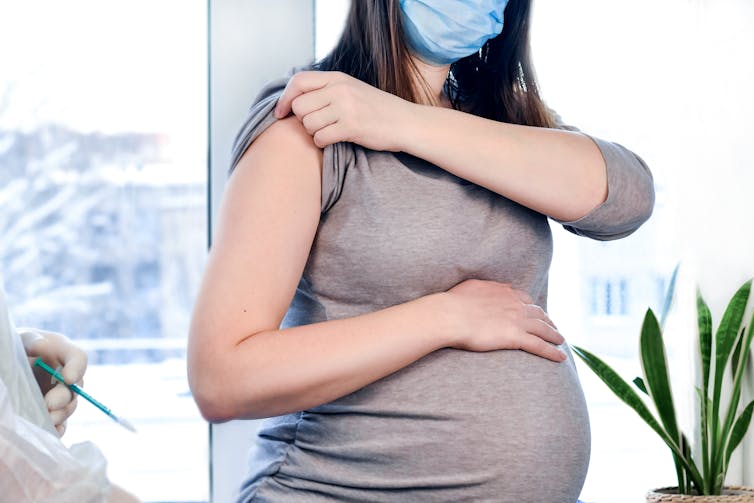 The research so far hasn’t detected any safety concerns.
Shutterstock
The research so far hasn’t detected any safety concerns.
Shutterstock
What about clinical trials?
The studies above looked at what was happening in real world data, rather than testing the vaccine in trials, where people don’t know if they got the vaccine or a placebo (disguised as a vaccine).
Pregnant women are often excluded from vaccine trials. This is because vaccinating pregnant women has the potential to affect both mother and baby, and testing medications on them rightly makes us nervous.
But while animal studies of COVID vaccines show no fertility or pregnancy effects, we need more than mouse models to test safety and efficacy in humans. Calls are therefore growing for pregnant women to be involved in trials.
One such trial of Pfizer involving pregnant women is currently under way but only started in February this year so data won’t be available yet.
Real world data from the UK and US
In the UK, the professional bodies for midwives, obstetricians and gynaecologists have expressed concern about the effect easing restrictions will have on pregnant women.
Around 58% of pregnant women in the UK have declined the vaccine. The main reason for declining is waiting for more evidence to reassure them it’s safe for their baby.
Read more: Pregnant women at increased risk of severe COVID – new study
One in ten pregnant women admitted to hospital with COVID symptoms in the UK go to intensive care. These women are more likely to have a baby born early (preterm), develop high blood pressure, need a caesarean during labour and become very ill, particularly after 28 weeks.
More than 100 pregnant women have been admitted to hospital in the UK in the past couple of weeks with COVID; none had received both doses of the vaccine and five had one dose.
 Unvaccinated pregnant women are more likely to be admitted to hospital than those who have been immunised.
Shutterstock
Unvaccinated pregnant women are more likely to be admitted to hospital than those who have been immunised.
Shutterstock
Meanwhile in the US, more than 130,000 pregnant women have received a COVID vaccine to date, and the data so far is reassuring. Side effects such as getting a sore arm or headache or feeling tired are common but don’t appear to affect the pregnancy.
What else do pregnant women need to know?
The Pfizer vaccine is recommended in Australia for pregnant women and doesn’t contain live coronavirus or additional ingredients harmful to pregnant women.
It’s now one of three vaccines offered in pregnancy, along with the whooping cough (pertussis) and influenza vaccines.
Read more: Vaccines to expect when you're expecting, and why
Pregnant women are higher risk of becoming very unwell with COVID-19 if they:
- have underlying medical issues such as high blood pressure, diabetes, asthma, heart disease, immune problems
- are overweight
- are over 35 years of age
- in their final trimester.
So getting vaccinated before 28 weeks will offer protection for mother and baby in the riskiest time.
If you are pregnant, keep in mind no vaccine is 100% effective, so it’s important to continue social distancing, wearing masks when needed, and keeping up good hand hygiene.
The decision to get vaccinated as a pregnant woman is not an easy one. The decision should be the woman’s and that decision should be informed and free of pressure or misinformation.
Authors: Hannah Dahlen, Professor of Midwifery, Associate Dean Research and HDR, Midwifery Discipline Leader, Western Sydney University


 Daily Bulletin


