

Remembering Janet Malcolm: her intellectual courage shaped journalism, biographies and Helen Garner
- Written by: Matthew Ricketson, Professor of Communication, Deakin University
Journalism has rarely had a fiercer critic, nor a finer practitioner than the longtime writer for The New Yorker, Janet Malcolm, who died last week aged 86.
Some might quibble with the description of Malcolm as a journalist, but journalism is a far more supple practice than commonly believed. One list of the best American journalism of the 20th century, for instance, had Carl Bernstein and Bob Woodward’s Watergate reporting for The Washington Post ranked highly, but the top place went to John Hersey’s Hiroshima.
Published in 1946 in The New Yorker, Hersey’s 31,000-word article revealed in horrifying details the experiences of the victims of the first atomic bomb. It was also a pioneering, influential piece of what we would now call narrative non-fiction.
Malcolm began contributing to the magazine 17 years later, in 1963.
Over the next nearly six decades, she wrote many long reported pieces, profiles and essays that were published first in the magazine, then as books. Few journalists’ work has had as much influence on the way people thought about a range of topics – psychoanalysis, journalism, biography and the law.
She achieved this through a formidably sharp intelligence and sentences that were, as the magazine’s current editor, David Remnick, wrote last week, “clear as gin, spare as arrows, like no one else’s”.
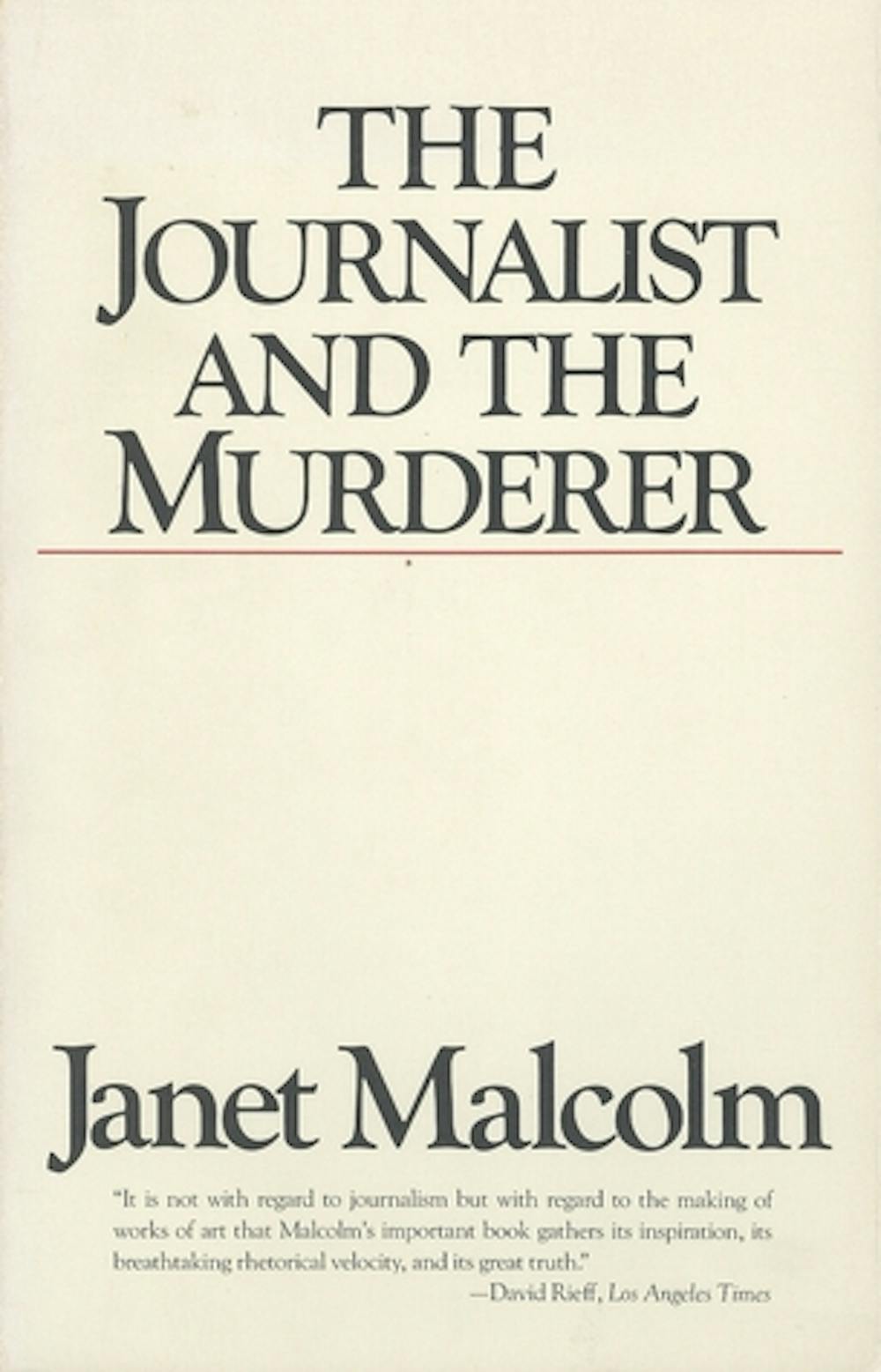
A quiver of these sentences opens her withering critique of journalism, The Journalist and the Murderer, published in 1989:
Every journalist who is not too stupid or too full of himself [sic] to notice what is going on knows that what he does is morally indefensible. He is a kind of confidence man, preying on people’s vanity, ignorance, or loneliness, gaining their trust and betraying them without remorse.
When this was published, journalists exploded in outrage, not least because Malcolm had pierced the omertà observed by journalists concerning how they went about their work. There are all sorts of legitimate qualifications to be made about Malcolm’s insight, but more than three decades later it remains a key prod to any journalist, especially those working on longer projects, to reflect on the messy complexities inherent in the relationship between themselves and their sources.
Helen Garner’s ‘shard of horror’
 Malcolm’s influence extends to Australia, primarily through Helen Garner, who came to fame through her fiction but forged a second career as one of the nation’s foremost practitioners of narrative non-fiction, and a highly controversial one, too.
When Garner read The Journalist and the Murderer, she said it immediately struck a chord. “It sends a shard of horror right through you,” she said in an interview for Meanjin in 2012.
Later in the same interview with Sonya Voumard, she talked about her debt to Malcolm when writing The First Stone (1995), her still much-debated account of a sexual harassment case at Melbourne University’s Ormond College in the early 1990s.
Read more:
Helen Garner's This House of Grief: criminal justice viewed from the coalface
She recalled interviewing a retired judge who had once chaired the Ormond College council and was a “tough, smart old lawyer” who revealed little. As they talked and drank tea, Garner found herself gobbling up the homemade shortbread biscuits he had provided.
After she’d had three, he put the lid on the jar, saying “I didn’t do that to keep you out”, but he had.
Garner recalled:
It wouldn’t have occurred to me, unless I’d read Janet Malcolm, to put a Freudian interpretation on his closing the jar – I mean Freudian in the sense that people are always doing and saying things that enact their real purpose. He would have thought the incident was about biscuits. But unconsciously he was indicating to me that he was in charge of how much would be given and taken.
A writer of unusual intellectual courage
At that stage Garner had been reading Malcolm’s The Silent Woman (1993), her excoriating attack on biography in general and the industry surrounding the short life and tragic death of Sylvia Plath in particular.
In it, Malcolm likens biographers to professional burglars:
The voyeurism and busybodyism that impel writers and readers of biography alike are obscured by an apparatus of scholarship designed to give the enterprise an appearance of banklike blandness and solidity.
Readers, as well as biographers, are skewered for colluding in the exciting, forbidden undertaking of “tiptoeing down the corridor together, to stand in front of the bedroom door and try to peep through the keyhole”.
Malcolm’s influence extends to Australia, primarily through Helen Garner, who came to fame through her fiction but forged a second career as one of the nation’s foremost practitioners of narrative non-fiction, and a highly controversial one, too.
When Garner read The Journalist and the Murderer, she said it immediately struck a chord. “It sends a shard of horror right through you,” she said in an interview for Meanjin in 2012.
Later in the same interview with Sonya Voumard, she talked about her debt to Malcolm when writing The First Stone (1995), her still much-debated account of a sexual harassment case at Melbourne University’s Ormond College in the early 1990s.
Read more:
Helen Garner's This House of Grief: criminal justice viewed from the coalface
She recalled interviewing a retired judge who had once chaired the Ormond College council and was a “tough, smart old lawyer” who revealed little. As they talked and drank tea, Garner found herself gobbling up the homemade shortbread biscuits he had provided.
After she’d had three, he put the lid on the jar, saying “I didn’t do that to keep you out”, but he had.
Garner recalled:
It wouldn’t have occurred to me, unless I’d read Janet Malcolm, to put a Freudian interpretation on his closing the jar – I mean Freudian in the sense that people are always doing and saying things that enact their real purpose. He would have thought the incident was about biscuits. But unconsciously he was indicating to me that he was in charge of how much would be given and taken.
A writer of unusual intellectual courage
At that stage Garner had been reading Malcolm’s The Silent Woman (1993), her excoriating attack on biography in general and the industry surrounding the short life and tragic death of Sylvia Plath in particular.
In it, Malcolm likens biographers to professional burglars:
The voyeurism and busybodyism that impel writers and readers of biography alike are obscured by an apparatus of scholarship designed to give the enterprise an appearance of banklike blandness and solidity.
Readers, as well as biographers, are skewered for colluding in the exciting, forbidden undertaking of “tiptoeing down the corridor together, to stand in front of the bedroom door and try to peep through the keyhole”.
 Biographers were as outraged as journalists had been a few years earlier. Readers don’t appear to have objected. They — we — seem to think Malcolm must be talking about other readers, the voyeuristic ones. She couldn’t possibly be talking about us.
But she was, of course. One of the paradoxes of Malcolm’s work is she continued to practice the crafts that she forensically critiques — journalism and biography. For some, this might amount to hypocrisy. To me, it underscores her intellectual courage, taking seriously the power and influence inherent in the practice of these two forms, and refusing to shelter behind loyalty to her tribe.
Which brings me to my favourite rhetorical aria of Malcolm’s, also from The Silent Woman:
The narratives of journalism (significantly called ‘stories’), like those of mythology and folklore, derive their power from their firm undeviating sympathies and antipathies. Cinderella must remain good and the stepsisters bad. ‘Second stepsister not so bad after all’ is not a good story.
Malcolm refused to write fairytales. Her stories may be as sharp as arrows; they also fly true.
Read more:
Biography in the age of celebrity: what's left to reveal?
Biographers were as outraged as journalists had been a few years earlier. Readers don’t appear to have objected. They — we — seem to think Malcolm must be talking about other readers, the voyeuristic ones. She couldn’t possibly be talking about us.
But she was, of course. One of the paradoxes of Malcolm’s work is she continued to practice the crafts that she forensically critiques — journalism and biography. For some, this might amount to hypocrisy. To me, it underscores her intellectual courage, taking seriously the power and influence inherent in the practice of these two forms, and refusing to shelter behind loyalty to her tribe.
Which brings me to my favourite rhetorical aria of Malcolm’s, also from The Silent Woman:
The narratives of journalism (significantly called ‘stories’), like those of mythology and folklore, derive their power from their firm undeviating sympathies and antipathies. Cinderella must remain good and the stepsisters bad. ‘Second stepsister not so bad after all’ is not a good story.
Malcolm refused to write fairytales. Her stories may be as sharp as arrows; they also fly true.
Read more:
Biography in the age of celebrity: what's left to reveal?
Authors: Matthew Ricketson, Professor of Communication, Deakin University


 Daily Bulletin


