

2020 Eureka Prizes go to a 'milkshake for malaria', ABC's Coronacast and an energy-making sewerage system
- Written by: Noor Gillani, Deputy Editor, Science and Technology
From potential new diabetes therapies, to an environmentally friendly sewage treatment system, this year’s Eureka Prizes have acknowledged a diverse group of brilliant minds tackling pressing global problems.
University of Technology Sydney researcher Qilin Wang received the Prize for Outstanding Early Career Researcher, for developing a technology that can transform energy-intensive, high-emission sewage treatment plants into low-emission plants that produce energy instead. The technology is currently being commercialised.
The Prize for Excellence in Data Science was awarded to Sydney University of Technology Professor Dacheng Tao. His research into artificial intelligence and deep learning theory led to the development of innovative algorithms that allow improved object detection and image enhancement, such as is required for self-driving cars.
Monash University Professor Mark Febbraio has been recognised with the Prize for Scientific Research, for his discovery of a compound that could improve glucose metabolism.
This would allow the development of new drug therapies for people with diabetes. There’s currently no treatment that can halt or reverse the disease’s progression.
Read more: Top science prize for 2020 goes to Aussie physicists who helped detect distortions in space-time
Also from Monash University, the Monash Pharmaceutical Milkshake Team received the Prize for Innovative Use of Technology for their novel approach to producing drug formulations.
The team developed a synchrotron-based method for studying the interactions between milk and drugs. They have produced the first single-dose malaria cure — dubbed the “milkshake to cure malaria”.
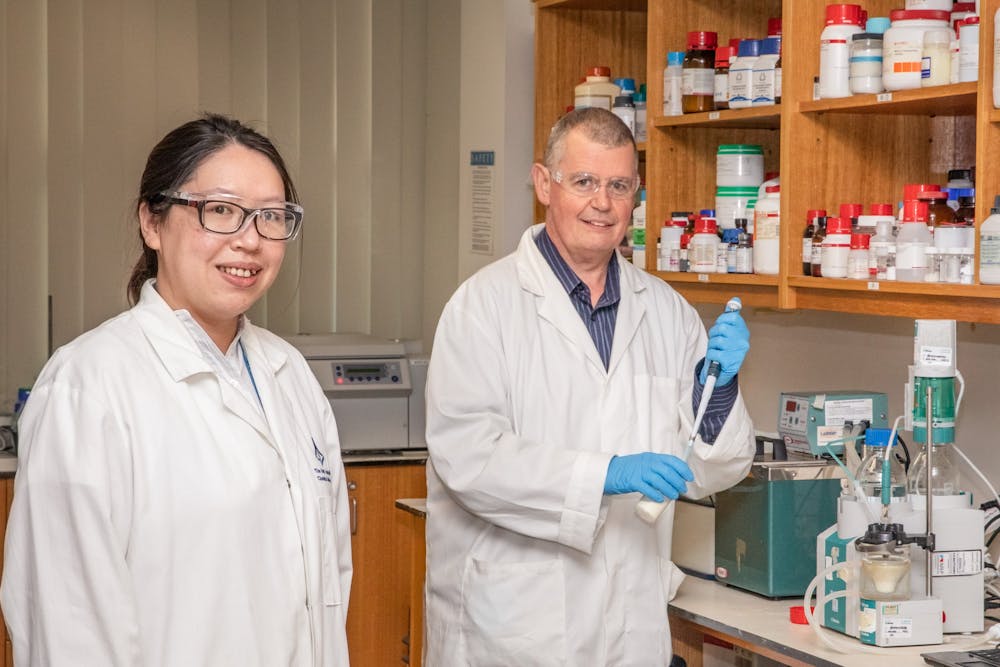 Dr Malinda Salim and Professor Ben Boyd are part of the Monash Pharmaceutical Milkshake Team.
Supplied
Dr Malinda Salim and Professor Ben Boyd are part of the Monash Pharmaceutical Milkshake Team.
Supplied
A deep dive into the health of reefs
The Eureka Prize for Applied Environmental Research has gone to a team from The Nature Conservancy Australia (James Cook University, University of Adelaide and University of Tasmania).
They tracked the decline of almost extinct shellfish reefs across southern Australia, gaining significant insight into how these reefs might be restored.
 The 2020 UNSW Eureka Prize for Excellence in Interdisciplinary Scientific Research went to a team that tracked reef conditions across 46 countries.
Supplied
The 2020 UNSW Eureka Prize for Excellence in Interdisciplinary Scientific Research went to a team that tracked reef conditions across 46 countries.
Supplied
Excellence in reef research continued with the Social-Ecological Research Frontiers team, which was awarded the Prize for Excellence in Interdisciplinary Scientific Research.
This group compiled an extensive dataset (the largest of its kind) on the condition of more than 6,000 reefs across 46 countries — with a focus on “bright spots”. These are areas in which reefs seem to thrive despite intense human and environmental pressures.
Moving the public to make change
The Prize for Innovation in Citizen Science went to the people behind the Victorian Coastal Monitoring Program (University of Melbourne, Deakin University, Propeller Aerobotics and the Department of Environment, Land, Water and Planning).
This program enlists citizen scientists to help predict how beaches will respond to storms and rising sea levels which, in turn, helps guide coastal management and policy decisions.
Also instilling a passion for science in the public is the CSIRO Indigenous STEM Education Project team, which received the Prize for STEM Inclusion.
This project, rolled out across every state and territory, boosts Aboriginal and Torres Strait Islander students’ participation in STEM. It has engaged more than 22,600 students since 2015.
Praise for science writing and leadership
Other prizes went to recipients from a variety of backgrounds, including:
ABC Coronacast presenters Tegan Taylor, Norman Swan and producer Will Ockenden — Science Journalism
The ABC team’s Coronacast podcast has helped listeners make sense of the world as it goes through a pandemic. Physician Norman Swan and health reporter Tegan Taylor offer comprehensive, evidence-supported answers to important questions. The podcast has quickly become one of the country’s most trusted sources of coronavirus news.
Author Ceridwen Dovey — Long-form Science Journalism
Dovey’s essay Mining The Moon, published last year in The Monthly, casts a critical light on private industries’ urgency to commercialise and normalise space activity and mining on the moon.
University of Sydney Associate Professor Alice Motion — Promoting Understanding of Science
Chemistry researcher Alice Motion is a public figure who, through extensive public engagement, has touched millions of Australians with her passion for chemical education.
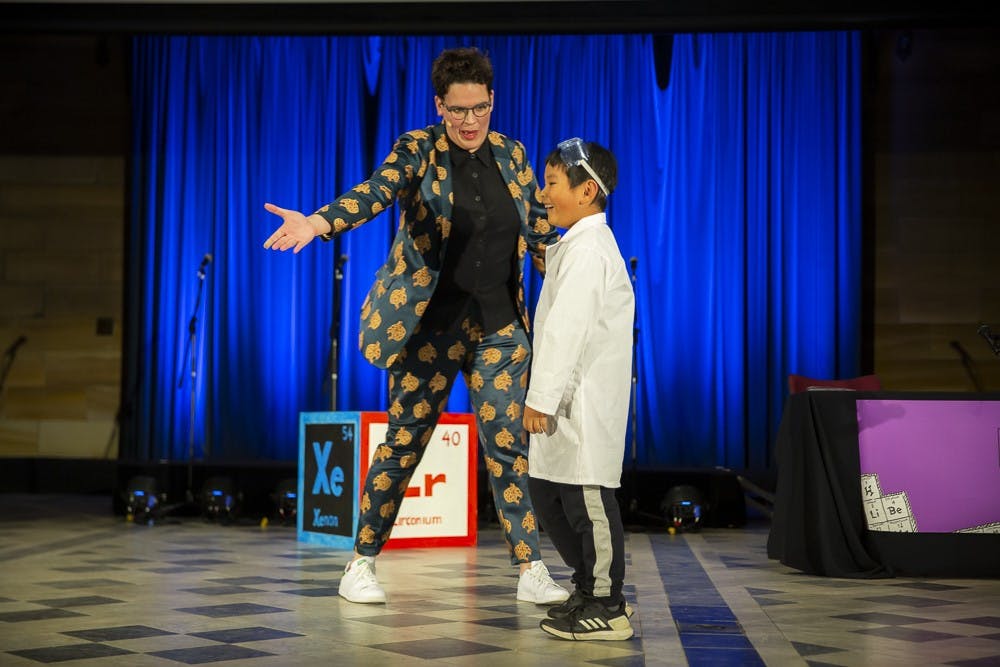 Associate Professor Alice Motion is a chemist and science communicator based at The University of Sydney.
Supplied
Associate Professor Alice Motion is a chemist and science communicator based at The University of Sydney.
Supplied
Kirby Institute Professor Gregory Dore — Infectious Diseases Research
Professor Dore’s work has supported drug users affected by hepatitis C, by leading the first international trials to include these marginalised individuals. While members of this demographic are vulnerable to the disease, they’re often assumed to have poor compliance and are therefore excluded from therapy trials.
University of Sydney researchers Benjamin Eggleton, Eric Mägi, Moritz Merklein, Alvaro Casas Bedoya, Yang Liu and Australian National University Associate Professor Stephen Madden — Outstanding Science in Safeguarding Australia
Professor Eggleton and colleagues have invented a compact microchip that’s ushering in a new era of microwave signal processing. The technology allows improved performance, efficiency and cost for signal processing.
Wesfarmers Centre of Vaccines and Infectious Diseases Associate Professor Asha Bowen — Emerging Leader in Science
Professor Bowen is an esteemed early-career researcher who specialises in infectious diseases, specifically skin disease. Her efforts have driven breakthrough policy changes that have reduced skin infections among Aboriginal children in remote communities.
University of Sydney Professor Robert F. Park — Leadership in Innovation and Science
Professor Park has led major efforts to develop cereal varieties with inbuilt resistance against genetic disease. His work continues to have a substantial impact on the economic viability of global cereal production and food security.
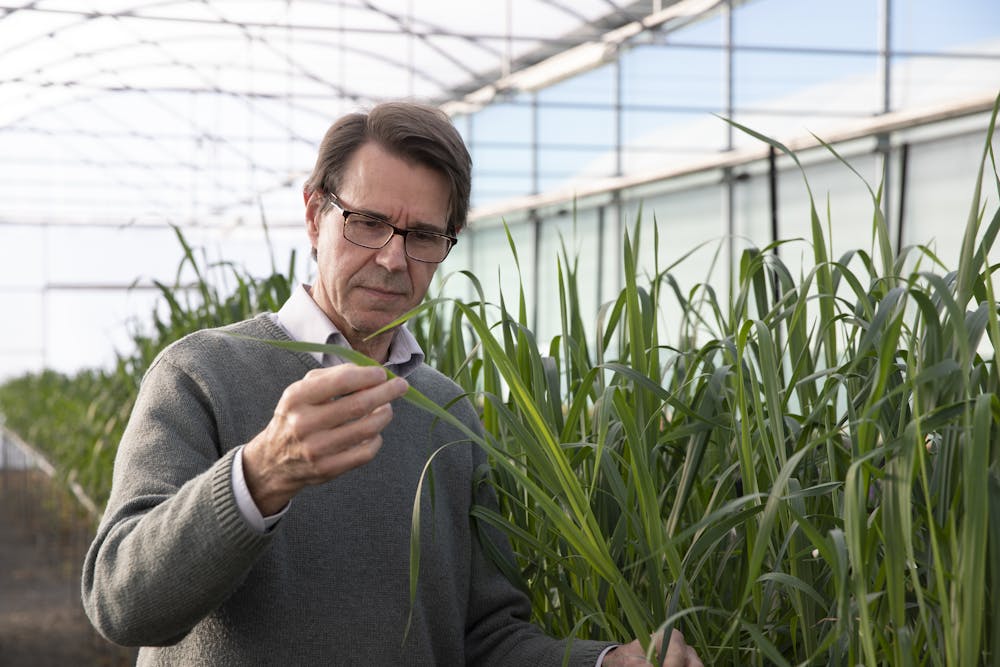 The Prize for Leadership in Innovation and Science went to University of Sydney Professor Robert F. Park.
Supplied
The Prize for Leadership in Innovation and Science went to University of Sydney Professor Robert F. Park.
Supplied
Woolcock Institute of Medical Research and University of Sydney Professor Carol Armour — Outstanding Mentor of Young Researchers
Professor Armour’s longstanding work has contributed greatly to the country’s research capacity. Among other contributions, she has introduced several programs inspiring the next generation of researchers.
Oak Flats Primary School students Scarlett P. and Scarlett O. received the Primary Sleek Geeks Science Eureka Prize. Their video submission explains how hot water turns into ice and how “supercooling” works.Authors: Noor Gillani, Deputy Editor, Science and Technology


 Daily Bulletin


