

Buying and distributing a COVID-19 vaccine will involve hard ethical and practical choices
- Written by: Barbara Allen, Senior Lecturer in Public Management, Te Herenga Waka — Victoria University of Wellington
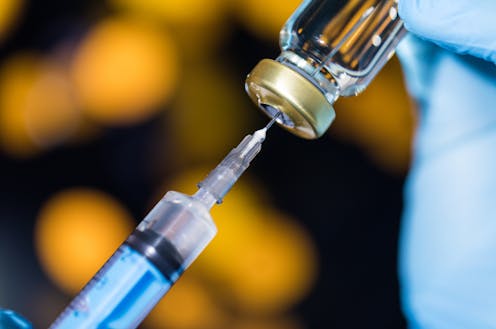
The world was ablaze with hope following the announcement last week that a vaccine developed by Pfiser and BioNTech may be more than 90% effective in preventing COVID-19.
New Zealand politicians were quick to point out 1.5 million doses had already been pre-purchased through a legally binding agreement signed in late September to buy any vaccine to emerge from the multilateral COVAX facility.
Within the week, a second potentially effective vaccine emerged from US biotech firm Moderna. Health Minister Chris Hipkins would not say if New Zealand had negotiated for this option.
But assuming an approved vaccine is coming, attention then turns to logistics. Funding, procurement, storage and distribution all raise significant questions about values, decision-making and ethics.
We know there are multiple candidates for a COVID-19 vaccine, but there will be few “winners”, as many countries have already pre-contracted substantial amounts based on calculated risk assessments of which will emerge first. Even then, the challenges will be immense.
For example, assuming the Pfizer vaccine does become available as a safe option, it must be held in “ultra-cold storage” at -70 degrees Celsius. As has been observed already, “Distributing an effective COVID-19 vaccine to the global population will likely be the greatest logistical challenge since World War II.”
Who gets a vaccine first?
For New Zealand, as with all countries, the questions raised are complex: do we now spend a large amount of money to scale up a logistics, distribution and storage system for the Pfizer drug? Or should we wait for an alternative that is more effective, easier to transport and store, and possibly cheaper?
After all, the first available vaccine might not achieve the outcomes we want. But would it be fair (or feasible) to make the country wait?
Read more: Moderna follows Pfizer with exciting vaccine news – how to read these dramatic developments
Furthermore, because enough doses to treat everyone will not be available immediately, it will be necessary to prioritise recipients. What are the country’s obligations here? Do we offer the vaccination first to the oldest, or the youngest, or the most vulnerable?
National health systems will have some idea about how to go about this, but wealthy countries have never faced an immediate requirement on this scale.
An ethical framework
Answering these questions means calling simultaneously on a number of different ethical perspectives:
an ethic of justice to assess the fairness of a decision
an ethic of consequentialism to look at outcomes
the ethics of obligations to see who we may have made commitments to
an ethic of care to look at individual cases, rather than relying on abstract logic.
Only when we combine these perspectives can we begin to make sense of priorities.
The vaccine marketplace is a kind of oligopoly, with a few extremely large firms deciding which vaccines get made, when and at what price. Pharmaceutical companies are reluctant to invest in producing new vaccines for the developing world because they have little prospect of earning an attractive return.
While global organisations such as vaccine alliance GAVI have been instrumental in getting vaccines to developing countries, given the geopolitics of procurement it could be a long time before an effective COVID-19 option reaches the poorest populations.
The moral dimension
All this points to the deeper ethical issue of inequality. Many agencies, including the World Health Organisation (WHO), have demonstrated that health outcomes are related to socio-economic, ethnic and gender inequalities. COVID-19 has only made these inequalities worse.
Only last week, for example, a UK study showed 57.7 more people per 100,000 have died in the poorest areas of northern England than in the rest of the country.
Read more: COVID-19 vaccines could go to children first to protect the elderly
This matches other research showing how the pandemic has disproportionately affected poorer families, including their being less likely to be able to work from home or adapt to home-schooling.
Limited or selective availability of a vaccine could exacerbate these problems. And while New Zealand may be in a relatively privileged position, this doesn’t mean there won’t be negative consequences for other countries.
This adds an international dimension to our national dilemma: we have a duty to protect our own citizens, but is there a way we can minimise harm to others at the same time?
Authors: Barbara Allen, Senior Lecturer in Public Management, Te Herenga Waka — Victoria University of Wellington


 Daily Bulletin


