

Labor politicians need not fear: Queenslanders are no more attached to coal than the rest of Australia
- Written by: Bruce Tranter, Professor of Sociology, University of Tasmania
It’s written into electoral folklore that Labor was wiped out at the 2019 federal election because Queensland didn’t like its position on coal. As the story goes, Labor’s lukewarm support for the Adani coal mine and its ambitious climate policies antagonised Queensland’s mining communities and cemented another Coalition term.
But our recent research casts doubt on this conventional wisdom. Our findings challenge claims that the issue of new coal mines in Queensland was largely to blame for Labor’s election loss.
We examined how support for coal mines was linked to voting at the last federal election. We found Queensland voters supported new coal mines, and this was definitely a factor in the federal election. But the influence of coal mines as an election issue in Queensland was similar to that in most other mainland states.
Queenslanders head to the polls tomorrow to decide the state election. Throughout the campaign, the Palaszczuk Labor government has vocally backed expansion of the resources industry – but our research suggests the issue will not necessarily decide the election result.
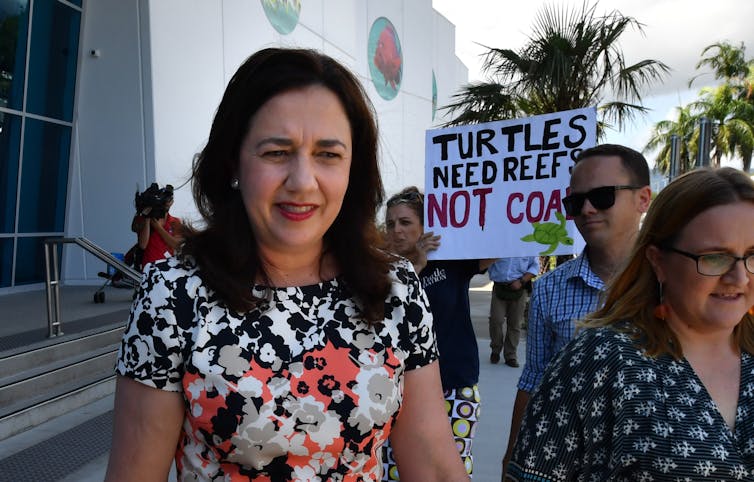 Annastacia Palaszczuk has strongly backed the Queensland resources industry.
AAP/Darren England
Annastacia Palaszczuk has strongly backed the Queensland resources industry.
AAP/Darren England
A shock loss
After Labor lost the election in May 2019, many analysts and commentators – not to mention the party itself – were left scratching their heads. Labor had been thumped in what was billed as the climate change election, despite its policy on cutting greenhouse gas pollution being far more ambitious than the Coalition’s.
Labor had pledged to cut Australia’s emissions by 45% between 2005 and 2030. It wanted renewable energy to form half the electricity mix by 2030 and would have implemented an emissions trading-type scheme to limit pollution from industry.
During the campaign, Labor was accused of fence-sitting on the Adani coal mine. Leader Bill Shorten had stopped short of saying it shouldn’t proceed, instead insisting it should stack up environmentally and financially, and should not receive Commonwealth funding.
On election night, Labor received an electoral walloping in Queensland, and its messaging on coal and climate was widely blamed.
Read more: New polling shows 79% of Aussies care about climate change. So why doesn't the government listen?
Several commentators, and even Coalition MPs, said the government owed its re-election to a convoy of anti-Adani protesters, led by former Greens leader Bob Brown, which travelled through Queensland and purportedly alienated voters.
While the Coalition strongly supported the construction of new coal mines, Labor struggled to articulate its position – wedged between its blue-collar base in regional areas, and urban voters concerned about the environment.
After the election, Labor frontbencher Joel Fitzgibbon conceded Labor’s positioning on the Adani mine overlooked the importance of investment and jobs, and left coal miners worried.
But does the empirical evidence support the view that Labor lost Queensland – and the election – over the issue of coal?
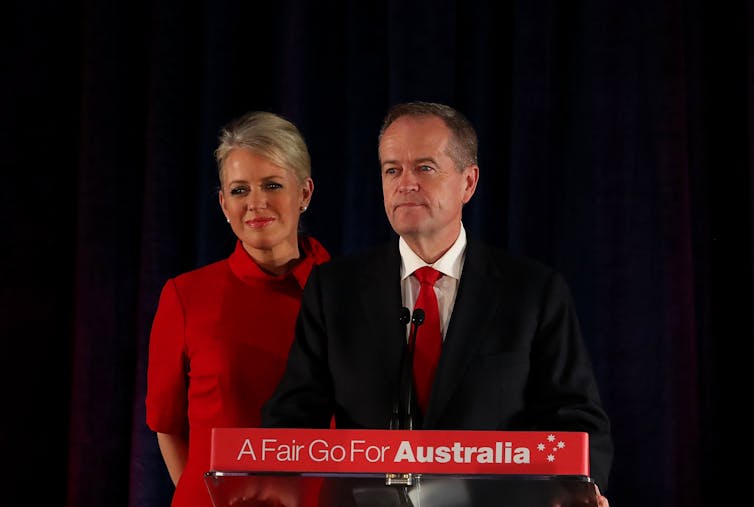 Bill Shorten’s election defeat was largely attributed to the Queensland coal issue.
David Crossling/AAP
Bill Shorten’s election defeat was largely attributed to the Queensland coal issue.
David Crossling/AAP
Our surprise findings
To answer this questions, we examined data from a 2019 national survey, the Comparative Study of Electoral Systems (CSES). The data indicated 46% of Australians supported the construction of new coal mines, and 52% were against.
On average, people who favoured new coal mines tended to be Coalition supporters, less likely to have a tertiary education, more likely to be men than women and were older than average. In contrast, those who accept that human-driven climate change is occurring tend to be tertiary-educated Greens or Labor supporters. They are more likely to be women than men and are younger than average.
Support for new coal mines declined as interest in politics increased in NSW and Victoria. Yet in Queensland and (to a lesser extent) Western Australia, the pattern was very different. In these so-called “mining states”, support for new coal mines increased with political interest.
Read more: Why this Queensland election is different — states are back at the forefront of political attention
What’s more, as interest in politics increased among Labor identifiers, support for new coal mines decreased. However as political interest increased among Coalition identifiers, support for new mines increased.
These results suggest coal mines influenced voting behaviour in regional and remote areas of Queensland in the 2019 election.
However, our research also suggests the issue was no greater a factor for voters in Queensland than in other states. Those who supported new mines were more likely to vote for the Coalition than for Labor. But the association between new coal mines and voting was not stronger in Queensland than in New South Wales, Victoria, South Australia or Western Australia.
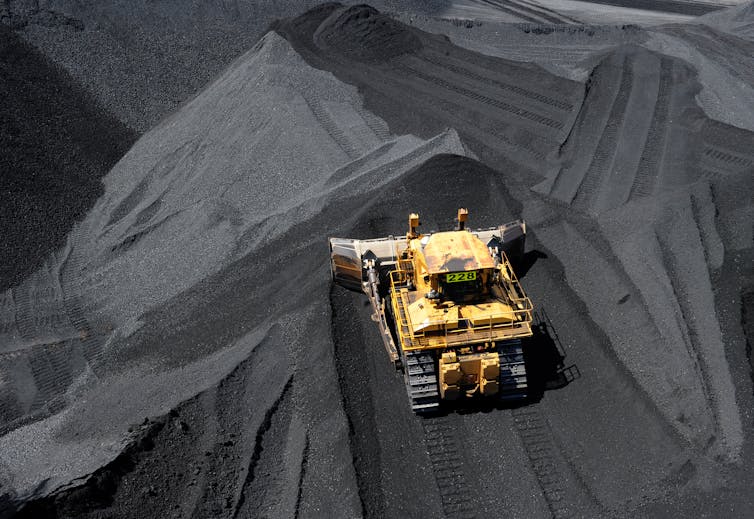 Queenslanders support for new coal mines is not greater than anywhere else in Australia.
AAP/Dave Hunt
Queenslanders support for new coal mines is not greater than anywhere else in Australia.
AAP/Dave Hunt
Labor should not abandon climate ambitions
Just days after federal Labor’s 2019 electoral rout in Queensland, Palaszczuk swung into action. Obviously fearing for the electoral prospects of her own government, she ordered state officials to give a “definitive timeframe” on approvals for the Adani mine within days.
The Queensland state election campaign has been dominated by the issues of economic recovery, job creation and infrastructure. Early in the campaign, the Palaszczuk government signed off on a new metallurgical coal mine in the Bowen Basin, further affirming its support for Queensland’s resources industry. Climate action, and the need to move away from coal, has been mentioned in the campaign, but it’s not at the fore.
Federal Labor is still struggling to regroup after its election loss. It has not revealed the emissions reduction targets it will take to the next federal election, and reportedly this month resolved to support the Morrison government in developing new gas reserves.
But at both a state and federal level, Labor should not hasten to back fossil fuels, nor should it abandon an ambitious climate policy agenda. The issue of new coal mines may not be a huge election decider in Queensland after all.
Authors: Bruce Tranter, Professor of Sociology, University of Tasmania


 Daily Bulletin


