

We can't ignore mental illness prevention in a COVID-19 world
- Written by: Stephen Carbone, Honorary, School for Population and Global Health, University of Melbourne
Despite the incremental easing of Victoria’s restrictions, it’s clear the journey towards COVID-normal is far slower than many people had hoped.
Australians – particularly Victorians – have shown remarkable resilience, but many are suffering emotionally.
The mental health impacts of COVID-19
During the early days of the pandemic, surveys showed a sharp increase in symptoms of anxiety and depression across Australia. These difficulties continued into mid-August. More than 40% of Australians aged 18 years and older feel high levels of anxiety, and around one in six report depressive symptoms.
To target this, federal and state governments have increased telephone, online and face-to-face mental health supports. While this is vital, more needs to be done to prevent people suffering severe mental health problems in the first place.
 Over 40% of Australians aged 18 years and older feel high levels of anxiety, and around 1 in 6 report depressive symptoms.
Shutterstock
Over 40% of Australians aged 18 years and older feel high levels of anxiety, and around 1 in 6 report depressive symptoms.
Shutterstock
Prevention is better than cure
There’s good evidence we can prevent many cases of depression, anxiety and substance abuse. But Australia doesn’t have a mental health prevention plan or policy, and government funding for prevention is just 1% of the total mental health budget.
The Fifth National Mental Health and Suicide Prevention Plan, the government’s key mental health blueprint, focuses on improving mental health-care services and suicide prevention, but not on preventing the mental health conditions that are a major risk factor for suicide.
What about illness prevention?
Last month the federal government released a consultation paper on its proposed National Preventive Health Strategy, setting out what the strategy will aim to achieve and how it might be done.
The document’s exciting because it focuses on health promotion and illness prevention, acknowledging we can’t improve the health of the Australian community through health-care measures alone.
But unfortunately, the proposed strategy’s fundamentally focused on physical health issues. In its 20 pages, the consultation paper only mentions mental health three times.
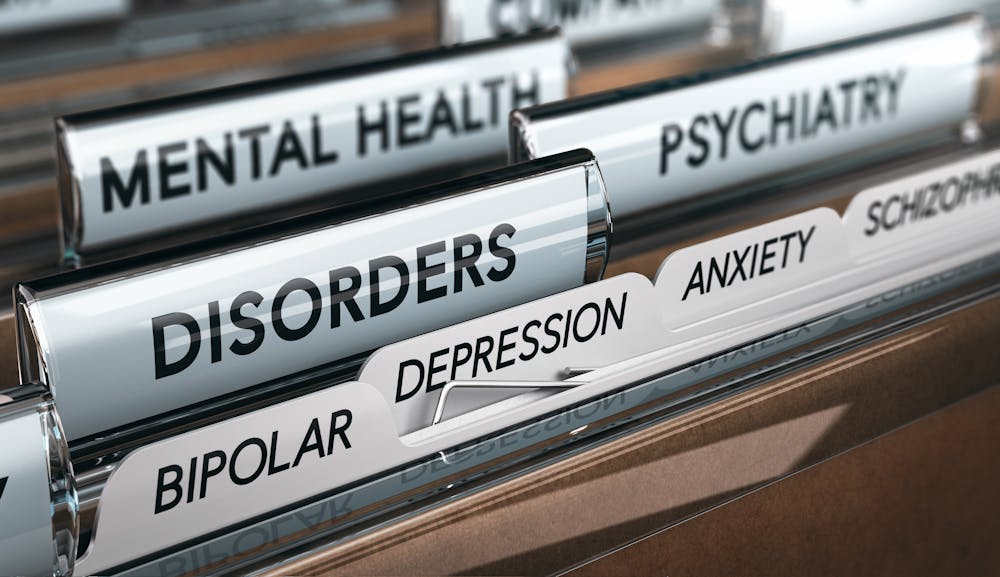 Government funding for prevention is just 1% of the total mental health budget. The National Preventive Health Strategy provides an opportunity to shed light on prevention measures for mental health conditions.
Shutterstock
Government funding for prevention is just 1% of the total mental health budget. The National Preventive Health Strategy provides an opportunity to shed light on prevention measures for mental health conditions.
Shutterstock
The same principles outlined in the strategy to prevent conditions such as diabetes also apply to preventing mental health conditions such as depression. To prevent either, we need to minimise risk factors and increase protective factors linked to the condition, before it occurs. But some adaptation would be needed for the plan to address both physical and mental health.
What prevention measures should be added?
A focus on physical activity, healthy eating, and non-smoking will help to promote good mental health as well as physical health.
 Unemployment, a risk factor for a number of mental health conditions, is on the rise due to COVID-19.
Shutterstock
Unemployment, a risk factor for a number of mental health conditions, is on the rise due to COVID-19.
Shutterstock
To prevent mental health issues we should focus on building people’s health literacy and self-care skills through public information campaigns and online learning programs. Supportive social environments can be encouraged by parenting programs, and school and workplace mental health promotion initiatives.
Local communities could also be mobilised to take positive action on local issues that contribute to poor health and mental health through place-based strategies. Place-based strategies aim to tackle issues existing at a neighbourhood level, such as social isolation and poor housing.
Services could be reoriented towards prevention. Primary care professionals might provide advice on self-care and use social prescribing to address stress and enhance social supports. Social prescribing involves medical professionals linking patients to non-medical supports. For example, they may provide an “exercise prescription” or “art prescription”.
Finally, appropriate public policy solutions, such as JobSeeker and JobKeeper, that tackle the social and economic determinants of ill-health are needed.
Social factors matter too
Research also points to a strong link between mental health conditions and experience of childhood adversity, family violence, loneliness, racism, homophobia and transphobia. Workplace stressors, financial stress, unemployment and homelessness are also risk factors.
Many of these issues are on the increase because of COVID-19, so to safeguard mental health we need to tackle them and their impact. This will require the use of evidence-based preventive programs outlined above - many of which already exist but are not being implemented well or to sufficient scale. It will also require public policies to soften the economic blow and ease financial stress.
Targeting these issues will not only help to prevent mental health conditions, but physical health conditions as well.
While better access to mental health-care services is important, it can’t solve all the mental health challenges posed by COVID-19. We also need to strengthen the factors that buffer people against stress, and tackle the underlying factors that contribute to poor mental health.
Whether we create a National Preventive Mental Health Plan, or embed mental health in the current National Preventive Health Strategy, one thing’s for sure: continuing to ignore the prevention of mental health conditions is not an option in a COVID-19 world.
Authors: Stephen Carbone, Honorary, School for Population and Global Health, University of Melbourne
Read more https://theconversation.com/we-cant-ignore-mental-illness-prevention-in-a-covid-19-world-145686


 Daily Bulletin


