

As bushfires intensify, we need to acknowledge the strain on our volunteers
- Written by: Blythe McLennan, Research Fellow, Centre for Urban Research, RMIT University
The early and ferocious start to the bushfire season in Australia this year has raised questions about the impact on those at the frontline – the tens of thousands of volunteers helping to put out the blazes.
In Australia, the vast majority of bushfire fighters are volunteers. In the Queensland Fire and Emergency Services, for instance, volunteers account for 89% of the workforce.
And with fire seasons due to become longer and bushfires more intense due to the impacts of climate change, this will place even more demands on the men and women undertaking this vital and demanding work.
Given this, it’s important for us to understand how our worsening bushfires are affecting the mental and physical health of volunteers. Is this causing burnout? And if so, is that making it more difficult for fire and emergency services to recruit new volunteers and keep the ones they have?
Challenges for volunteer recruitment and retention
Of course, the impact of today’s bushfires needs to be viewed within the context of other challenges to volunteer recruitment and retention.
Two of the key factors are greater competition for people’s time – for example, due to changes in the nature of paid work – and the increasing difficulty of balancing work, family and volunteer commitments.
Read more: Why rural Australia is facing a volunteer crisis
The ways people choose to volunteer are also changing. Many people are choosing more flexible, shorter-term and cause-driven ways of volunteering and eschewing the kind of structured, high-commitment volunteering that is common in the emergency services.
At the same time, rural communities are facing a shrinking volunteer base as people either leave for better opportunities in cities or can no longer perform strenuous volunteering roles.
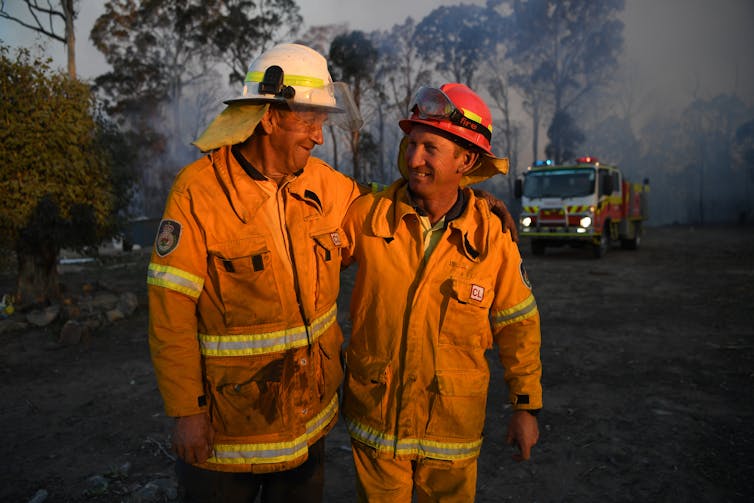 Father and son volunteers with the NSW Rural Fire Service.
Dan Peled/AAP
Father and son volunteers with the NSW Rural Fire Service.
Dan Peled/AAP
Meanwhile, a lot has been said about younger generations being less motivated by altruistic values to volunteer.
However, there is considerable evidence that younger people are highly committed to making a positive contribution to society. They are just doing it differently than their parents – they are tapping into the power of social media and working outside of formal, structured organisations.
Changes to emergency management services are also at play. One of the most significant shifts has been the professionalisation, corporatisation and modernisation of volunteer-based emergency services in recent years.
While this has undeniably brought improvements to volunteer safety and the quality of service, it has also caused headaches for volunteers in the form of more bureaucracy and additional training requirements.
There is a risk this could drive a wedge between the corporate goals of fire and emergency service agencies that focus on risk management and efficiency, for example, and their more traditional, community-based roots – the reason many people choose to volunteer in the first place.
Read more: Stop calling young people apathetic. For many, volunteering and activism go hand-in-hand
Improving support for volunteers
This type of volunteering can be demanding. Bushfire volunteers face a range of significant stresses that can be physical, mental and emotional. Volunteer fatigue and burnout are real concerns.
There are also economic burdens for both volunteers and their employers, as well as strains on their family members.
Additionally, with the likelihood of more intense bushfires in the future, volunteers will increasingly be asked to travel outside their own communities to fight fires in other regions, further complicating their lives.
Having said this, support for volunteers is available and improving. In my ongoing research with other academics at the Bushfire and Natural Hazard Cooperative Research Centre, interviewees report improvements in operational equipment, technology and procedures that are enhancing volunteer safety.
Emergency services are also increasing mental health and well-being support for volunteers and developing more diverse and flexible ways for people to fit volunteering into their lives.
There is also a strong commitment to improving diversity and inclusion across the sector.
The reasons people want to help
Even though fighting fires is obviously demanding work, it is also extremely fulfilling and rewarding. Core reasons that people choose to volunteer include helping the community, learning new skills, feeling useful and doing something worthwhile, and experiencing camaraderie with others.
In our ongoing research, we are consistently hearing that the personal fulfilment and rewards of volunteering are not being adequately communicated to the public. If they were, a lot more people would offer their services.
In addition, many volunteering roles do not require people to be on the front lines at all. There are a large number of opportunities to support fire prevention, response and recovery well beyond the fires themselves.
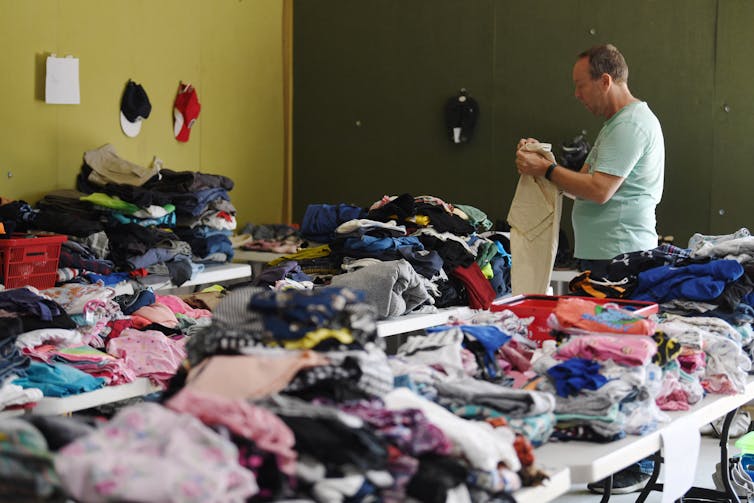 A volunteer-run donation center in Taree, NSW.
Dean Lewins/AAP
A volunteer-run donation center in Taree, NSW.
Dean Lewins/AAP
We also know that everyday people are deeply motivated to help others in the face of disaster. Indeed, NSW RFS and QFES are likely to see an upswing in people inquiring about volunteering in the aftermath of the current fires.
However, there is one important thing to note: the best time to approach emergency services about volunteering is before an event, rather than during one.
Volunteering at a crossroads
If we are fighting bushfires into the next decade with the same or declining numbers of volunteers, using the same approaches we use today, then clearly the job will be much harder and the demands on volunteers will become more extreme.
The key variable that will make the most difference for volunteers is the willingness and commitment of emergency services, governments, society and volunteers themselves to embrace change to current practices.
Read more: 70 years before Black Saturday, the birth of the Victorian CFA was a sad tale of politics as usual
This includes a greater investment in risk reduction, new operational approaches and involving volunteers more in organisational decision making. Emergency services providers should also be working more closely with community organisations to better understand and target the particular needs of different communities.
Whatever choices we make, we cannot leave it to our front line volunteers to bear an increasing burden of fighting the bushfires of the future.
Authors: Blythe McLennan, Research Fellow, Centre for Urban Research, RMIT University


 Daily Bulletin


