

How to manage your essential medicines in a bushfire or other emergency
- Written by: Andrew Bartlett, Associate Lecturer Pharmacy Practice, University of Sydney
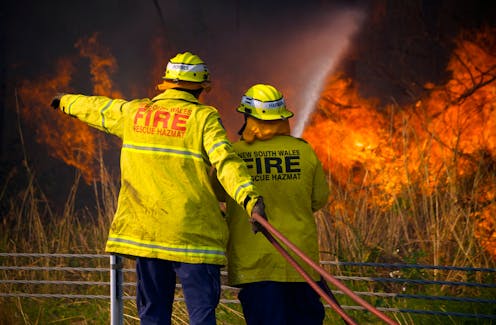
Some people find managing their medication difficult at the best of times. But in an emergency, like a bushfire or cyclone, this can be harder still.
As catastrophic bushfires burn across Australia, here’s what to think about as part of your emergency planning to make sure you have access to the medicines you need.
Read more: What you can do about the health impact of bushfire smoke
As part of your emergency plan, list your medications and where you keep them, along with contact details for your doctor and pharmacist and any other relevant emergency services.
If you have advanced warning of emergency conditions, check both your supply of tablets and any prescriptions you may need. Your prescription label will tell you how many repeats you have left. Try and keep at least one week’s medication on hand.
I need to evacuate. Now what?
If you need to evacuate, know how best to store and transport your medication. Most medications for conditions such as blood pressure or cholesterol need to be stored below 25-30℃. These medications will be OK if temperatures are higher than this for short periods of time, while you transport them.
Medicines sensitive to temperature will need to be stored or transported with cold packs in an insulated container of some sort, such as an esky. Putting them in a ziplock bag will help protect them from moisture.
Read more: Evacuating with a baby? Here's what to put in your emergency kit
Insulin is one common medication you need to store cold. Your current insulin pen can be stored at room temperature. But store unused pens with a cold pack in an esky until you find refrigeration.
This also applies to thyroxine tablets. Fourteen days supply (usually one strip of tablets) is OK if stored at room temperature. But keep the rest with a cold pack. If you don’t think it will be possible to keep the rest below 25℃ for a long time, also keep these with the cold pack.
Many antibiotic syrups, such as cefalexin, also need to be kept cold. But check the dispensing label or speak to your pharmacist if you are not sure.
What if I run out of medicine?
If you are caught without essential medication, doctors and pharmacists can help in a number of ways.
This is easier if you have a regular GP and pharmacist who will both have a complete record of your medication. Your pharmacist can call your GP and obtain verbal approval to supply your medication. Your GP will then need to fax or email the prescription to your pharmacist as soon as possible and mail the original script within seven days.
Pharmacists can also dispense emergency supplies of cholesterol medicines and oral contraceptives, so long as you already take them. Under so-called continued dispensing arrangements, pharmacists can dispense a single pack of these medicines once every 12 months.
If you cannot get in touch with your GP, in an emergency, most states allow a pharmacist to dispense a three-day supply of your medication. But this is only if the pharmacist has enough information to make that judgement.
Some medicines, such as strong pain medications and sleeping tablets, are not covered by these provisions.
Medicines for people with lung conditions, like asthma
People with existing lung conditions (such as asthma, chronic obstructive pulmonary disease or bronchitis), older people, young children and pregnant women are most likely to be vulnerable to the effect of bushfire smoke. They can also have symptoms long after a bushfire if fine particulate matter is still in the air.
Read more: How does poor air quality from bushfire smoke affect our health?
If you have a respiratory condition, follow the action plan you will have already discussed with your doctor, which outlines what to do in an emergency.
This plan includes instructions on what you should do if your asthma gets worse, such as taking extra doses or additional medication. It also tells you when you should contact your doctor or go to the emergency department.
If you have a respiratory condition, such as asthma, and live in a bush fire prone zone, this action plan needs to be part of your fire safety survival plan.
Read more: Thunderstorm asthma: who's at risk and how to manage it
You also need to make sure you have enough preventer and reliever medications, for asthma for example, to hand just in case there is an emergency.
If you don’t have an action plan, taking four separate puffs of your reliever medication may relieve acute symptoms. This applies for adults and children.
In a nutshell
Being prepared for an emergency, like a bushfire, goes a long way to keeping you and your family safe. That applies to thinking about your supply of medicines well in advance, if possible.
But if conditions change rapidly and you need to evacuate, an esky containing medicines for a few days, and contact numbers for your GP and pharmacist, could save your life.
Authors: Andrew Bartlett, Associate Lecturer Pharmacy Practice, University of Sydney


 Daily Bulletin


