

80% of household water goes to waste – we need to get it back
- Written by: Roberta Ryan, Professor, UTS Institute for Public Policy and Governance and UTS Centre for Local Government, University of Technology Sydney
As regional Australian towns face the prospect of running out of water, it’s time to ask why Australia does not make better use of recycled wastewater.
The technology to reliably and safely make clean, drinkable water from all sources, including sewage, has existed for at least a decade. Further, government policy has for a long time allowed for recycled water to ensure supply.
Read more: Cape Town is almost out of water. Could Australian cities suffer the same fate?
The greatest barrier to the widespread use of recycled wastewater is community acceptance. Research from around the world found the best way to overcome reluctance is to embrace education and rigorously ensure the highest quality water treatment.
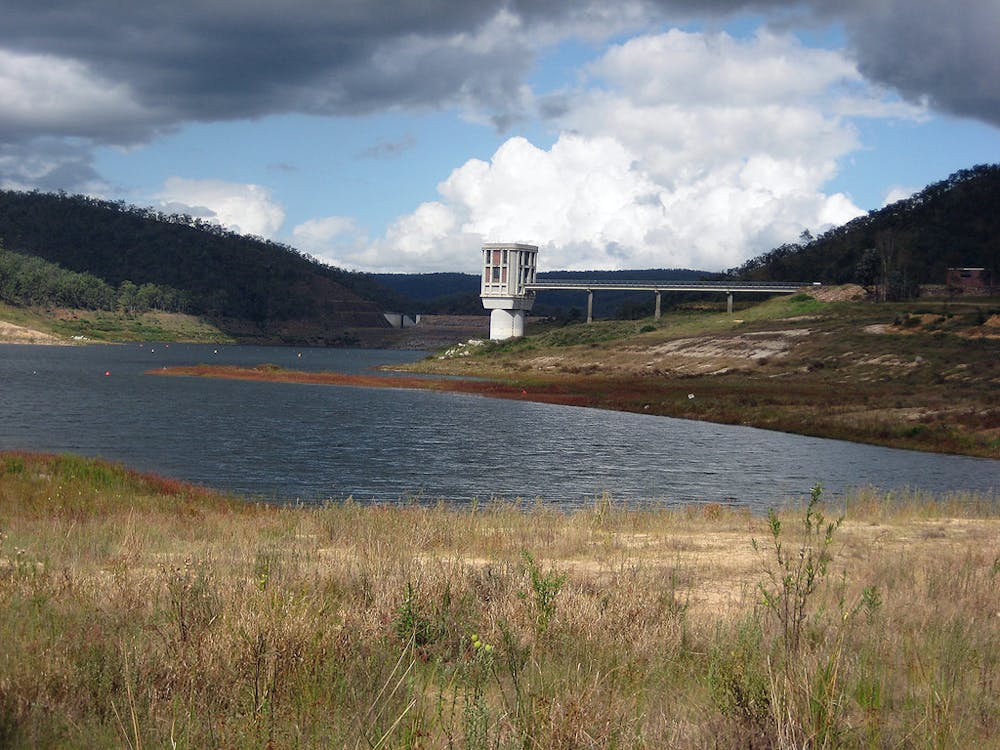 In 2006 Toowoomba voted against introducing recycled water, despite extensive drought gripping the area.
Allan Henderson/Flickr, CC BY
In 2006 Toowoomba voted against introducing recycled water, despite extensive drought gripping the area.
Allan Henderson/Flickr, CC BY
Why not use stormwater?
Many people are happy to use recycled stormwater, while being reluctant to cook, drink or wash with recycled household wastewater. But there are technical, cost and supply issues with relying on stormwater to meet our country’s water needs. Stormwater has to be cleaned before it is used, the supply can be irregular as it is reliant upon rain, and it has to be stored somewhere for use.
On the other hand, household wastewater (which is what goes into the sewerage system from sinks, toilets, washing machines and so on) is a more consistent supply, with 80% or more of household water leaving as wastewater.
Furthermore, wastewater goes to treatment plants already, so there is a system of pipes to transport it and places which already treat it, including advanced treatment plants that can treat the water to be clean enough for a range of purposes. There are strong economic, environmental and practical arguments for investing more effort in reusing wastewater to meet our water supply needs.
This water can be used for households, industry, business and agriculture, greening public spaces, fighting fires, and topping up rivers or groundwater.
The water cycle
Technically, all water is recyled; indeed we are drinking the same water as the dinosaurs. Put very simply, water evaporates, forms clouds and falls as rain, and is either absorbed into the earth and captured underground or filtered through rock and goes back again into oceans and rivers.
When we capture and reuse water, we are not making more water, but speeding up the water cycle so we can reuse it more quickly.
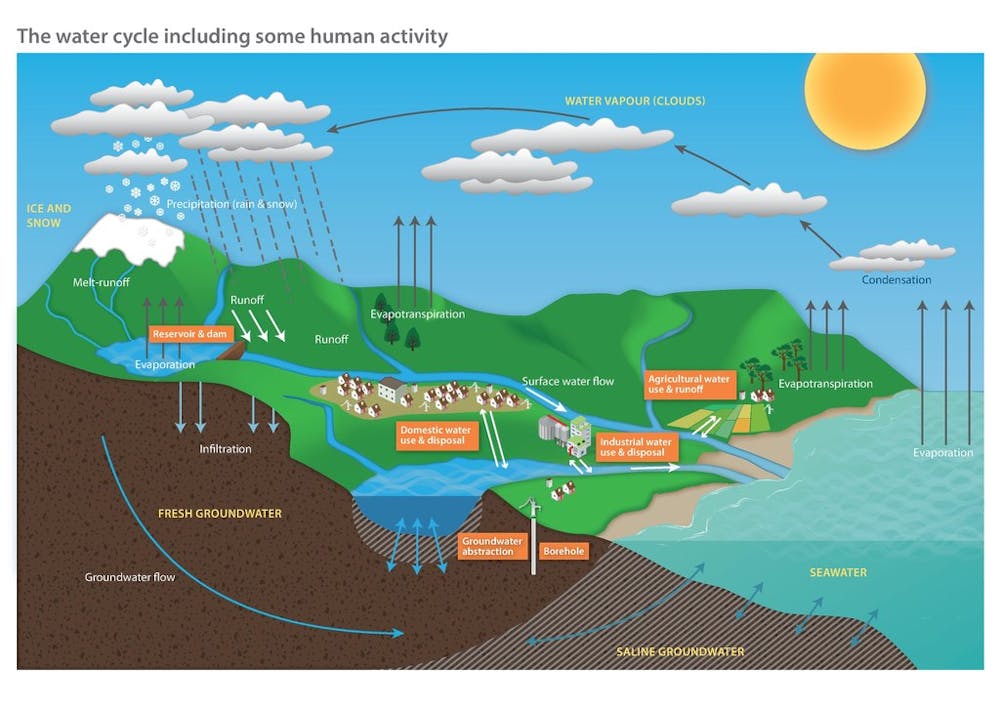 Not pictured: the many, many animals and people every drop of water has passed through over millennia.
Wikimedia Commons, CC BY-SA
Not pictured: the many, many animals and people every drop of water has passed through over millennia.
Wikimedia Commons, CC BY-SA
We do already reuse wastewater in Australia, with many parts of regional Australia cleaning wastewater and releasing it into rivers. That water is then extracted for use by places downstream.
Despite this, there have been significant community objections to building new infrastructure to reuse wastewater for household use. In 2006, at the height of the Millennium drought, Toowoomba rejected the idea entirely.
However, since then a scheme has been successfully established in Perth. We must examine these issues again in light of the current drought, which sees a number of Australian regional centres facing the prospect of running out of water.
Read more: It takes a lot of water to feed us, but recycled water could help
Lessons from overseas
 Singapore has had enormous success in reusing wastewater for all kinds of purposes.
EPA/HOW HWEE YOUNG
Singapore has had enormous success in reusing wastewater for all kinds of purposes.
EPA/HOW HWEE YOUNG
Despite initial reluctance, many places around the world have successfully introduced extensive wastewater recycling. Places such as Singapore, Essex, California, New Mexico, and Virginia widely use it.
Recent research from the Water Services Association of Australia, working with other research bodies, found several key lessons.
Firstly, the language we use is important. Phrases like “toilet to tap” are unhelpful as they don’t emphasise the extensive treatment processes involved.
Read more: How to get people to eat bugs and drink sewage
The social media and news outlets can play an significant role here. In Orange County, California, wastewater was introduced through a slow process of building acceptance. Influential individuals were enlisted to explain and advocate for its uses.
Secondly, communities need time and knowledge, particularly about safety and risks. Regulators play an important role in reassuring communities. In San Diego, a demonstration plant gave many people the opportunity to see the treatment process, drink the water and participate in education.
We need to go beyond information to deep consultation and education, understanding where people are starting from and acknowledging that people from different cultures and backgrounds may have different attitudes.
El Paso successfully introduced wastewater through strong engagement with the media and significant investment in community education, including explaining the water cycle.
Finally, quality of the water needs to be great and it needs to come from a trustworthy source. The more it happens, and people know that, the more likely they are to feel reassured.
Read more: More of us are drinking recycled sewage water than most people realise
It’s clear the public expect governments to plan and act to secure our future water supply. But we can’t just impose possibly distasteful solutions – instead, the whole community needs to be part of the conversation.
Authors: Roberta Ryan, Professor, UTS Institute for Public Policy and Governance and UTS Centre for Local Government, University of Technology Sydney
Read more http://theconversation.com/80-of-household-water-goes-to-waste-we-need-to-get-it-back-125798


 Daily Bulletin


