

Why are we losing so many Indigenous children to suicide?
- Written by: Pat Dudgeon, Professor, The Centre of Best Practice in Aboriginal and Torres Strait Islander Suicide Prevention, the Poche Centre for Indigenous Health, University of Western Australia
This article was written with Rob McPhee, Deputy CEO of the Kimberley Aboriginal Medical Service and co-chair of the Commonwealth-funded Kimberley Aboriginal Suicide Prevention Working Group.
The recent child and youth suicides in our communities are a tragedy. Five young Indigenous Queenslanders have taken their lives this month. This adds to a spate of child deaths in Adelaide and Western Australia in January.
There is nothing new about Indigenous child suicide. In 2017 it was the leading cause of death among our children aged 5 to 17. Aboriginal and Torres Strait Islander people account for just 2.8% of the population, but over the past five years, one in every four Australian children who died by suicide was Indigenous.
There is something especially shocking about the suicide of a child for whom life was just beginning. It indicates serious underlying issues in our society, and our children are reacting to their environment. We need to act now to prevent as many potential child suicides as possible in our communities.
Read more: Indigenous suicide rates in the Kimberley seven times national average
Tackle both short- and long-term change
Short- and long-term action is essential, but alongside this, long-term action must begin to address the traumatic, disrupting and intergenerational effects of colonisation and its aftermath: poverty and social exclusion. These are deep-rooted contributors to Indigenous suicide and child suicide.
Children may be at higher risk of suicide if they experience behavioural and emotional challenges, bullying, family and relationship breakdown, and issues that contribute to other forms of psychological distress.
In the short term, we need to identify and provide immediate help to our children and young people in crisis situations. Families, peers and schools need to be involved, with backup from counsellors and, if required, 24/7 access to culturally competent mental health professionals.
Read more: It's despair, not depression, that's responsible for Indigenous suicide
Some child and young person suicides occur in “clusters”, where several deaths occur over a short period in the same place.
Ensuring children and young people exposed to family and community suicide receive “postvention” support can also be vital to preventing further suicides. Postvention is an intervention after a death to provide counselling, material support, and other assistance to the family and community of the deceased.
To avoid imitations, responsible, non-sensational media and social media discussion about suicide is crucial. Proactively monitoring the social media activity of children for signs of suicidal thoughts can also play a role in preventing suicide in a community.
In the medium term, communities must be empowered to co-design and control responses that capitalise on the community’s strengths.
We can also learn from past programs that have been evaluated and shown to be successful in preventing Indigenous child and youth suicide. This includes peer-to-peer mentoring networks; programs to engage children and young people, including in sport; and connecting young people to Elders and culture.
Culture is Life backs Aboriginal-led solutions that deepen connection and belonging to culture and country and supports young Aboriginal and Torres Strait Islander people to thrive.Blueprint for action
In November 2018, two Indigenous suicide prevention conferences in Perth brought together 500 delegates from the national and international Indigenous communities to identify solutions that work in Indigenous suicide prevention.
The delegates called for a new national Aboriginal and Torres Strait Islander suicide prevention strategy – and fully funded implementation plan – with a focus on preventing child and youth suicide.
This should build on the 2013 strategy, adapted to the current policy environment, with an increased focus on suicide prevention.
The plan should also address stopping, and otherwise healing, child sexual abuse that is increasingly associated with suicide.
It’s important the plan is developed in genuine partnership with our communities, suicide prevention experts and mental health leaders. It should:
- support Indigenous community empowerment and self-determination
- enable suicide prevention programs to be co-designed with Indigenous communities
- focus on increasing the Indigenous suicide prevention workforce to levels that meet demand
- ensure the workforce is culturally safe and competent
- embed (and appropriately remunerate) youth peer workers, Elders and cultural healers in mental health and suicide prevention services
- include a plan to build the evidence-base for, and fund, Indigenous suicide prevention research.
Read more: Well-connected Indigenous kids keen to tap new ways to save lives
Truth and healing to move forward
Any sustainable response must go to the deeper, underlying historical causes of hopelessness and despair, which contributes to suicide. This isn’t just a problem among children; the suicide rate peaks in those aged between 25 and 34.
These deeper causes include intergenerational trauma. Poverty, racism, social exclusion, substandard housing, and economic marginalisation of our communities are the legacies of colonisation.
Indigenous suicide is different because it cannot be separated from the historical and related present-day situation of our peoples. Indigenous people from around the world share both similar histories and high rates of child, youth and other suicide.
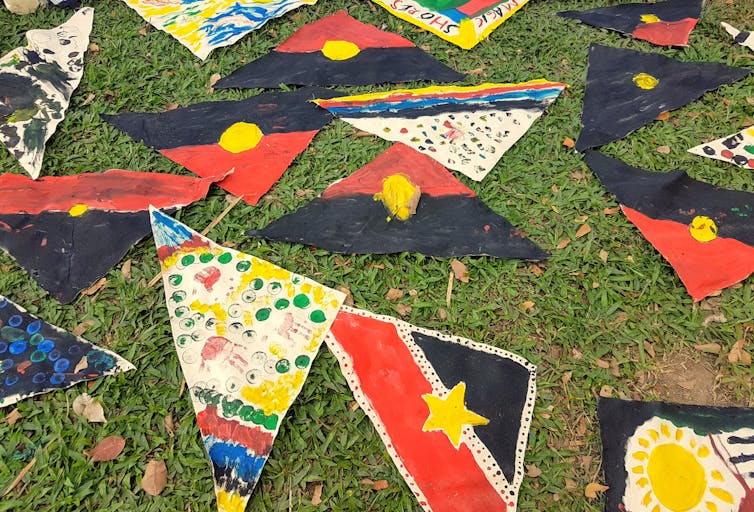 Acknowledging the truth allows people to start healing.
Annie 888/Shutterstock
Acknowledging the truth allows people to start healing.
Annie 888/Shutterstock
Indigenous leaders want to see a broader Australian recovery and healing. Truth is the basis for healing and moving forward. And this process can begin by recognising the impacts of colonisation on present-day trauma, disadvantage, marginalisation, and neglect.
Some Elders have suggested a royal commission or “truth and reconciliation commission” could form the foundation for this process.
Our communities and cultures are sources of identity, values and practices that can help protect against suicide. Such strengths provide the foundation for a mix of short, medium, and longer-term action to turn the trajectory of Indigenous child and youth suicide deaths around.
Read more: Reducing Indigenous suicide through empowerment and pride
If you or anyone you know needs help or is having suicidal thoughts, contact Lifeline on 131 114 or beyondblue on 1300 22 46 36.
Authors: Pat Dudgeon, Professor, The Centre of Best Practice in Aboriginal and Torres Strait Islander Suicide Prevention, the Poche Centre for Indigenous Health, University of Western Australia
Read more http://theconversation.com/why-are-we-losing-so-many-indigenous-children-to-suicide-114284


 Daily Bulletin


