

What is a waterless barrier and how could it slow cane toads?
- Written by: Mike Letnic, Professor, Centre for Ecosystem Science, UNSW
A federal parliamentary inquiry into stopping cane toads’ relentless march across Australia has proposed creating “waterless barriers” in the semi-arid land between Western Australia’s Kimberley and Pilbara regions.
Because cane toads need regular access to water to survive, the plan is to fence off man-made watering points like dams and tanks, creating the equivalent of a firebreak the toads cannot cross.
My colleagues and I have been working with the federal inquiry to create this proposal. Here are the facts.
What is a waterless barrier?
There are large areas of Australia that are naturally dry. Except after big rains, there’s very little above-ground water. When people began farming sheep and cattle out in the western ranges, they created artificial water points with the help of dams, tanks and bores.
These water points are refuges for cane toads during droughts and act as stepping-stones when it rains, because the toads can move safely from point to point. This is how they are colonising large areas of Australia.
But if the toads can’t reach open water they cannot live through a dry season. The proposal aims to restrict the toads’ access to the water, but still let the cattle drink.
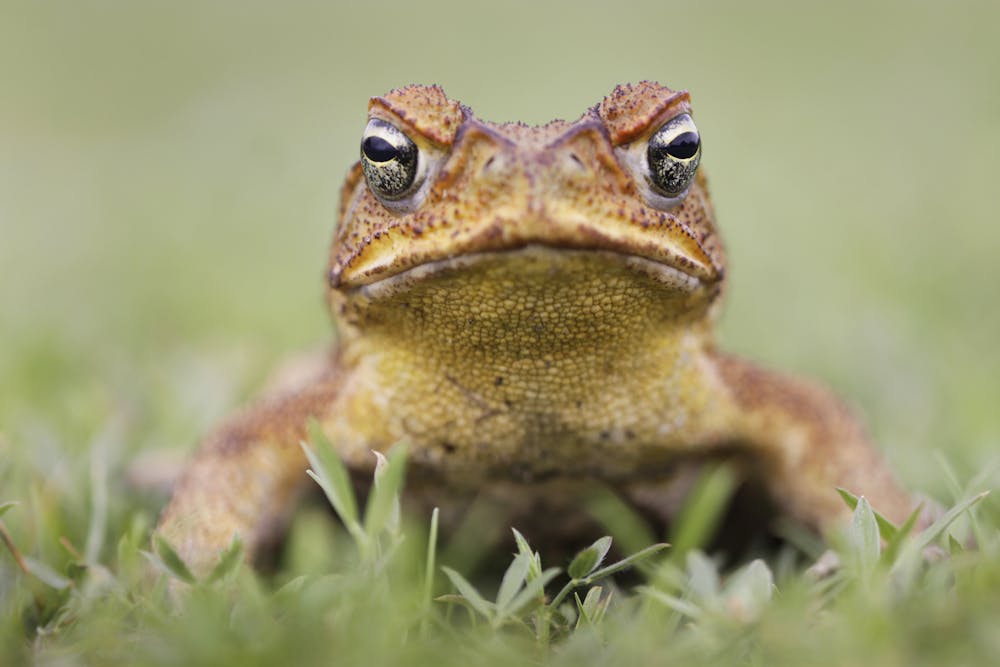 The poisonous cane toads are considered non-native pests in Australia.
Shutterstock
The poisonous cane toads are considered non-native pests in Australia.
Shutterstock
What kind of fences are we talking about?
Many water sources are actually already inaccessible to cane toads. Steel or plastic tanks filled from pipelines or underground dams cannot be reached. Troughs give a very limited supply.
The main problem comes from turkeynest dams (these are classic dams: pools of water in the ground with a mounded earth edge). My colleagues and I did research years ago that found a simple 60cm fence is enough to keep cane toads out.
Read more: We've cracked the cane toad genome, and that could help put the brakes on its invasion
This doesn’t mean fencing dams is easy: the stations where this would be most helpful are very remote and have plenty of water sources, so fencing (and maintaining) them all presents a logistical hurdle. However many stations are increasingly replacing dams with tanks, which serve the same purpose (and lose far less water to leakage and evaporation).
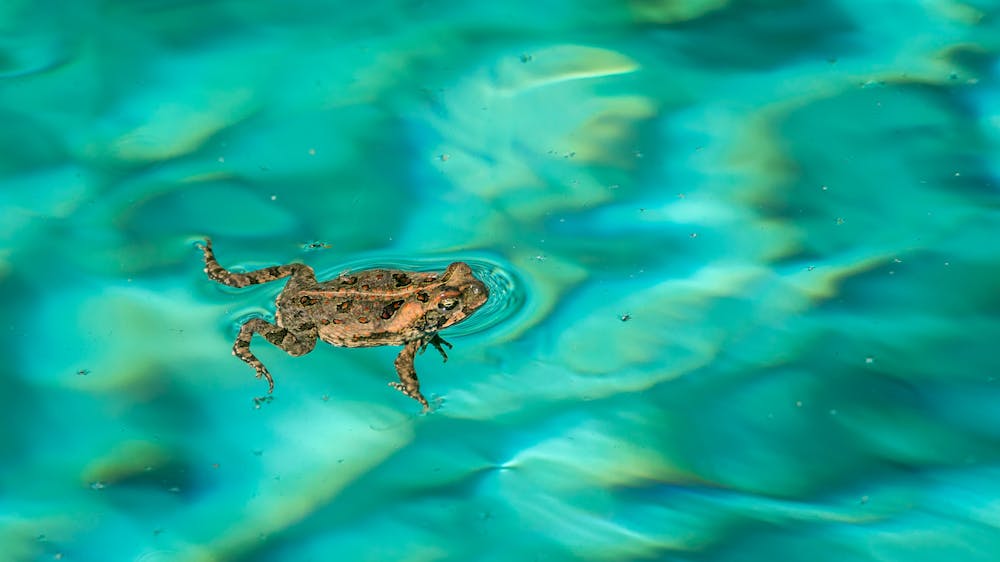 Cane toads need moisture to survive.
Shutterstock
Cane toads need moisture to survive.
Shutterstock
Another promising development is the number of farmers installing “cut-off switches” for the pumps that fill dams. This is a move away from the older system of turning on a pump and leaving it on until the generator ran out of fuel – perhaps days later. This meant considerable overflow, and created ideal conditions for cane toads. Tanks with solar panels and a cut-off switch that senses when a trough is full can save farms water, power and money, as well as stranding cane toads.
Read more: Yes, you heard right: more cane toads really can help us fight cane toads
Would it affect native animals?
It’s true some of these dams are now part of the landscape – they’ve been there for a long time. On the other hand, we’re talking about areas that did not originally have much above-ground water before people showed up, and most animals native to the area don’t really need the water (of course, they will drink it if it’s there).
The other part of the equation is the presence of cane toads seriously threatens native wildlife. Cane toads are poisonous and kill native predators, with devastating effects to the environment.
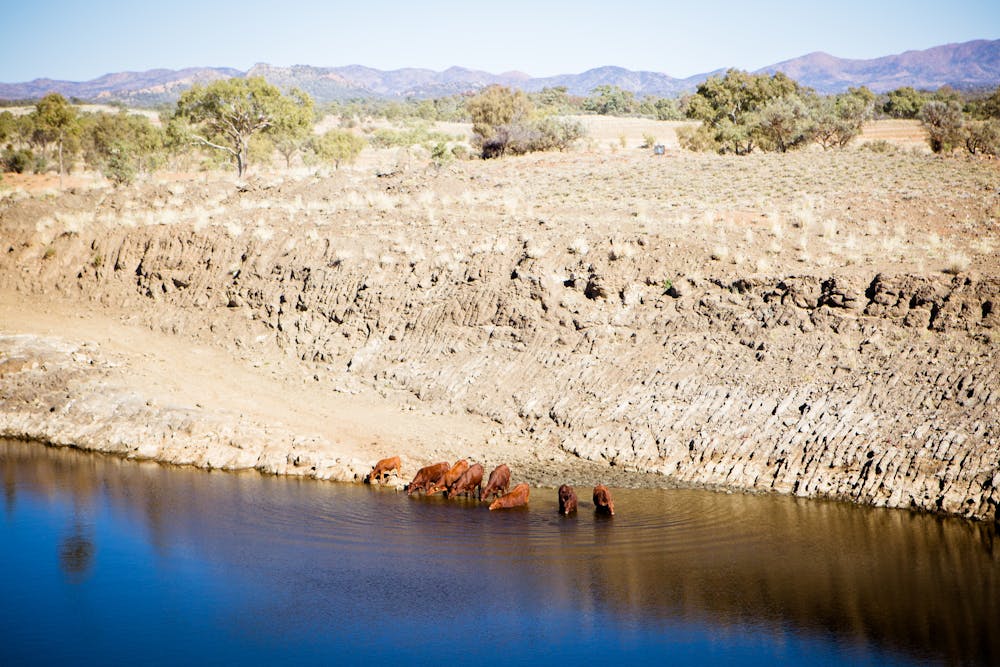 Herd cows drinking water from a Northern Territory dam.
Shutterstock
Herd cows drinking water from a Northern Territory dam.
Shutterstock
How big does the barrier need to be, and won’t the rains let the toads cross anyway?
The cattle stations in northern Australia are huge - often 5,000ha. On this scale, just a handful of stations could make a huge difference.
Research suggests a barrier of 50km across could stop toads in their tracks.
The distance a toad can travel in a day varies highly with the environment and weather. In a hot, humid environment a toad might be able to travel roughly 20-30km during a wet season; during cold or dry weather they’re stuck where they are.
Therefore even after heavy rains there won’t be enough water in standing puddles or river beds to let the toads cross the waterless barrier. The puddles would dry out, leaving the toads stranded and without access to dams they would quickly die.
Read more: The economics of 'cash for cane toads' – a textbook example of perverse incentives
Why should we do it?
Cane toads haven’t been found in this part of Australia, but we believe they will be soon. By creating waterless barriers we can cut them off.
Excitingly, this strategy also has potential to be used in other parts of the country to push cane toads back, reclaiming invaded areas.
Most of the pests Australia has really gone to war against affect agriculture. Cane toads, on the other hand, are an environmental pest: they wreak havoc on native fauna, but have comparatively little impact on cash crops.
Eradication of environmental pests receives comparatively little resources. This proposal would be both a win against a devastating invader, and also a symbol of how much we care for our natural environment, and how important it is to protect it.
Authors: Mike Letnic, Professor, Centre for Ecosystem Science, UNSW
Read more http://theconversation.com/what-is-a-waterless-barrier-and-how-could-it-slow-cane-toads-114363


 Daily Bulletin


