

How Dental Implants Enhance Your Chewing and Speaking Abilities
- Written by: Daily Bulletin
This article will discuss the link between dental implants and missing teeth and how they enhance communication and chewing efficiency. It will also cover the workings of dental implants, their benefits over conventional dentures, and what to anticipate from implant placement.
The Impact of Tooth Loss on Chewing and Speaking
To understand how dental implants Brisbane can enhance your chewing and speaking abilities, it's essential first to understand the consequences of tooth loss. When teeth are lost due to injury, decay, or periodontal disease, the gaps left behind can lead to significant problems:
- Chewing Difficulty: Missing teeth can make it difficult to chew food properly. When molars are missing, the back of the mouth may lack the necessary force for breaking down food, leading to digestive issues. Moreover, the remaining teeth may shift or become overused, causing strain and discomfort.
- Speech Impediments: When the tongue and teeth contact, certain letters and sounds, including "s" and "th," are created. Speech that is slurred or imprecise might be the result of this coordination being disrupted by missing teeth. Additionally, gaps may result in an artificial lisp or whistle.
- Jawbone Deterioration: When teeth are missing, the jawbone no longer receives stimulation from the tooth roots. Over time, this leads to bone loss, weakening the structure that supports remaining teeth and affecting facial symmetry.
How Dental Implants Work
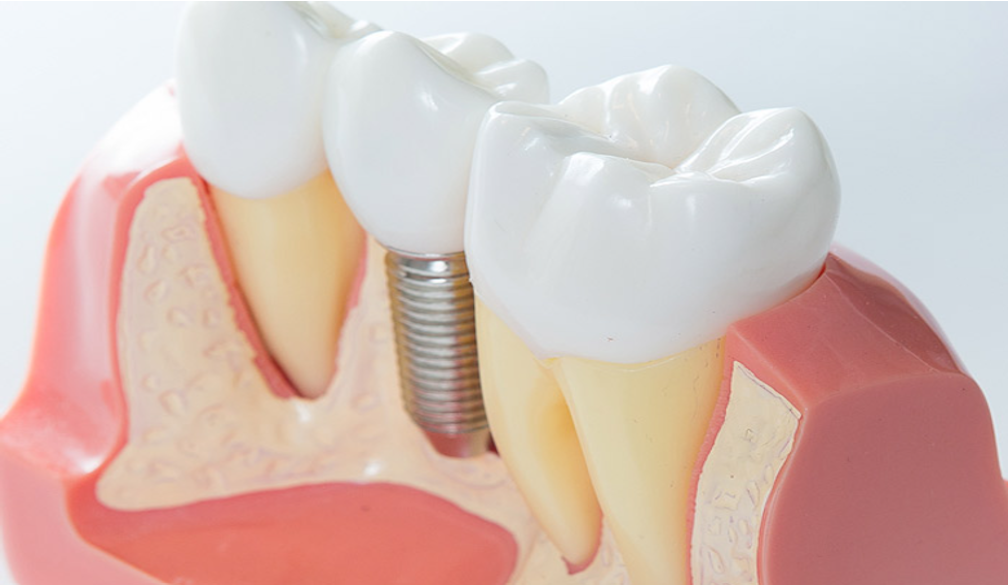
Dental implants are titanium or zirconia posts surgically placed into the jawbone where the tooth root typically resides. These posts are sturdy anchors for replacement teeth, such as crowns, bridges, or dentures. Over time, the bone naturally fuses with the implant through osseointegration, making the implant a permanent fixture.
The implant itself consists of three parts:
- The Implant Post: The screw-like post that is inserted into the jawbone.
- The Abutment: A connector piece that attaches the implant post to the crown.
- The Crown: The visible part of the tooth that sits above the gumline and functions like a natural tooth.
With this design, dental implants mimic the structure and function of a natural tooth, providing superior support for both chewing and speaking.
How Dental Implants Enhance Chewing Abilities
The primary function of teeth is to break down food for digestion, which starts in the mouth. Chewing is vital because it grinds food into smaller, more digestible pieces, allowing enzymes in saliva to begin the breakdown process. When teeth are missing, especially molars, this process is disrupted and forces other teeth to take on more work, often leading to uneven wear, jaw strain, and discomfort.
Here's how dental implants improve chewing efficiency:
- Stability and Strength
Dental implants provide unparalleled stability and strength compared to other tooth replacement options. Dental implants are anchored securely into the jawbone, unlike removable dentures, which may slip or shift while chewing. This allows you to bite and chew with the same force and control as natural teeth.
The strength of dental implants is particularly beneficial for eating more challenging foods, such as raw vegetables, meat, or crunchy snacks. Because dental implants are designed to bear a whole load of chewing pressure, they allow you to enjoy a wide variety of foods that might otherwise be difficult to consume with missing teeth or loose dentures.
- Natural Biting Force
The osseointegration process – where the implant fuses with the jawbone – allows dental implants to function like a natural tooth root. This strong foundation restores nearly 100% of your natural bite force. In contrast, dentures can only restore a fraction of your bite strength, limiting the types of food you can eat. With dental implants, you can enjoy your favourite foods without discomfort or fear of damaging your teeth.
- Even the Distribution of Chewing Pressure
Missing teeth can cause an uneven distribution of chewing forces across your mouth, which can damage remaining teeth or cause jaw problems like temporomandibular joint (TMJ) disorder. Dental implants ensure that chewing pressure is evenly distributed across your teeth, reducing the strain on individual teeth and preserving the health of your jaw joints.
- Prevention of Bone Loss
When you chew, the pressure and stimulation are transferred from the teeth to the jawbone, which helps maintain bone density. When a tooth is missing, that jawbone area no longer receives stimulation, leading to bone loss. Dental implants counteract this by transferring chewing forces to the jawbone, like natural teeth. This stimulation prevents further bone deterioration and helps maintain the structure and strength of your jaw.
- No Food Restrictions
One of the frustrations with traditional dentures or missing teeth is the limitation on certain types of foods. Sticky, complex, or chewy foods can be challenging to eat with dentures, and missing teeth can make biting into things like apples or corn on the cob impossible. Dental implants allow you to eat a varied diet without worrying about damaging your teeth or causing discomfort.
How Dental Implants Improve Speech
Teeth play a crucial role in the formation of speech sounds. They help to control airflow and guide the tongue as it moves to create different sounds and words. When teeth are missing, speech can become slurred, unclear, or even produce a whistling sound.
Here's how dental implants help restore natural speech patterns:
- Stabilisation of Dentures or Bridges
Speaking clearly can be a significant challenge for patients with removable dentures. Dentures can slip or shift, making pronouncing certain words and sounds difficult. Dental implants anchor dentures securely, preventing movement and allowing for more precise, confident speech.
Implant-supported dentures or bridges feel and function like natural teeth, making it easier to articulate words without fear of dentures slipping or clicking against each other.
- Restoration of Speech Sounds
Certain sounds, mainly "s" and "th", require the tongue to contact the front teeth. Missing front teeth can make these sounds difficult to form correctly, leading to a lisp or speech impediment. Dental implants replace these missing teeth, restoring the tongue's natural ability to contact teeth and produce clear sounds.
- Improved Control Over Airflow
Teeth help to regulate airflow in the mouth, which is essential for speech. Missing teeth can cause excess air to escape while speaking, creating a whistling or hissing sound. Dental implants fill these gaps, helping to restore proper airflow control and prevent these unnatural speech patterns.
- Prevention of Jawbone Deterioration
As mentioned earlier, the jawbone begins to deteriorate when teeth are missing due to lack of stimulation. This can alter the structure of your face and mouth, affecting how sounds are produced. Dental implants help maintain the jawbone's integrity, preserving the mouth's shape and ensuring speech remains clear and unaffected.
Dental Implants vs. Other Tooth Replacement Options
While dental implants are an investment, they offer several advantages over other tooth replacement options like dentures and bridges when it comes to improving chewing and speaking abilities:
1. Implants vs. Dentures
- Chewing: Dentures rest on the gums and rely on adhesives or suction to stay in place. They can slip, causing discomfort while chewing and limiting the types of food you can eat. Dental implants are securely anchored, providing a stable chewing surface and eliminating adhesive need.
- Speaking: Dentures can cause speech issues, particularly slurring or whistling sounds, due to movement. Implant-supported dentures or single-tooth implants remain fixed, allowing for more natural speech.
2. Implants vs. Bridges - Chewing: Traditional bridges are supported by adjacent teeth, which may weaken over time. Implants don't rely on neighbouring teeth for support, so they distribute chewing forces more evenly and naturally.
- Speaking: Bridges can still leave small gaps or feel bulky in the mouth, which may interfere with speech. Conversely, implants provide a smooth, seamless fit that closely mimics natural teeth, allowing for standard speech patterns.
The Dental Implant Process
The process of receiving dental implants typically involves several stages:
- Initial Consultation: During this visit, your dentist Ellenbrook or oral surgeon will evaluate your oral health, take X-rays, and discuss the best treatment options for you. You may require a bone graft before receiving implants if you have significant bone loss.
- Implant Surgery: The implant post is surgically placed into the jawbone. After surgery, it takes a few months for the bone to integrate with the implant and form a strong bond.
- Abutment Placement: An abutment is attached to the post once the implant fuses with the bone. This serves as the connector between the implant and the replacement tooth.
- Crown Placement: Finally, a custom-made crown is attached to the abutment, completing the implant process. This crown is designed to match the colour and shape of your natural teeth, ensuring a seamless fit.
Conclusion
Dental implants are a life-altering option for those lacking teeth. They improve speech clarity and restore full chewing strength, which improves general quality of life. They are a durable, practical option that offers comfort and functionality while boosting confidence.

 Daily Bulletin


