

Smart Wardrobe Storage Ideas for Small Sydney Apartments and Bedrooms
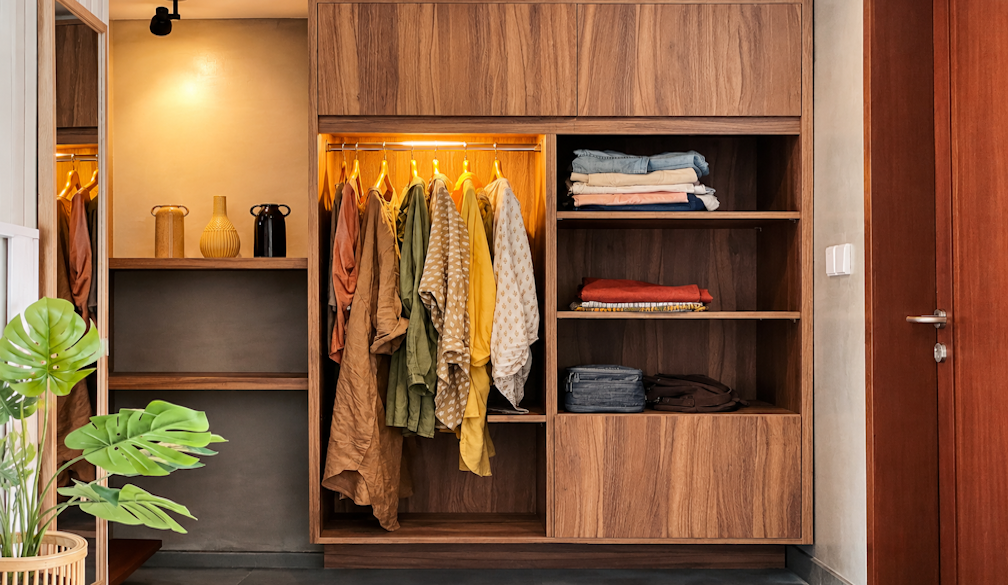
A well-designed wardrobe is one of the most useful things a home can have. It's meant to keep clothes, shoes and accessories organised and out of the way. But Australian homes have shrunk, and a lot of wardrobes haven't kept pace.
The result is familiar. Clothes end up draped over the couch because there's no space left on the rail, shoes get shoved into a basket by the door, and accessories are crammed into whatever container still has room. None of that is really the wardrobe's fault. It's simply not built for the space it's in.
It's a particularly common problem in Sydney. The 2021 Census found that 30.7% of occupied dwellings in Greater Sydney are flats or apartments, more than double the national rate of 14.2%, and almost a quarter of Sydney households are single-person homes. Smaller floorplans and smaller wardrobes tend to go hand in hand.
So what if you could get maximum storage out of a small space, without giving up an inch of floor? That's what this guide is for. With a wardrobe designed around your room instead of a standard size off the shelf, you can fit in far more than you'd expect. Here are five ways to do it.
-
Use the Full Height of the Room
Most standard wardrobes stop well short of the ceiling, leaving a stretch of empty space above that ends up as dead air, or worse, a magnet for dust.
A custom wardrobe can run floor-to-ceiling, turning that upper section into genuine storage, where it’s safe and easy to store suitcases, spare bedding, out-of-season clothes, anything you don't need to reach every day. Keep the top for things you rarely use and the middle and lower sections for what you wear day to day, and even a narrow wardrobe can hold a surprising amount.
-
Choose Sliding Doors Where Floor Space is Tight
A hinged door needs somewhere to swing open, and in a small bedroom that space is usually already taken by the bed, a bedside table, or the path you walk to get to either.
Sliding doors solve that by moving sideways across the front of the wardrobe rather than out into the room. That’s why they're a natural fit for apartments where the wardrobe sits close to the bed, and they tend to give the wall a cleaner, more streamlined look too.
-
Use Mirrored Doors to Open the Room Up
Small rooms often feel smaller than they are, and doors play a big part in that. Mirrored wardrobe doors reflect light back into the room and create the impression of more space than there actually is, which makes a real difference in a bedroom with limited square footage.
In addition, they're practical too. A full-length mirror built into the wardrobe door means one less thing to find wall space for elsewhere.
-
Design the Inside Around What You Actually Own
A wardrobe can have plenty of total storage and still feel like it's never quite enough, if the inside isn't laid out for what you actually own. Filling half the space with a hanging rail doesn't help much if most of your clothes are folded. Equally, if your wardrobe is full of dresses, coats or shirts, you'll want more hanging height, not less.
Think through what actually needs to go in, like everyday clothes, shoes, bags, accessories, bedding, luggage. Each works better with a different kind of storage, for example, drawers for the small things that otherwise end up in piles, adjustable shelving for anything you might rearrange later, and hanging space sized to what you actually wear.
-
Put Awkward Corners and Alcoves to Work
Few small bedrooms have perfectly square, convenient walls. There's often a shallow alcove, an angled corner, a chimney breast, or a strip of wall too narrow for a standard piece of furniture to sit against.
Rather than leaving that space empty, a custom wardrobe can be shaped to use it, like a slim shelving unit for shoes or bags, a set of drawers tucked into a lower section, or a taller run of hanging space wherever the wall allows. This ensures that the odd-shaped bits of the room aren't wasted.
Ready to Match the Wardrobe to Your Home?
Getting real storage out of a small bedroom comes down to treating the wardrobe as part of the room's design, not something bolted onto whatever wall has space left. Full height, doors that suit the space available, and a layout built around what you actually own can turn even the tightest apartment into somewhere everything has a proper place.
From Sydney Wardrobe Company's experience working with bedrooms and apartments across Sydney, one of the main challenges in smaller properties is making better use of the available vertical and internal storage space. Their website confirms they provide Sydney-wide service, with custom wardrobe solutions designed around each room's individual layout.
If your bedroom or apartment is fighting you for space, it's worth speaking with a wardrobe company in Sydney about what a bespoke design could do for the room. The right layout does more than add storage. It can genuinely elevate how the space works and how much function a home has to offer.
FAQs
Are sliding wardrobe doors better for small bedrooms?
Often, yes. Because they slide across the front of the wardrobe instead of swinging outward, they don't need the extra clearance a hinged door does, which matters when the wardrobe sits close to the bed.
Is a custom wardrobe worth it for a small apartment?
It usually is, especially where the room has an awkward shape or limited floor space. A made-to-measure wardrobe can use gaps, corners and vertical space that a standard piece of furniture leaves behind.
Can a wardrobe be built around an awkward corner?
Yes. Alcoves, angled corners, sloping ceilings and other unusual shapes can typically be worked into a custom design, in a way that's difficult with off-the-shelf furniture.
Which wardrobe doors work best in a small bedroom?
Mirrored doors can reflect light and give the impression of a larger room, while also removing the need for a separate full-length mirror.
Simple painted or glass finishes can work well where you want the wardrobe to blend into the room rather than become its main feature.
For older or character homes, the wardrobe does not necessarily need to look completely contemporary. A federation-style custom door, for example, can be designed to sit more comfortably alongside existing architectural details. Custom wardrobe doors can be matched more closely to the character of the room rather than looking like a piece of furniture that has simply been placed against the wall.


 Daily Bulletin


