

Gold, stocks, and dollar: Octa’s guide to navigating market volatility during election time
- Written by: Daily Bulletin
- Published in News from Asia
KUALA LUMPUR, MALAYSIA - Media OutReach Newswire - 2 September 2024 - The influence of presidential elections on financial markets is often temporary. Still, the psychological effect of elections on traders and investors can cause emotional and illogical behaviour, contributing to increased market swings.
Apart from the White House, the Senate is also up for grabs this fall, and the balance of power inside the legislative branch could be just as important. To mitigate potential losses, investors should refrain from purchasing risky assets during periods of election-related uncertainty. The sheer fact that presidential elections are taking place in a deeply divided yet highly important country is already having a bullish impact on gold prices.
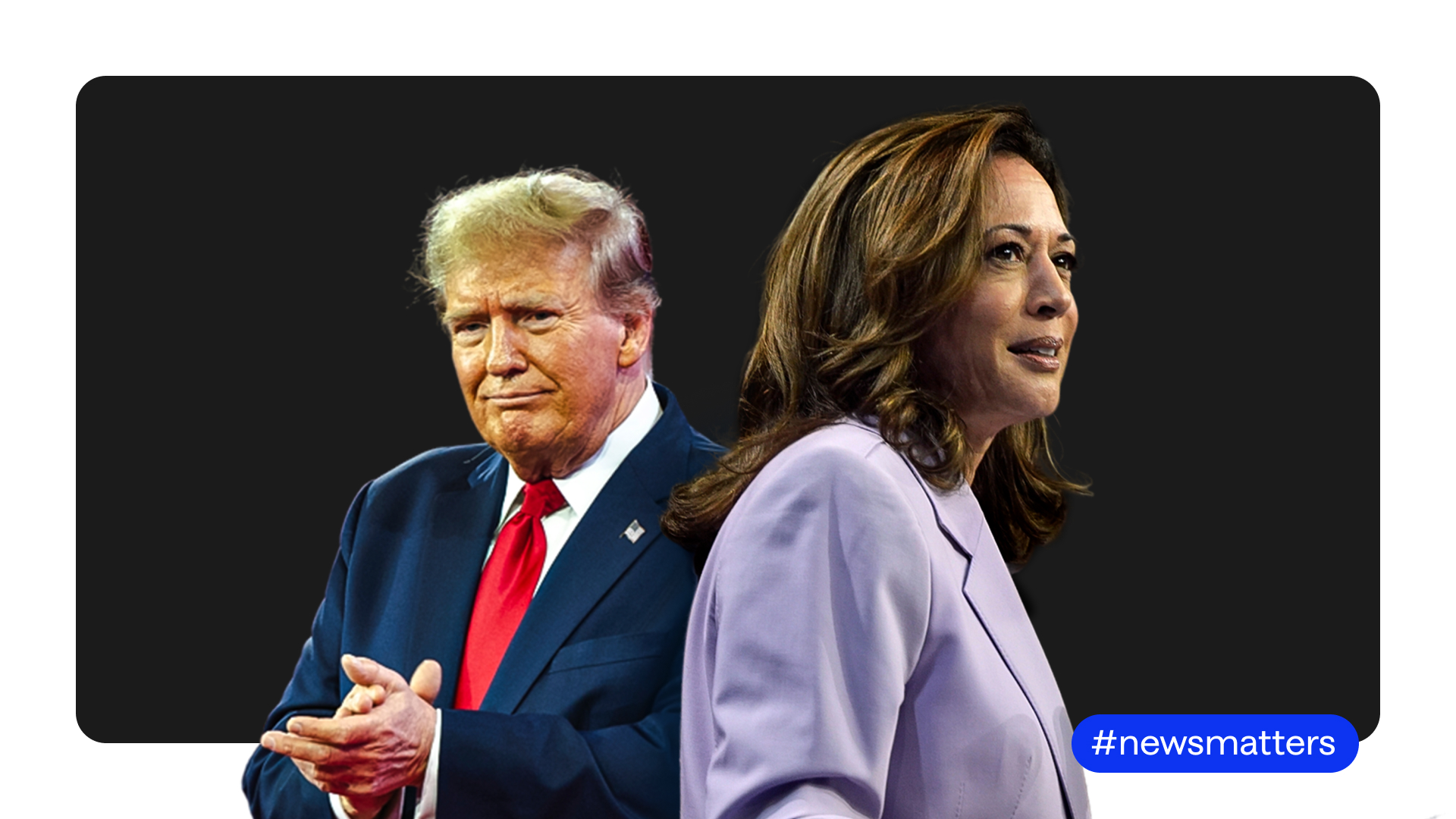
When it comes to quick money-making on the financial markets, retail traders often disregard political events. Instead, they prefer to focus on regular macroeconomic releases, such as scheduled Consumer Price Index (CPI) readings or Nonfarm Payrolls (NFP) reports. However, politics and economics often go together. And if there is one political event that traders cannot afford to overlook this year, it is certainly the U.S. presidential elections, which are set to be held on Tuesday, November 5, 2024. This pivotal event doesn't just influence American citizens—it has a significant ripple effect on global financial markets. From Wall Street to the commodities markets, the implications of the U.S. presidential election could be profound and far-reaching.
The candidates
American voters will choose between Kamala Harris, the Democratic nominee, and former President Donald Trump, the Republican nominee.
Kamala Harris aligns closely with the current president, Joe Biden, especially on domestic policies. She is backing national abortion protections, LGBT+ rights, and significant fiscal stimulus measures, such as student debt relief. She is also a staunch advocate of new legislation to address climate change and wants to move the U.S. economy toward cleaner energy sources. As a presidential candidate, she introduced a staggering $10 trillion climate plan, greatly surpassing Biden’s $1.6 trillion initiatives. In addition, Harris also advocated for a ‘climate pollution fee’ and proposed the elimination of federal subsidies for fossil fuels. Although Harris launched her political career in Silicon Valley, she is now calling for regulations to address the dangers of artificial intelligence (AI) and enhance data privacy rules. Her record on trade policies suggests that she is somewhat sceptical of free trade. ‘There would be no trade deal that would be signed unless it protected American workers and it protected our environment,’ she was quoted as saying at one point.
Donald Trump’s previous administration was characterised by tax cuts, deregulation, and a focus on trade policies. During the 2024 campaign, Trump has repeated his intention to cut red tape, reduce government spending, and bring inflation down. He intends to lift the restrictions on fossil fuel production and cancel the electric vehicle mandate. Additionally, Trump seems to be leaning towards protectionism as he has explicitly promised to ‘stop outsourcing and turn the United States into a manufacturing superpower’. Domestically, one of his most radical proposals is to deport millions of illegal immigrants and seal the border. As for the tech sphere, the Republicans aim to put an end to what they describe as Democrats' overreach in regulating cryptocurrencies. They vow to defend the rights of Americans to mine Bitcoin (BTC) and manage their digital assets independently. Additionally, they promise freedom from government surveillance and control of digital transactions. They also plan to overturn President Biden's executive order on AI, which they believe hinders innovation.
Implications for the markets
Before discussing the potential implications of the U.S. presidential elections on the financial market, there is one important caveat to make—U.S. presidents are not omnipotent. The U.S. is a sprawling nation with numerous institutions, a developed political framework, and a complex system of checks and balances. No president can single-handedly steer the entire country in one direction. For instance, if Kamala Harris becomes president but the Senate remains Republican-controlled, she would face significant hurdles in pushing through her initiatives. Likewise, with a Democrat-controlled Senate, President Trump might find his policies completely stalled. Therefore, while the executive branch of government is undeniably significant, its power has limits and should not be overstated. In this regard, it is worth remembering that in addition to the high-stakes presidential race, this fall's ballot also includes one-third of the U.S. Senate seats (presently held by a slim Democratic majority) and all 435 seats in the House of Representatives (where Republicans hold a slight edge).
It's also important to note that the impact of presidential elections on financial markets can be short-lived. While there may be immediate reactions to the election results, markets often stabilise as the new administration's policies become clearer. For example, after the initial pre-election decline in 2016, the stock market then continued to rise as the Trump administration implemented its economic agenda. Similarly, gold prices and the dollar often return to their pre-election trends once the uncertainty dissipates and investors gain more clarity on future policies.
U.S.Stocks
Kar Yong Ang, an Octa analyst, comments: ‘Obviously, investors will react to the perceived economic agendas of the candidates, leading to fluctuations in stock prices, but right now they are more focused on corporate earnings and potential interest rate cuts by the Federal Reserve (Fed)’.
Still, the U.S. presidential candidates focus on different agendas, and some sectors of the U.S. economy may perform better depending on who wins the election. Judging solely by their platforms, it seems reasonable to infer that under Donald Trump, the following broad sectors may perform well:
- Energy companies (particularly those involved in fossil fuel production)
- Industrials and manufacturing companies (such as General Electric and 3M)
- Pharmaceutical and biotech companies (Pfizer, Johnson & Johnson, and Moderna)
- Tech companies (particularly those not heavily reliant on international supply chains)
- Companies in the renewable energy sector
- Companies with strong diversity and inclusion initiatives
- Infrastructure companies
- Healthcare companies (particularly those focused on expanding access to healthcare services)
U.S. Dollar
Neither of the candidates has provided specific details about how they intend to tackle the huge debt that the U.S. has accumulated over the past years. Harris’ ambitious spending plans on infrastructure and the environment may potentially undermine the U.S. fiscal position and lead to a weaker dollar. At the same time, Trump has explicitly stated that he wants to preserve the U.S. dollar as the world’s reserve currency. However, his leaning toward protectionism might hurt global trade and encourage other countries to look for alternatives to the U.S. dollar.
If Kamala Harris wins
A Harris administration might prioritise increased government spending on social programs, healthcare, and infrastructure. While such spending could stimulate economic growth, it could also lead to larger budget deficits, necessitating increased borrowing and possibly putting downward pressure on the dollar.
If Harris were to implement higher taxes on corporations and the wealthy and introduce new regulations, it could lead to reduced corporate profits and potentially slower economic growth. This might weaken investor confidence in the U.S. economy, leading to a dollar depreciation as investors seek higher returns elsewhere.
Generally speaking, the market views Harris’ victory as bearish for the U.S. dollar.
If Donald Trump wins
During his previous administration, Trump implemented tariffs and renegotiated trade deals, which had mixed effects on the dollar. A renewed focus on protectionist policies could strengthen the dollar in the short term due to reduced imports and a lower trade deficit. However, if global trade tensions escalate, it could also lead to long-term depreciation.
Trump's approach to fiscal policy has typically involved tax cuts, which can lead to higher budget deficits. While tax cuts might initially boost economic growth and support the dollar, sustained deficits could eventually undermine confidence in the U.S. fiscal position, leading to a weaker dollar over time.
Monetary policy interactions are another critical aspect. ‘Trump has explicitly stated that he wants presidents to have a role in setting borrowing costs. It is quite a radical proposal by modern standards, the effects of which are very difficult to estimate’, said Kar Yong Ang, Octa analyst.
Generally speaking, the market views Trump’s victory as bullish for the U.S. dollar—particularly, in the short term. The longer-term outlook, however, is less certain.
Gold
If Kamala Harris wins
A Harris victory might be perceived as a shift towards more progressive policies, which could include increased regulation and higher corporate taxes. These changes could create volatility in the stock market, leading investors to flock to gold as a more stable investment.
Additionally, if Harris's policies lead to a weaker U.S. dollar, this could further boost gold prices. Gold is typically inversely related to the dollar: when the dollar weakens, gold prices usually rise.
If Donald Trump wins
One potential outcome of Trump’s victory is that it could lead to increased geopolitical tensions and trade uncertainties. During his previous term, Trump's administration engaged in trade wars, particularly with China, which created economic uncertainty. Because gold is considered to be a safe-haven asset during times of geopolitical instability, heightened tensions could drive investors to flock to gold, pushing its price higher.
Additionally, Trump's stance on monetary policy could influence gold prices. If his administration were to pressure the Fed to maintain low interest rates or engage in further monetary easing, this could weaken the U.S. dollar. A weaker dollar typically makes gold cheaper for foreign investors, increasing demand and potentially driving up the price of gold.
Gold is poised to shine
Kar Yong Ang, Octa analyst, puts it this way: ‘It is not so much the policies of the actual candidates that are bullish for gold; it is the sheer fact that the elections are taking place that is bullish. Emotions run high, and most polls put Harris and Trump neck and neck in the presidential race. I think that the overall impact on gold prices would depend on the candidates’ preparedness and willingness to concede defeat and avoid wider confrontation’.
Indeed, many political analysts have noted that American society has become increasingly polarised over the past years. Consequently, an indecisive victory for either candidate could ignite widespread discontent among their opponents, potentially leading to large-scale protests. Under these circumstances, gold will certainly shine. Conversely, if the election outcome leads to market confidence and stability, the demand for gold might dip as investors move their money back into equities and other assets perceived as having higher returns.
Hashtag: #Octa
The issuer is solely responsible for the content of this announcement.
Octa
Octa is an international broker that has been providing online trading services worldwide since 2011. It offers commission-free access to financial markets and various services used by clients from 180 countries who have opened more than 52 million trading accounts. To help its clients reach their investment goals, Octa offers free educational webinars, articles, and analytical tools.
The company is involved in a comprehensive network of charitable and humanitarian initiatives, including the improvement of educational infrastructure and short-notice relief projects supporting local communities.
In the APAC region, Octa received the ‘Best Trading Platform Malaysia 2024’ and the ‘Most Reliable Broker Asia 2023’ awards from Brands and Business Magazine and International Global Forex Awards, respectively.


 Daily Bulletin


