

Conflux‘s Hong Kong Office Officially Opens, Ushering in a New Chapter of Global Growth
- Written by: Daily Bulletin
- Published in News from Asia
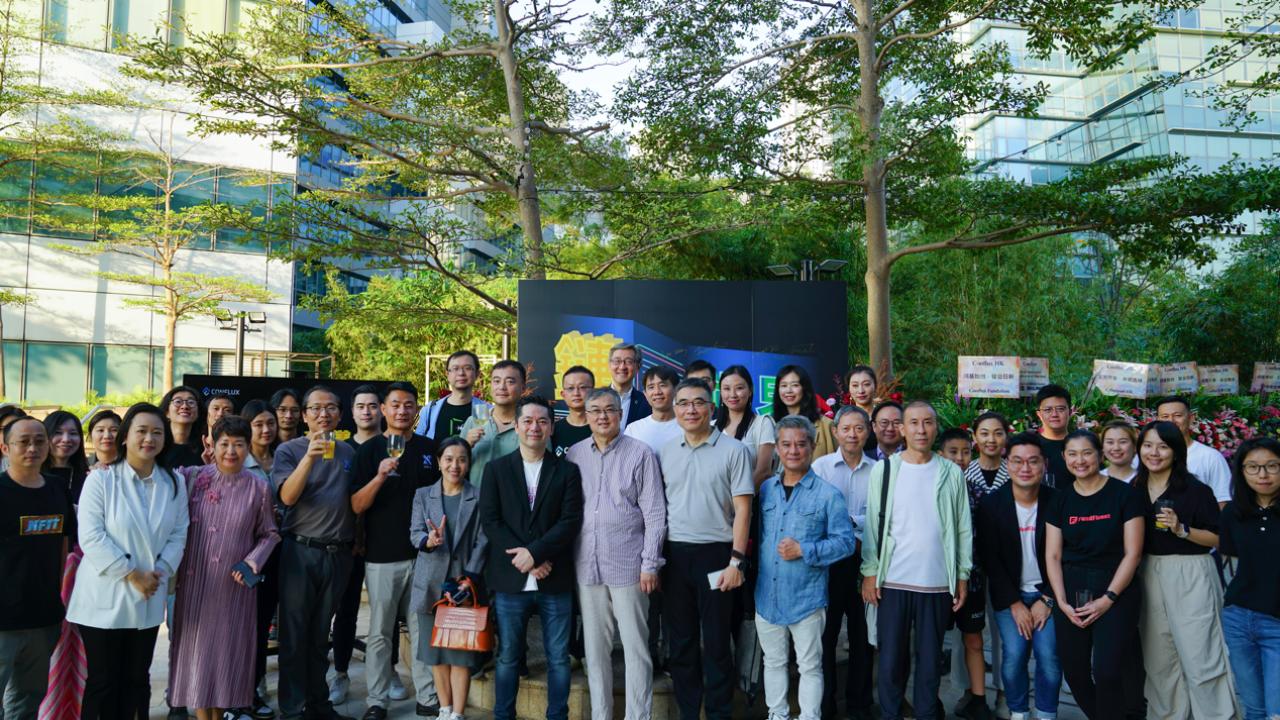
HONG KONG SAR - Media OutReach - 27 October 2023 - On October 25th, the Conflux Hong Kong office celebrated its official launch with an opening ceremony at the Hong Kong Cyberport.

Conflux founder Professor Long Fan was unable to attend in-person and instead sent his blessings through a video call. The ribbon-cutting ceremony was conducted jointly by Peter Yan, CEO of Cyberport Management Co., Ltd., Terry Chan from the Invest Hong Kong of the Hong Kong Special Administrative Region Government, Dr. Wu Ming, Co-founder and Chief Technology Officer of Conflux, and Zhang Yuanjie, Co-founder and Chief Operating Officer of Conflux. Special congratulations were extended by Dr. Joseph Rodarick Law, Justice of the Peace of Australia and Executive Chairman of J Global. Positioned strategically in the heart of Asia and extending its reach worldwide, the Hong Kong office stands as a pivotal hub in Conflux's comprehensive internationalization strategy to deliver services to global users and partners.
Next, Terry Chan from the Invest Hong Kong of the Hong Kong SAR Government offered his blessings. He emphasized that Hong Kong's free, open, and well-regulated business environment provides an excellent foundation for developing the digital economy. He congratulated Conflux on the opening of the new office and expressed his hope that Conflux, leveraging Hong Kong's unique advantage of being "backed by the motherland and connected to the world," will expand its digital business, support the development of the Greater Bay Area, and align itself with the global community.
Peter Yan, CEO of Hong Kong Cyberport Management Co., Ltd., also offered his congratulations. Peter stated that Cyberport has evolved into an innovation community centered around the digital industry, bringing together over 1,900 technology and creative enterprises. Cyberport is actively working to establish itself as a global digital technology hub, contributing to the economic momentum in Hong Kong. He congratulated Conflux on the opening of their office and expressed his commitment to providing support to Conflux, working together to create Cyberport's digital advantage.
Afterwards, Dr. Wu Ming, Co-founder and Chief Technology Officer of Conflux, delivered a speech. He introduced Conflux's upcoming global strategic plan, stating that Hong Kong marks the first step of Conflux's global strategy. Subsequently, offices will be established in Dubai, Europe, and other regions, to expand business outreach and connect with the global digital ecosystem. In the meantime, Dr. Wu Ming expressed that the Conflux Hong Kong office will fully utilize Hong Kong's advantages in international finance, technology, and trade. By actively integrating into Hong Kong's blueprint for technological development, Conflux will collaborate with more users and ecosystem partners, leverage the advantages of technological innovation, and contribute to the development of Hong Kong's digital economy.
The next address came from Zhang Yuanjie, Co-founder and Chief Operating Officer of Conflux, where he presented the current state of Conflux's ecosystem, highlighted select ecosystem application cases, and unveiled the ecosystem layout plan. He expressed his optimism about Hong Kong's role as a global financial hub, and promised that Conflux remains committed to providing high-quality Web 3.0 infrastructure and ecosystem support, bolstering blockchain technology, digital economy, and Web 3.0 development in Hong Kong and China.
Dr. Joseph Rodarick Law, Justice of the Peace of Australia and Executive Chairman of J Global, delivered the last speech. He welcomed technological pioneers like Conflux to Hong Kong, encouraging them to establish their roots in the city. He expressed his blessings for the future development of Conflux in Hong Kong.
Conflux was founded in 2018, with Professor Long Fan and Chief Scientist, as well as Turing Award laureate, Professor Andrew Yao at its core. The team comprises exceptional young computer scientists from prestigious institutions such as Tsinghua University, Shanghai Jiao Tong University, China University of Science and Technology, and the Massachusetts Institute of Technology. Following two years of dedicated research and development, the team launched the Conflux public blockchain globally. As the sole regulatory compliant public blockchain in China and one of the high-quality underlying infrastructures for the development of Web 3.0, Conflux's public blockchain has achieved a leading edge in data, boasting 3000+ transactions per second (TPS), 5000+ nodes, 0.5-second block time, and 23-second confirmation time. The mainnet has been running stably for nearly three years, with over 24.7 million on-chain accounts, 127 million transactions, and nearly 18,000 deployed smart contracts. Conflux ranks third in the world in terms of network size (by number of consensus nodes) and is the only Chinese public blockchain that stands among the top global performers.
At the opening ceremony, Dr. Wu Ming also introduced to the guests the Blockchain SIM card ("BSIM card"), jointly developed by Conflux and China Telecom. Leveraging the hardware security advantages of SIM cards, the BSIM card protects user private keys, presenting a seamless and secure solution for Web 3.0 users. He mentioned that in the near future, Conflux will initiate pilot testing for the BSIM card in Hong Kong.
The Conflux Hong Kong office welcomes partners from various industries to consult and collaborate to foster a more vibrant and diverse ecosystem. Leveraging its performance and integration advantages, Conflux will engage in strategic collaborations with its ecosystem partners in areas such as technological innovation and talent exchange. With the support of the Greater Bay Area, Hong Kong serves as Conflux's gateway to digital innovation, embracing policies that explore the innovative potential and future prospects of digital economy and Web 3.0.
Hashtag: #Conflux
The issuer is solely responsible for the content of this announcement.
About Conflux
Conflux was established in 2018, with Professor Long Fan and Chief Scientist, as well as sole Chinese Turing Award recipient, Academician Andrew Yao, at its core. The team is composed of a group of top young computer scientists from prestigious global institutions such as Tsinghua University, Shanghai Jiao Tong University, China University of Science and Technology, and the Massachusetts Institute of Technology. Focused on the research and development of blockchain fundamental infrastructure and key technologies, Conflux is dedicated to bringing more people the benefits of blockchain technology.
After two years of intensive research and development, the Conflux team launched its public chain globally. Its core innovation lies in the Tree-Graph consensus algorithm, which organizes blocks based on a tree-graph structure. This novel approach integrates several innovative technologies, including a high-bandwidth transaction forwarding protocol, dynamic bandwidth allocation, transaction latency execution, and incremental MPT data structure. These innovations significantly enhance the overall performance of the blockchain system, covering aspects such as networking, consensus, storage, and execution.
Conflux now boasts 3000+ transactions per second (TPS), 5000+ nodes, 0.5-second block time, and 23-second confirmation time. The mainnet has been running stably for nearly three years, with over 24.7 million on-chain accounts, 127 million transactions, and nearly 18,000 deployed smart contracts. Conflux ranks third in the world in terms of network size (by number of consensus nodes) and is the only Chinese public blockchain that stands among the top global performers. With stable cross-chain services and extensive developer tool support, Conflux has incubated and hosted hundreds of diverse ecosystem projects. Among them, more than 150 enterprises have been incubated domestically in the digital collectible platforms category alone. Additionally, Conflux has collaborated with various global brands on blockchain foundational technology and metaverse activities, including China Telecom, Xiaohongshu (Little Red Book), McDonald's China, Oreo, and Naixue's Tea.
The team's independently developed core blockchain technologies have been published in multiple top international academic papers and received two granted patents in the United States. Their innovative and advanced solutions have garnered widespread attention from both the academic and industrial sectors. Conflux is notably the only Chinese-led blockchain project mentioned in the technical whitepaper of Diem (formerly known as Libra), Facebook's consortium chain project. With its globally leading performance, Conflux has shattered the monopoly of Western countries in the blockchain underlying technology field.
About BSIM Card
The Blockchain SIM card ("BSIM card"), jointly developed by Conflux and China Telecom, leverages the hardware security advantages of SIM cards, to protect users' private keys, presenting a seamless and secure solution for Web 3.0 users. The BSIM Card is nearly identical to traditional SIM cards in appearance but offers 10-20 times more storage space and significantly enhanced computational capabilities. It can generate and store user public-private key pairs within the card and perform digital signatures without revealing the private key, thereby reducing the risk of malicious software attacks such as mobile Trojan Horses and other viruses. Its advantages include:
- Portability: Integrated into the user's phone SIM card, eliminating the need for additional devices.
- High Security: Features a Secure Element (SE) chip with a security level equivalent to bank card chips.
- High Performance: Utilizes ECC hardware co-processors for fast signature generation.
- Universal Compatibility: Adopts a Bluetooth 4.0 interface, compatible with Android and iPhone smartphones.
- User-Friendly: User interface aligns with common mobile apps, reducing the learning curve.
- Easy Promotion: Can be bundled with carrier marketing systems, facilitating promotion and subsequent value-added services.
Applications of BSIM Cards include digital asset management, digital identity, "three-proof" phones (anti-fraud, anti-harassment, anti-loss), and IoT terminals.


 Daily Bulletin


