

how to protect your kids from online sexual abuse
- Written by: Divna Haslam, Senior Research Fellow (Faculty of Law/ Health) & Clinical Psychologist, Queensland University of Technology
Parents have many things to worry about. It’s easy to stick our heads in the sand and assume bad things - like sexual abuse - won’t happen to our kids.
But online sexual abuse is increasing at an exponential rate.
Last week, the Australian Federal Police announced it had busted an alleged child sex offender network, warning
child exploitation in Australia is becoming more prolific … this type of offending is becoming more violent and brazen.
Read more: Dark web: Study reveals how new offenders get involved in online paedophile communities
The risks are especially high at the moment, as we spend more time on devices during the pandemic lockdown.
For example, recent media reports have warned about Zoom calls being hijacked by offenders showing child abuse material.
This article, based on our work as parenting and maltreatment experts, looks at how parents can protect their children from online sexual abuse.
In a separate piece, we also look at how to protect kids from in-person sexual abuse.
How common is online sexual abuse?
Online sexual abuse occurs across many platforms including social media, text messaging, websites, various apps, such as WhatsApp and Snapchat and the dark web.
Very broadly, it includes asking a child to send sexual content, a person sending your child sexual content, “sextortion” (coercing or manipulating children for sexual gain), and viewing, creating or sharing child exploitation/ abuse material (sometimes inappropriately referred to as “child pornography”).
Read more: Cyber threats at home: how to keep kids safe while they're learning online
A 2018 survey of more than 2,000 children in the United Kingdom found one in seven children had been asked to send sexual information. And one in 25 primary school children (that’s roughly one in every class) had been sent or shown a naked or semi-naked picture or video by an adult.
Who are the abusers?
Online abusers are most likely to be Caucasian males who are attracted to prepubescent children.
They differ from in-person abusers in that they are less likely to have easy physical access to children, have higher internet use, higher levels of education, and are less likely to have a criminal history. However, some people abuse children both online and in person.
Read more: 'It's real to them, so adults should listen': what children want you to know to help them feel safe
Importantly, some online sexual abuse is also committed by other adolescents under the age of 18, creating and sharing sexual images.
Research estimates 16% of Australian children between 10 and 19 receive “sexts” - sexually explicit or sexually suggestive texts or images via phone or internet - and 10% send them.
Some image sharing occurs in genuinely consensual peer relationships, and this is generally not abusive. However, any coercion to share sexual content constitutes abuse.
Which children are most at risk?
Children with poor psychological health, poor relationships with their parents, low self-esteem, and those who have been exposed to other forms of abuse, are more at risk of online sexual abuse.
Age-wise, girls aged 11 to 15 are at the highest risk for child exploitation, although it also happens to very young children.
Tips for protecting your child
Here are some practical steps you can take to minimise the risks facing your child online and to help them safely navigate online challenges.
These are based on known patterns of online abuse and identified factors that place children at greater or lesser risk.
Take care with photos. Consider who you allow to take photos of your children and where you share photos to ensure they don’t get misused.
Talk openly to children and teens about sex so they don’t seek out advice or information online from individuals. Children who are knowledgeable may be less likely to be targeted. In particular, talk about consent, and what is consensual behaviour between kids, and what is not.
 Wes Mountain/The Conversation, CC BY-ND
Talk with teens about the safe sharing of images. This includes the risks associated with sharing photos of themselves in provocative poses or in revealing clothing. This conversation should start early and get more developed as your child grows up. A lot of child exploitation material is taken by teens or by people known to the children then shared more widely.
Be interested in the online lives of your children and know their online friends. Do this routinely, just as you do with their real-life friends. Be attentive to changes or special friends. Keep these conversations going. Listen to their experiences.
Encourage attendance at school-based prevention programs. And then talk with your kids about what they’ve learned to reinforce the messages or answer any questions.
Wes Mountain/The Conversation, CC BY-ND
Talk with teens about the safe sharing of images. This includes the risks associated with sharing photos of themselves in provocative poses or in revealing clothing. This conversation should start early and get more developed as your child grows up. A lot of child exploitation material is taken by teens or by people known to the children then shared more widely.
Be interested in the online lives of your children and know their online friends. Do this routinely, just as you do with their real-life friends. Be attentive to changes or special friends. Keep these conversations going. Listen to their experiences.
Encourage attendance at school-based prevention programs. And then talk with your kids about what they’ve learned to reinforce the messages or answer any questions.
 Wes Mountain/The Conversation, CC BY-ND
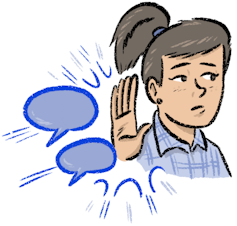
Talk with your kids about how to respond to sexual innuendo or unwanted advances and when to tell an adult. Start by asking kids for examples of sexual innuendo and the types of things people might say online. Then brainstorm ways the best ways to respond. For example, teens could withdraw from conversations or block acquaintances. Or say something like “I’m not into that kind of chat” or say “No thanks, not interested” to any invitations or requests.
Talk with teens about online safety. This includes restricting who can view or reshare posts. You may need to upskill yourself first.
Know what your child is doing online. Monitor their online behaviour, rather than relying only on software controls, which are less effective.
Wes Mountain/The Conversation, CC BY-ND
Talk with your kids about how to respond to sexual innuendo or unwanted advances and when to tell an adult. Start by asking kids for examples of sexual innuendo and the types of things people might say online. Then brainstorm ways the best ways to respond. For example, teens could withdraw from conversations or block acquaintances. Or say something like “I’m not into that kind of chat” or say “No thanks, not interested” to any invitations or requests.
Talk with teens about online safety. This includes restricting who can view or reshare posts. You may need to upskill yourself first.
Know what your child is doing online. Monitor their online behaviour, rather than relying only on software controls, which are less effective.
 Wes Mountain/The Conversation, CC BY-ND
Keep the computer in a communal area. Ensure their computer use occurs in communal areas of the home and restrict kids’ access to mobiles at night. If possible, do this from an early age and make it routine, so teens don’t get the message you don’t trust them.
Build your child’s esteem and confidence. Children with low self-esteem are more susceptible to online grooming designed to make children feel special.
Meet your own needs. Children are at greater risk of abuse when parents are struggling with their own mental health or substance issues. If you need help get support or talk to your doctor.
More resources for parents are available via Bravehearts and at esafety.gov.au.
If you believe your child is the victim of grooming or exploitation, or you come across exploitation material, you can report it via ThinkuKnow or contact your local police.
If you are a child, teen or young adult who needs help and support, call the Kids Helpline on 1800 55 1800.
If you are an adult who experienced abuse as a child, call the Blue Knot Helpline on 1300 657 380 or visit their website.
Wes Mountain/The Conversation, CC BY-ND
Keep the computer in a communal area. Ensure their computer use occurs in communal areas of the home and restrict kids’ access to mobiles at night. If possible, do this from an early age and make it routine, so teens don’t get the message you don’t trust them.
Build your child’s esteem and confidence. Children with low self-esteem are more susceptible to online grooming designed to make children feel special.
Meet your own needs. Children are at greater risk of abuse when parents are struggling with their own mental health or substance issues. If you need help get support or talk to your doctor.
More resources for parents are available via Bravehearts and at esafety.gov.au.
If you believe your child is the victim of grooming or exploitation, or you come across exploitation material, you can report it via ThinkuKnow or contact your local police.
If you are a child, teen or young adult who needs help and support, call the Kids Helpline on 1800 55 1800.
If you are an adult who experienced abuse as a child, call the Blue Knot Helpline on 1300 657 380 or visit their website.
Authors: Divna Haslam, Senior Research Fellow (Faculty of Law/ Health) & Clinical Psychologist, Queensland University of Technology


 Daily Bulletin


