

Children with autism may use memory differently. Understanding this could help us teach them
- Written by: John Munro, Professor, Faculty of Education and Arts, Australian Catholic University
Around one in every 70 Australians are on the autism spectrum. The proportion of children with autism is higher – more than 80% of all Australians on the autism spectrum are aged under 25.
Autism is most prevalent among school-aged children between 5 and 14. Many of these children have social, learning, communication and intellectual difficulties.
The high proportion of children on the autism spectrum presents an obvious challenge to teachers and the learning environment. One way they can respond to it is to examine what we know about how these children understand their world and learn.
How memory works
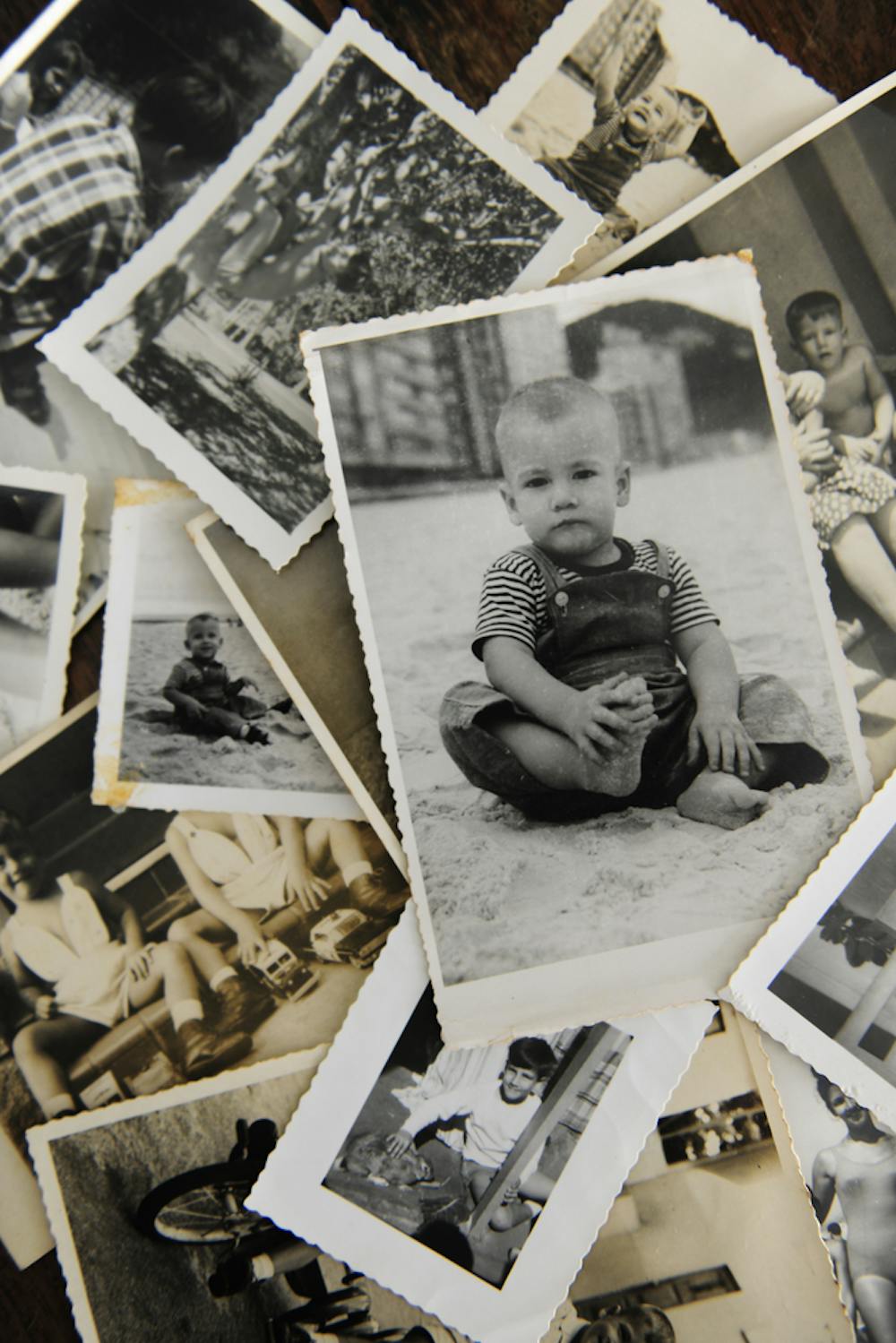 We use our bank of autobiographical memory to tell us how to behave in any situation.
from shutterstock.com
We use our bank of autobiographical memory to tell us how to behave in any situation.
from shutterstock.com
To understand what we suspect, so far, about the way in which some people with autism may see the world, we need to examine how we use our autobiographical episodic memory – the bank of experiences we have stored in memory.
This bank of experiences tells us how to behave in any situation. It tells us what we did in past, matching situations, where and when events happened, how we felt at the time and how we coped. These are the time-and-place images of our life history.
We use this memory bank to interpret new situations. The memories help us decide how to act socially or functionally, to imagine how someone might feel and what to expect in the future. They help us transfer our behaviours to new situations and adjust how we behave and think based on the context.
We seem to do these things implicitly. We don’t need to plan consciously how we will act in most new situations. In other words, we modify or adapt our stored experiences automatically to fit the situation in which we find ourselves at any time.
Theories on autism
The stereotypical behaviours of individuals with autism suggest they don’t use their bank of experiences spontaneously and automatically in these ways.
Emerging research supports this possibility. It suggests people on the autism spectrum could be less likely to reflect on specific experiences, infer from them or recognise regularities in them.
This would then lead to difficulty modifying stored experiences to use later to interpret other everyday situations.
Instead, they may learn experiences and store them in a more fixed way.
People on the autism spectrum, depending on where on the spectrum they are, can have difficulty adapting what they have learnt to changes in context. They may find it harder to predict, anticipate or think flexibly and switch how they will act.
 Children on the autism spectrum may find it harder to predict, anticipate or think flexibly and switch how they will act.
Photo by Limor Zellermayer on Unsplash
Children on the autism spectrum may find it harder to predict, anticipate or think flexibly and switch how they will act.
Photo by Limor Zellermayer on Unsplash
At the same time they may be able to learn and recall facts and relationships that are specific, precise and rigid – such as associations between names, symbols and meanings.
Rigidly stored experiences limit the ability to learn and to deal with dynamic social situations. So, people who store memories in this way may be more likely to overreact emotionally and show attention difficulties.
They might also have difficulty linking their experiential knowledge with language. Everyday living, the classroom and the workplace use language as a major vehicle for learning and interacting.
Read more: Young children with autism can thrive in mainstream childcare
How teaching could address this
Episodic memory is stimulated when you are exposed to visual information. People with autism sometimes perform better when given visual tasks.
One way to possibly stimulate episodic memory could be through the use of video-based instruction (VBI). This is where videos are used to demonstrate new knowledge and skills in particular contexts.
One review looked at 36 studies that investigated whether video-based instruction helped children with autism gain social skills. It showed students with autism could more easily learn functional skills and transfer and generalise them.
The videos may help participants recall past similar experiences, say what they did and how they coped, and decide how they would act in unfamiliar situations.
Narrative therapy has also been shown to help people with autism deal with social and emotional issues. This therapy is based on imaginary real-life situations.
The children are taught to actively analyse an everyday episode and to build alternative stories around it, with themselves as a protagonist. They learn to visualise the situation and imagine it changing.
Many students with autism often have difficulty with reading comprehension. Some research shows teaching visualisation strategies to reading underachievers generally enhances reading comprehension.
 Visualisation strategies can trigger a child’s imagination.
from shutterstock.com
Visualisation strategies can trigger a child’s imagination.
from shutterstock.com
This directly target’s a child’s ability to imagine. While reading a narrative, for example, a child is told to note how particular characters are feeling and predict what they might do next, as well as to imagine how others might be feeling.
Visualising scaffolds someone’s episodic memory to form virtual experiences of the text being read and to infer in a range of ways about it. This could also help students with autism. They are taught explicitly to create mental images of what they read, comprehension strategies and also to self-regulate and summarise.
Read more: How to identify, understand and teach gifted children
This type of reading intervention for students with autism has been shown to improve links between the verbal and imagery areas of the brain.
Our knowledge of how individuals with autism spectrum disorder know and learn has increased exponentially over the last two decades. Teachers can use some of this knowledge in the classroom, and governments can use some of the emerging evidence to develop programs to help children with autism learn.
Authors: John Munro, Professor, Faculty of Education and Arts, Australian Catholic University


 Daily Bulletin


