

managing type 2 diabetes during Ramadan
- Written by: Sue Lynn Lau, Endocrinologist, Western Sydney University
This article is the first part in a series, Where culture meets health.
The holy month of Ramadan, which sees Muslims all over the world fast during daylight hours, begins this weekend. Does having type 2 diabetes exclude a person from fasting? Not necessarily. The decision belongs to the person, but getting some advice from health professionals can help.
Diabetes is the fastest growing chronic condition in Australia. About 6% of Australian adults report they have diabetes, although this is likely an underestimate of the true prevalence.
Type 2 diabetes, which constitutes the majority of diabetes cases, occurs when the body becomes resistant to the actions of insulin, or loses the capacity to produce sufficient insulin from the pancreas. Insulin keeps the body’s blood glucose levels within a healthy range.
People with type 2 diabetes can manage the condition by maintaining a healthy lifestyle, including doing exercise and keeping a healthy diet. In more serious cases, people with type 2 diabetes may need to take medications such as metformin, sulfonylureas, or other glucose-lowering tablets, or self-administer insulin injections.
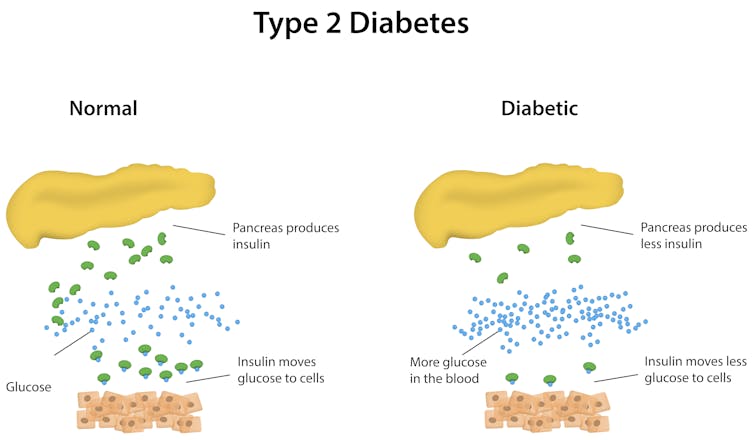 Type 2 diabetes affects the body’s blood glucose, or blood sugar levels.
From shutterstock.com
Type 2 diabetes affects the body’s blood glucose, or blood sugar levels.
From shutterstock.com
Type 2 diabetes affects some ethnicities more than others. It’s more common in people of Middle Eastern, north African and south/south-east Asian backgrounds. Many Muslim Australians are from these ethnic backgrounds.
Using 2016 census data, and conservatively estimating an adult diabetes prevalence of 10% among people of Muslim background (the exact prevalence is unknown), as many as 40,000 Muslims may be living with diabetes in Australia. And this number is likely to be increasing.
Read more: How Australians Die: cause #5 – diabetes
We’re about to begin the month of Ramadan
Dietary practices such as fasting, feasting, and consumption of special foods are an essential component of many religious and cultural celebrations.
For Muslims, fasting during the month of Ramadan is obligatory for all healthy adults, who must refrain from eating, drinking and taking oral medications between dawn and sunset.
During Ramadan, most people have two meals per day, at sunset and before sunrise. This can be risky for people with type 2 diabetes – particularly those who use insulin or certain oral diabetes medications – for a couple of reasons.
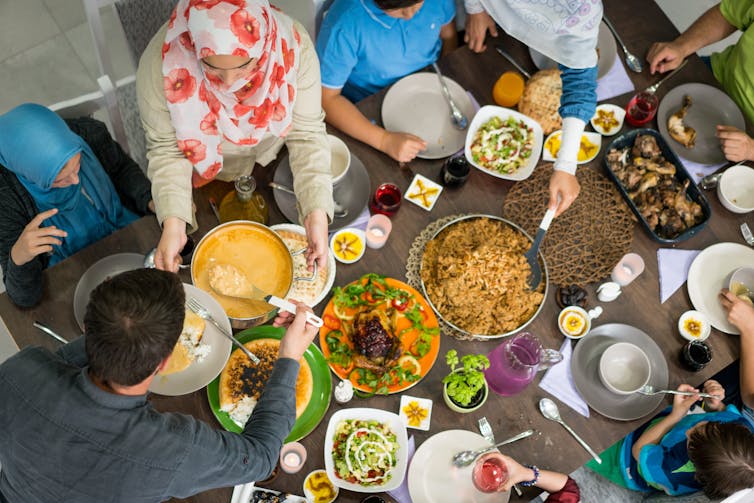 The daytime fast is often broken with a communal meal, called Iftar.
From shutterstock.com
The daytime fast is often broken with a communal meal, called Iftar.
From shutterstock.com
First, fasting during the day can increase the risk of low blood glucose levels in people who usually take insulin or other blood glucose-lowering medications.
And conversely, the evening meal to break the fast, called “Iftar,” often involves eating large amounts of calorie-rich foods in a relatively short space of time. This can put people with diabetes at risk of high blood glucose levels overnight.
Omission or changes in the timing of medications may also contribute to instability of blood glucose levels.
Low blood glucose levels can cause symptoms of sweating, shakiness and confusion. If severe, they can lead to seizures, coma, or even death. High blood glucose levels make people feel tired and generally unwell and can lead to dehydration and poor concentration. Extremely high levels are a medical emergency.
There are guidelines
According to Islamic teachings, the elderly, pregnant, or those with illnesses requiring regular medication – like diabetes – can be exempted from fasting on medical grounds. They do not need to seek special permission from a religious leader.
Certain groups of people with type 2 diabetes who do not use insulin or particular oral medications can safely fast during Ramadan under the guidance of their health-care professional.
But as diet, lifestyle and medication use are key factors in maintaining stable blood glucose levels and minimising diabetes complications, many people with type 2 diabetes can also be considered medically exempt from fasting.
Read more: Know your disease: education is key to living well with diabetes
Practical guidelines established by the International Diabetes Federation-Diabetes and Ramadan (IDF-DAR) International Alliance assist health professionals to assess patients’ level of risk.
Low risk patients can safely enjoy fasting, while those at moderate to high risk are advised against fasting.
These guidelines have been endorsed by religious authorities in Australia and overseas and are a valuable reference for health professionals and their Muslim patients.
But it’s not quite that simple
The month of Ramadan is a special time for Muslim people, where fasting and feasting are integral to religious life, social interaction and communal celebration.
Because fasting is one of the five pillars of Islam, there is a strong desire to participate, even among those who could be exempt for medical reasons.
Those who cannot fast for medical reasons may feel alienated by their diabetes and develop negative attitudes towards it, possibly resulting in impaired self-management of their condition.
Some people with diabetes may be reluctant to raise the topic themselves, fearing a lack of understanding from non-Muslim health providers. They may conceal their intentions to fast to avoid any perceived conflict with the health professional.
Understanding the spiritual significance of this month to Muslims as well as the practical aspects can put health practitioners in a much stronger position to gain patient trust and facilitate communication.
Read more: Health Check: will intermittent fasting diets help you lose weight?
Culturally sensitive discussion allows people with diabetes to make informed choices
The month of Ramadan is determined according to the Islamic lunar year and varies annually in the western calendar. Professionals caring for people who observe Ramadan should be aware of its timing and start the conversation in advance.
Muslims with diabetes wanting to observe Ramadan should be counselled on the risks of fasting. Drawing on the guidelines, health providers can reassure their patients that those who do not fast for medical reasons also receive spiritual rewards and should not feel guilty.
Health-care professionals may suggest donations of food or money to the poor could be considered as an alternative, if it’s within the person’s means.
 A person with diabetes may need to check their blood sugar more often if they’re fasting.
From shutterstock.com
A person with diabetes may need to check their blood sugar more often if they’re fasting.
From shutterstock.com
Discussion about Ramadan must occur in a culturally sensitive and non-judgemental way, appreciating a person’s right to evaluate the risks and benefits of fasting – both spiritual and physical – for themselves, and determine from an individual perspective whether fasting is the right decision.
Doctors might also advise their patient to discuss any concerns with their local religious leader.
For those who choose to fast despite their exemption, discussions about glucose monitoring, nutrition, exercise and potential medication changes can ensure they fast as safely as possible.
The diabetes health care team (which can include GPs, endocrinologists, diabetes educators, dietitians and diabetes nurse practitioners) can also develop an individualised Ramadan-specific management plan.
Read more: Friday essay: how Western attitudes towards Islam have changed
Understanding people’s different cultural backgrounds, lifestyles and religious practices plays an important role in their health care. A lack of understanding might lead to poorer health outcomes and disengagement with health services, while research shows culturally appropriate diabetes education and prevention programs improve outcomes for people from different backgrounds.
Health-care professionals should educate themselves about their cultural setting and local patient population to maintain effective therapeutic relationships and achieve the best patient-focused outcomes.
Authors: Sue Lynn Lau, Endocrinologist, Western Sydney University
Read more http://theconversation.com/between-health-and-faith-managing-type-2-diabetes-during-ramadan-115469


 Daily Bulletin


