

How the major parties’ Indigenous health election commitments stack up
- Written by: David Coombs, PhD candidate in Nura Gili Indigenous Studies, UNSW
Eleven years after Australia adopted the Closing the Gap strategy, many pressing First Nations health issues remain unresolved.
The gap between Indigenous and non-Indigenous life expectancy, currently 10.8 years for men and 10.6 years for women, is actually widening.
Similarly, the target to close the gap between Indigenous and non-Indigenous child mortality has not been met. The Indigenous rate of 164 deaths per 100,000 children aged 0-4 years is still 2.4 times the non-Indigenous rate of 68 deaths per 100,000 in this age group.
Read more: Indigenous health programs require more than just good ideas
The causes of Indigenous health inequality are complex. They stem from social determinants such as employment, education, social inclusion, and access to traditional land, rather than strictly biomedical causes.
Government policies have a critical role to play here. But funding cuts, policy incoherence, and governments retaining control over resources and decision-making explain why the gaps between Indigenous and non-Indigenous health outcomes are not closing.
Regardless of who wins the federal election on May 18, these enduring health issues affecting Indigenous Australians will require sustained and concerted policy attention.
A look at the major parties’ policy promises reveals some signs of hope, but also plenty of room for improvement.
Read more: Three reasons why the gaps between Indigenous and non-Indigenous Australians aren't closing
The Coalition’s commitments
Aboriginal and Torres Strait Islander groups criticised the lack of Indigenous-specific health measures in the Morrison government’s first budget detailed in April.
The budget did include A$35 million for First Nations solutions to family violence, and A$10 million for the Lowitja Institute for health research.
Indigenous youth suicide remains an urgent policy concern, with Indigenous children five times more likely to die in this way than non-Indigenous children. A coronial inquest recently identified complex causes including intergenerational trauma, poverty, and problems stemming from the home environment.
Read more: Indigenous health leaders helped give us a plan to close the gap, and we must back it
The Coalition’s budget committed A$5 million over four years to address Indigenous youth suicide. This figure has since been increased to A$42 million following criticism from First Nations organisations and advocates.
Meanwhile, the budget directed A$129 million towards the expansion of a cashless welfare card system that operates in a number of Aboriginal communities. The card quarantines 80% of welfare recipients’ income for use in government-approved stores, and on government-approved items, to prevent spending on alcohol, cigarettes and gambling. This decision was taken despite a lack of evidence these cards reduce social harm or public expenditure.
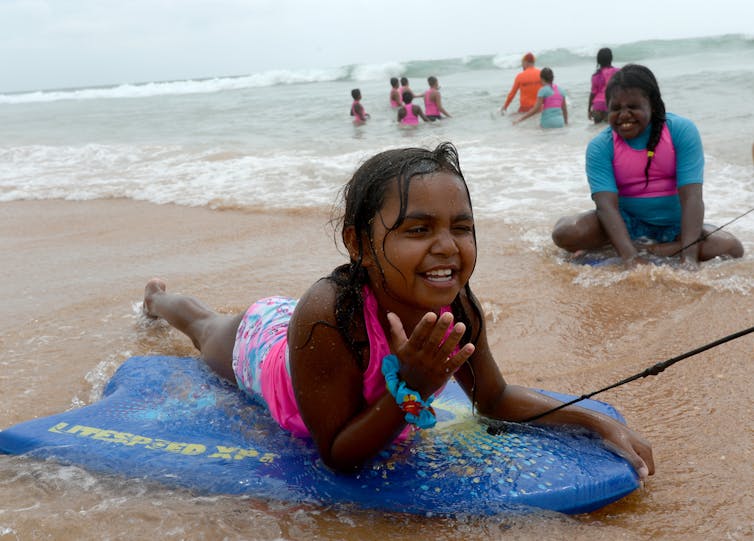 The health outcomes of Indigenous children don’t measure up to those of non-Indigenous children.
Jeremy Piper/AAP
The health outcomes of Indigenous children don’t measure up to those of non-Indigenous children.
Jeremy Piper/AAP
The government also made some pre-budget commitments around Indigenous health. These included:
The Coalition also honoured a previous commitment of A$550 million for remote housing in the Northern Territory.
The Morrison government deserves some credit for its part in reaching an agreement between the Council of Australian Governments and a coalition of Aboriginal and Torres Strait Islander peak organisations in December 2018.
This agreement commits governments and Indigenous peak bodies to shared decision-making and joint accountability in devising and working towards new Closing the Gap targets.
Read more: Budget 2019 boosts aged care and mental health, and modernises Medicare: health experts respond
Labor’s commitments
In keeping with its election campaign emphasis on health spending, Labor recently announced a A$115 million Indigenous health package.
The package includes almost A$30 million to reduce Indigenous youth suicide and mental ill-health.
It also offers A$33 million to address rheumatic heart disease, a preventable condition that disproportionately affects Indigenous children. The National Aboriginal Community Controlled Health Organisation (NACCHO) highlighted rheumatic heart disease as one of ten Indigenous health priorities for this election.
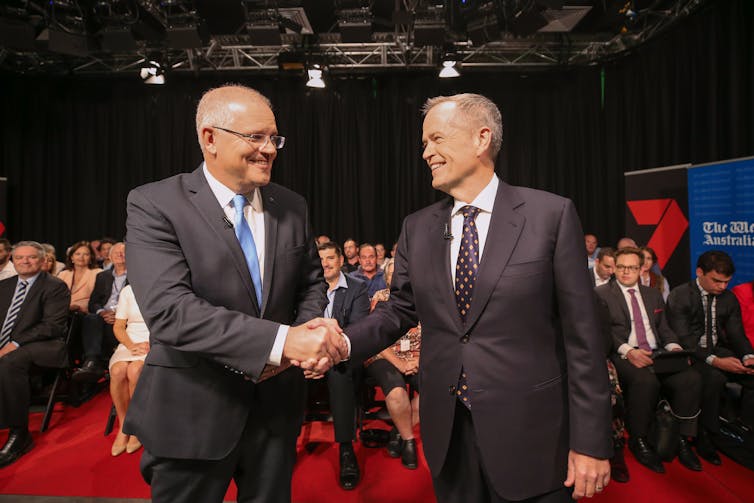 Scott Morrison and Bill Shorten have both focused strongly on health during this campaign.
Nic Ellis/AAP
Scott Morrison and Bill Shorten have both focused strongly on health during this campaign.
Nic Ellis/AAP
Labor has also promised A$20 million for sexual health promotion in northern Australia, A$13 million to combat vision loss, and A$16.5 million for the “Deadly Choices” initiative, which aims to prevent chronic disease through education.
Further, the opposition has announced a compensation scheme and healing fund for surviving members of the Stolen Generations and their families. This could help manage the effects of intergenerational trauma.
What’s lacking
Both parties’ funding commitments must be assessed in the context of the 2014 budget cut of more than A$500 million dollars to Indigenous affairs by the then Coalition government, which only the Greens have committed to restoring.
Impacts have been severe for specific programs, especially those run at the community level. These include youth services in Maningrida (NT) and employment and training programs in Inala (Queensland).
Funding for crucial Indigenous health infrastructure and capital works is also lacking, with the current shortfall estimated at A$500 million. Many Aboriginal Community Controlled Health Services are run from old buildings in desperate need of upgrades to accommodate increasing patient numbers and rising demand for services. The Coalition recently announced an incremental increase to infrastructure funding, but much more is needed.
Read more: Antibiotic shortages are putting Aboriginal kids at risk
Neither the Coalition nor Labor has made any substantial commitment to a national Indigenous housing strategy. Inadequate, insecure and poor quality housing worsens physical and mental health through overcrowding, inadequate heating and cooling, injury hazards, and stress.
Similarly, both parties have been silent on reducing poverty in Indigenous communities. Poverty is another social determinant that contributes to Indigenous physical and mental ill-health, as well as high incarceration levels.
What about self-determination?
Labor has stated it will prioritise Aboriginal Community Controlled Organisations as the vehicles for delivering much needed health services.
As the Close the Gap steering committee’s shadow report emphasised, “when Aboriginal and Torres Strait Islander people are involved in the design of the services they need, we are far more likely to achieve success”.
The Coalition has been silent on the issue of community control, and funding reforms under the Indigenous Advancement Strategy and the Indigenous Australians’ Health Programme have destabilised the position of Aboriginal organisations.
Read more: The Coalition's report card on health includes some passes and quite a few fails
Community control is threatened by the government’s focus on competitive tendering, where First Nations organisations compete with “mainstream” service providers trying to secure contracts to deliver Indigenous health services.
Neither the Coalition nor Labor has outlined a response to these structural issues.
A final verdict
It’s difficult to identify major differences between the two parties’ Indigenous health promises. The likely impact of these polices is also hard to gauge given the significant role played by state and territory governments in service delivery.
Labor has promised to support Aboriginal Community Controlled Organisations but specific details have not been announced. Labor’s significant funding pledge for rheumatic heart disease, though, makes their Indigenous health offering perhaps slightly more likely to achieve health gains than the Coalition’s.
Read more: Why are Aboriginal children still dying from rheumatic heart disease?
Authors: David Coombs, PhD candidate in Nura Gili Indigenous Studies, UNSW


 Daily Bulletin


