

Sickly sweet or just right? How genes control your taste for sugar
- Written by: Daniel Liang-Dar Hwang, Postdoctoral Researcher, The University of Queensland
You might love sugary doughnuts, but your friends find them too sweet and only take small nibbles. That’s partly because your genes influence how you perceive sweetness and how much sugary food and drink you consume.
Now our recently published study shows a wider range of genes at play than anyone thought. In particular, we suggest how these genes might work with the brain to influence your sugar habit.
Read more: Fact or fiction – is sugar addictive?
What we know
When food touches our taste buds, taste receptors produce a signal that travels along taste nerves to the brain. This generates a sensation of flavour and helps us decide if we like the food.
Genetic research in the past decade has largely focused on genes for sweet taste receptors and whether variation in these genes influences how sensitive we are to sweetness and how much sugar we eat and drink.
Our previous study showed genetics accounts for 30% of how sweet we think sugars or artificial sweeteners are. However, at the time, we didn’t know the exact genes involved.
Read more: Curious Kids: how do tongues taste food?
What our latest study found
Our new study looked at data from 176,867 people of European ancestry from Australia, the US and UK.
We measured how sweet 1,757 Australians thought sugars (glucose and fructose) and artificial sweeteners (aspartame and neohesperidin dihydrochalcone) were. We also looked at how sweet 686 Americans thought sucrose was and whether they liked its taste.
We also calculated the daily intake of dietary sugars (monosaccharide and disaccharide sugars found in foods such as fruit, vegetables, milk and cheese) and sweets (lollies and chocolates) from 174,424 British people of European descent in the UK Biobank.
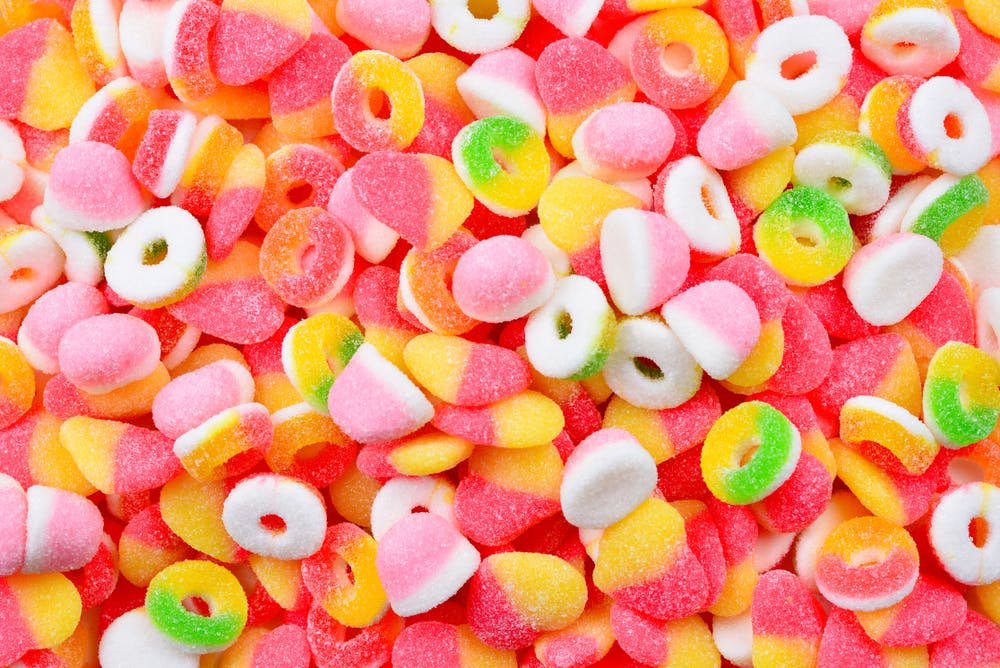 How many lollies do you eat a day? The researchers combined these types of questions with genome analysis to find links between sugar intake and people’s genes.
from shutterstock.com
How many lollies do you eat a day? The researchers combined these types of questions with genome analysis to find links between sugar intake and people’s genes.
from shutterstock.com
Then we looked at the associations between millions of genetic markers across the whole genome and the perception of sweet taste and sugar intake, using a technique known as genome-wide association analysis.
After a 15-year study, we showed that several genes (other than those related to sweet taste receptors) have a stronger impact on how we perceive sweetness and how much sugar we eat and drink.
These included an association between the FTO gene and sugar intake. Until now, this gene has been associated with obesity and related health risks. However, the effect is possibly driven not by FTO but nearby genes whose protein products act in the brain to regulate appetite and how much energy we use.
We believe a similar situation may be influencing our sugar habit; genes near the FTO gene may be acting in the brain to regulate how much sugar we eat.
Our study suggests the important role the brain plays in how sweet we think something is and how much sugar we consume. That’s in addition to what we already know about the role of taste receptors in our mouth.
Why we love sweet foods
Our natural enjoyment of sweet foods could be an evolutionary hangover. Scientists believe being able to taste sweetness might have helped our ancestors identify energy-rich food, which played a critical part in their survival.
Read more: Our ancient obsession with food: humans as evolutionary Master Chefs
However, being able to taste sweetness doesn’t always mean you prefer to eat lots of sweet-tasting food.
So it looks like there are genes associated with the consumption of sweet foods, but not how sweet we think they are, such as FTO. There might also be genes that influence our perception of sweetness but not how likely we are to eat sweet food.
Regional differences
We were surprised to find genes for sweet taste receptors had no effect on either the ability to taste sweetness or on the amount of sugar consumed in our study, which looked only at large populations of European descent.
But by comparing people of different ancestries in the UK Biobank, we showed there was some variation between different populations that variations in genes for sweet taste receptors might explain. For instance, we found people of African descent tended to eat more sugar than people of European and Asian descent.
So, how can we use this?
Just like genetics can help explain why some people choose tea over coffee, our latest study helps explain why some people prefer sweet food. That could lead to personalised diets to improve people’s eating habits based on their genetics.
However, genetics is not the only factor to influence your taste for sugary foods and how much of these you eat or drink. So you can’t always blame your genes if you’ve ever tried to quit sugary drinks or snacks and failed.
Authors: Daniel Liang-Dar Hwang, Postdoctoral Researcher, The University of Queensland
Read more http://theconversation.com/sickly-sweet-or-just-right-how-genes-control-your-taste-for-sugar-113455


 Daily Bulletin


