

Logged native forests mostly end up in landfill, not in buildings and furniture
- Written by: Chris Taylor, Research Fellow, Fenner School of Environment and Society, Australian National University
Victoria has some of the most carbon-dense native forests in the world. Advocates for logging these forests often argue that wood products in buildings and furniture become long-term storage for carbon.
However, these claims are misleading. Most native trees cut down in Victoria become woodchips, pulp and pallets, which have short lifespans before going to landfill. In landfill, the wood breaks down and releases carbon back into the atmosphere.
On the other hand, our evolving carbon market means Australia’s native forests are extremely valuable as long-term carbon stores. It’s time to recognise logging for short-lived wood products is a poor use of native forests.
Read more: Logging must stop in Melbourne's biggest water supply catchment
The problem with logging native forests
Victoria has about 7.6 million hectares of native forests. The most carbon-dense areas are in ash forests, consisting of mountain ash, alpine ash and shining gum trees.
These forests can store up to 1,140 tonnes of carbon per hectare for centuries.
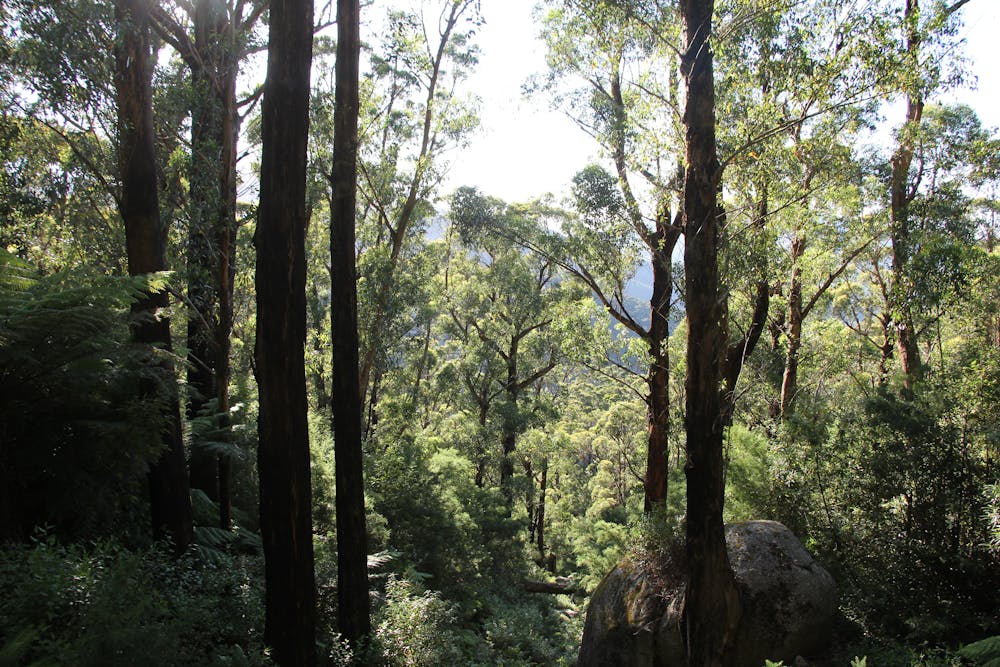 Only 14% of logs cut from Victorian native forests end up as timber products used in buildings and furniture.
Shutterstock
Only 14% of logs cut from Victorian native forests end up as timber products used in buildings and furniture.
Shutterstock
But around 1.82 million hectares of Victorian native forests are allocated to the government’s logging business, VicForests.
VicForests claims logging is the only market for the large area of native forest allocated to it. In other words, its forests are exclusively valued as timber asset, in the same way a wheat crop would be exclusively valued for wheat grain production.
In Victorian native forests, industrial scale clearfell logging removes around 40% of the forest biomass for logs fit for sale.
The remaining 60% is debris, which is either burned off or decomposes – becoming a major source of greenhouse gas emission.
Read more: Logging burns conceal industrial pollution in the name of 'community safety'
Myth one: storing carbon in wood products
The first myth we want to address is logging native forests is beneficial because the carbon is stored in wood products. This argument depends on the proportion of forest biomass ending up in wood products, and how long they last before ending up in landfill.
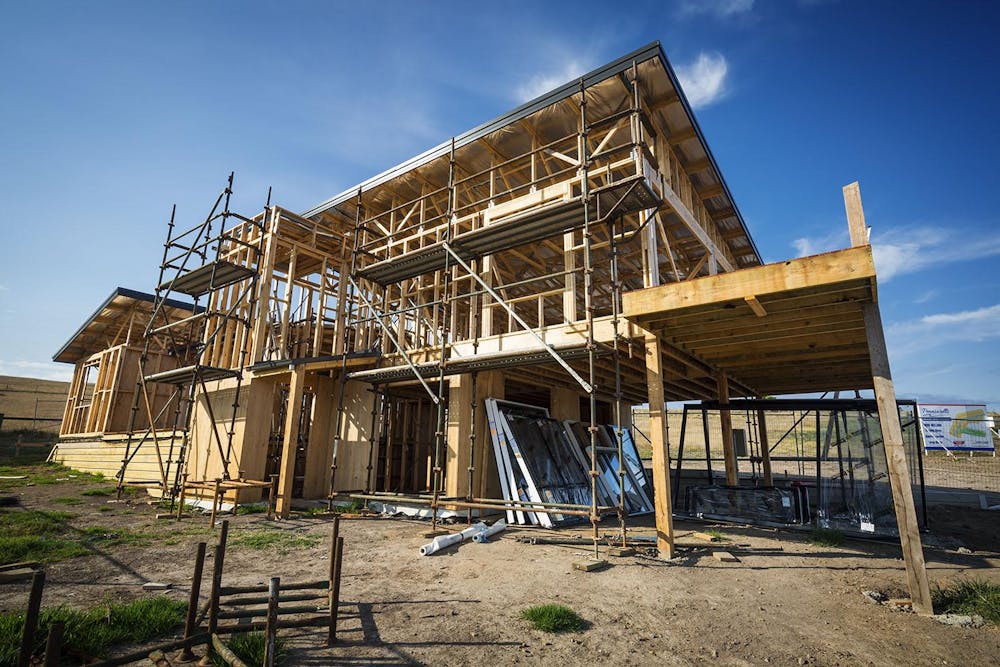 The majority of timber used in construction consists of plantation softwood, not native forest hardwood.
Chris Taylor, Author provided (No reuse)
The majority of timber used in construction consists of plantation softwood, not native forest hardwood.
Chris Taylor, Author provided (No reuse)
On average, logs suitable to be sawn into timber make up only an average 35% of total logs cut from Victorian native forests.
Of this 35%, sawmills convert less than 40% into sawn timber for building and furniture. Offcuts are woodchipped and pulped for paper manufacturing, along with sawdust sold to chicken broiler sheds for bedding.
Sawn timber equates to 14% of log volume cut from the forest. The remaining 84% of logs cut are used in short-lived and often disposable products like copy paper and pallets.
Read more: Forest soil needs decades or centuries to recover from fires and logging
The lifespan of paper products is assumed to be three years. Although around 75% of paper and cardboard is recovered, recycling is growing more uncertain with recovered paper being sent to landfill.
The maximum lifespan of a timber pallet is seven years. At the end of their service, timber pallets are sent to landfill, chipped for particleboard, reused for landscape mulch or burnt for energy generation.
Longer-lived wood products, such as the small proportion of native timber used in building and furniture, have a lifespan of around 90 years. These wood products are used to justify logging native forests.
But at the end of their service life, the majority of these wood products also end up in landfill.
In fact, for the 500,000 tonnes of wood waste generated annually from building, demolition and other related commercial processes in Victoria, over two thirds end up in landfill, according to a Sustainability Victoria report.
Myth two: the need to log South East Asian rainforests
A second myth is using logs from Victorian native forests will prevent logging and degradation of rainforests across South East Asia, particularly for paper production.
This is patently absurd. The wood from the Victorian plantation sector – essentially timber farms, rather than trees growing “wild” in native forests – could replace native forest logs used for paper manufacturing in Victoria several times over.
In fact, in 2016-17 89% of logs used to make wood pulp (pulplogs) for paper production in Victoria came from plantation trees, with the majority of hardwood logs exported.
And Australia is a net exporter by volume of lower-value unprocessed logs and woodchips.
Read more: Native forests can help hit emissions targets – if we leave them alone
Processing pulplogs from well managed plantations in Victoria instead of exporting them would give a much needed jobs boost for local economies.
With most of these plantations established on previously cleared farmland, they offer one of the most robust ways for the land use sector to off-set greenhouse gas emissions.
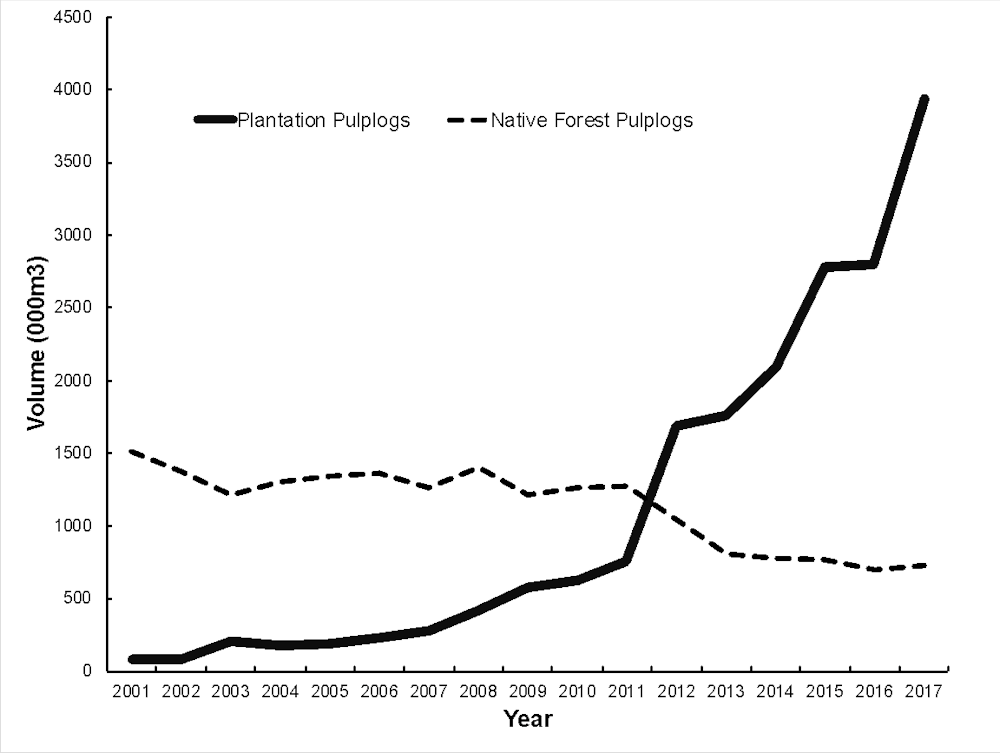 Hardwood pulplogs produced from plantations and native state forests across Victoria.
Author provided (No reuse)
Hardwood pulplogs produced from plantations and native state forests across Victoria.
Author provided (No reuse)
Next steps
The time is right for Australian governments to develop a long-term carbon storage plan that includes intact native forests.
Logging results in at least 94% of a forest’s stored carbon ending up in the atmosphere. A maximum of 6% of its carbon remains in sawn timber, for up to 90 years (but typically much shorter). This is patently counterproductive from a carbon-storage point of view.
Read more: Native forest protections are deeply flawed, yet may be in place for another 20 years
State-owned forest management companies, such as VicForests, can transition away from the timber business and begin managing forests for carbon storage. Such a concept is not new – the federal government has already approved a way to value the carbon storage of plantations.
The same must now be developed to better protect native forests and the large amounts of carbon they can store.
Authors: Chris Taylor, Research Fellow, Fenner School of Environment and Society, Australian National University


 Daily Bulletin


