

Economics needs to get real if we want more young Australians to study it
- Written by: Jim Stanford, Economist and Director, Centre for Future Work, Australia Institute; Honorary Professor of Political Economy, University of Sydney
When it comes to studying economics, Australian high school students are voting with their feet. According to data gathered by the Reserve Bank of Australia, year 12 enrolments in economics courses have plunged 70% nationwide over the last 25 years. Enrolments are so low, many schools are abandoning the subject altogether.
And it’s not just that there are fewer students taking economics. Those that do sign up seem rather … well … alike. There are now about twice as many boys than girls taking economics (compared to a 50-50 ratio in 1992). And most of those boys now come from higher-income families.
Read more: Women are dropping out of economics, which means men are running our economy
Economics enrolments at universities haven’t done much better. The number of university students choosing economics has stagnated for a quarter-century, even as student numbers surged. They’re shunning economics in favour of other subjects: whether that’s popular science, technology, engineering and maths, and business programs or socially relevant disciplines such as political-economy and environmental studies.
If we really want more young Australians to study economics (and not just boys from high-income families), the profession needs to reinvent itself - and become a lot more relevant to the big issues young people care about.
The problem with faith in the free market
The Reserve Bank (RBA) worries about students’ lack of interest in economics, and has started a mini-campaign to encourage more young Australians to heed the call of supply and demand. The RBA is lobbying state governments to update their economics curricula, and it sends ambassadors out to classrooms to advocate for economics – emphasising, among other points, that economics graduates earn relatively high salaries.
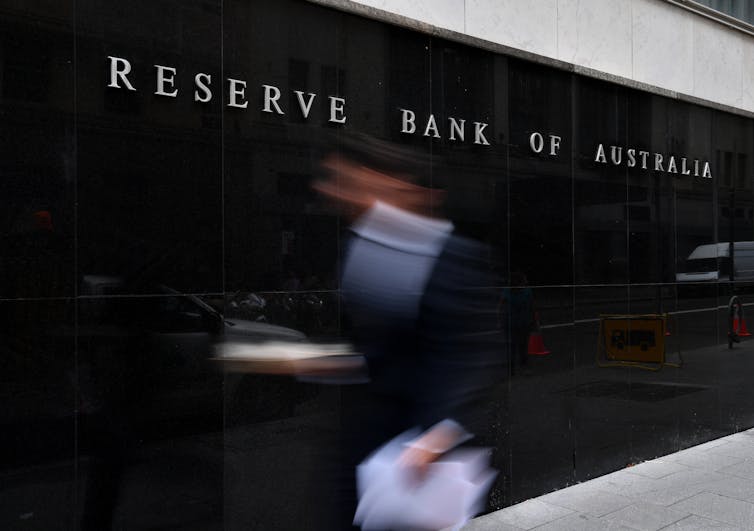 Economics is one of the most male-dominated professions, and most come from high-income families.
Joel Carrett/AAP
Economics is one of the most male-dominated professions, and most come from high-income families.
Joel Carrett/AAP
We share the RBA’s concern about the terrible lack of diversity in economics (it’s one of the most male-dominated professions, even worse than STEM courses). But the RBA’s campaign inadvertently symbolises what’s wrong with the whole profession: emphasising high salaries in an attempt to reverse falling enrolments only confirms that economics is still infatuated with markets and incentives. This misses the whole point about the most urgent and interesting problems in the world today.
There is no question today’s students are a passionate, socially aware generation. They rightly worry about the world they’re poised to inherit: scarred by climate change, inequality, angry populism, and possibly worse. Not to mention many of those students may never hold a normal permanent job (relegated instead to a never-ending series of “gigs”), and most can’t imagine being able to buy a house.
Given these critical challenges, we can’t blame today’s students for rushing into other disciplines – anything, it seems, but economics. After all, the social and environmental problems they confront are precisely the outcome of the ideological, market-worshipping canon still taught in most economics textbooks.
Markets are efficient. Supply equals demand. Private competition is best. Workers are paid according to their productivity.
Read more: How governments have widened the gap between generations in home ownership
Young people who want to improve the world quickly reject these tenets of economic theory. We, Jim and Richard, think students actually accomplish more to fix the actual economy by studying environmental studies, gender studies or social work, rather than immersing themselves in the theoretical games of free-market economics.
The RBA itself shares the blame for this state of affairs. Its narrow approach to economic policy is largely focused on suppressing inflation and letting markets take care of everything else.
For example, the RBA still claims Australia is almost at full employment. But they define that as 5% unemployment, according to the discredited theory of “non-accelerating inflation unemployment”. This neglects its responsibility, explicitly enshrined in the Reserve Bank Act to create more jobs as its top priority.
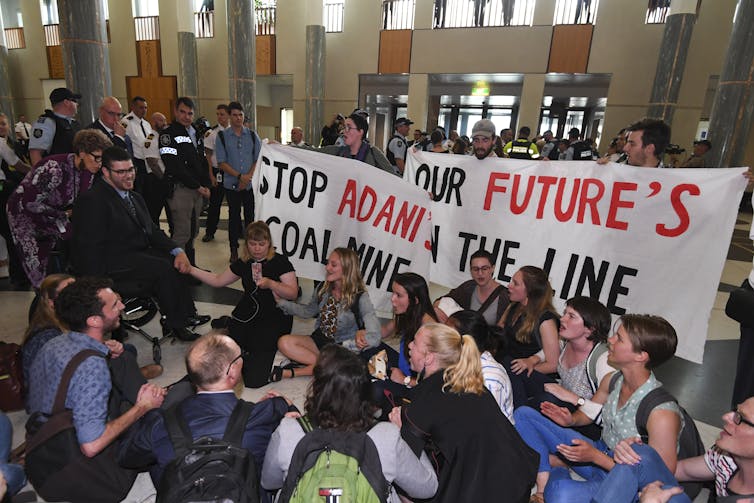 Students have proven themselves active and engaged in political and economic issues many times over.
Lukas Coch/AAP
Students have proven themselves active and engaged in political and economic issues many times over.
Lukas Coch/AAP
It’s a great intellectual irony that neoliberal economics, based on the theory that the market always knows best, is being abandoned by its own “market” (namely, prospective students). They are rejecting its idealised vision of supply and demand in favour of any number of more relevant, interesting disciplines: from business and marketing, to international relations or public health.
And the response of the discipline’s true believers is that its customers (the students) are somehow uninformed and don’t know what’s best for them.
Economics needs context
We both studied economics for many years, we love our profession, and we fervently hope more critical-thinking, passionate young people will take up this discipline – mostly to help us save the economy (and the planet) from conventional economics. But for economics to play a more helpful, critical role, it must thoroughly reinvent itself – and fast.
Read more: Home ownership falling, debts rising – it's looking grim for the under 40s
It must abandon its ideological and self-serving faith in the efficacy of private markets. It must embrace the social, historical, and environmental context of work, production, and distribution. And it must commit to truly building a better world, rather than justifying the status quo.
Apologising for inequality, selfishness, and pollution rather than confronting them has been the way of free-market economics since its invention. Most young people, understandably, yearn for something else. Let’s give it to them.
Authors: Jim Stanford, Economist and Director, Centre for Future Work, Australia Institute; Honorary Professor of Political Economy, University of Sydney


 Daily Bulletin


