

Flash photography doesn't harm seahorses – but don't touch
- Written by: Maarten De Brauwer, PhD-candidate in Marine Ecology, Curtin University
We all enjoy watching animals, whether they’re our own pets, birds in the garden, or elephants on a safari during our holidays. People take pictures during many of these wildlife encounters, but not all of these photographic episodes are harmless.
There is no shortage of stories where the quest for the perfect animal picture results in wildlife harassment. Just taking photos is believed to cause harm in some cases – flash photography is banned in many aquariums as a result.
But it’s not always clear how bright camera flashes affect eyes that are so different from our own. Our latest research, published in Nature Scientific Reports, shows that flash photography does not damage the eyes of seahorses, but touching seahorses and other fish can alter their behaviour.
Read more: New map shows that only 13% of the oceans are still truly wild
Look but don’t touch
In the ocean it is often easier to get close to your subject than on land. Slow-moving species such as seahorses rely on camouflage rather than flight responses. This makes it very easy for divers to approach within touching distance of the animals.
Previous research has shown that many divers cannot resist touching animals to encourage them to move so as to get a better shot. Additionally, the high-powered strobes used by keen underwater photographers frequently raise questions about the welfare of the animal being photographed. Do they cause eye damage or even blindness?
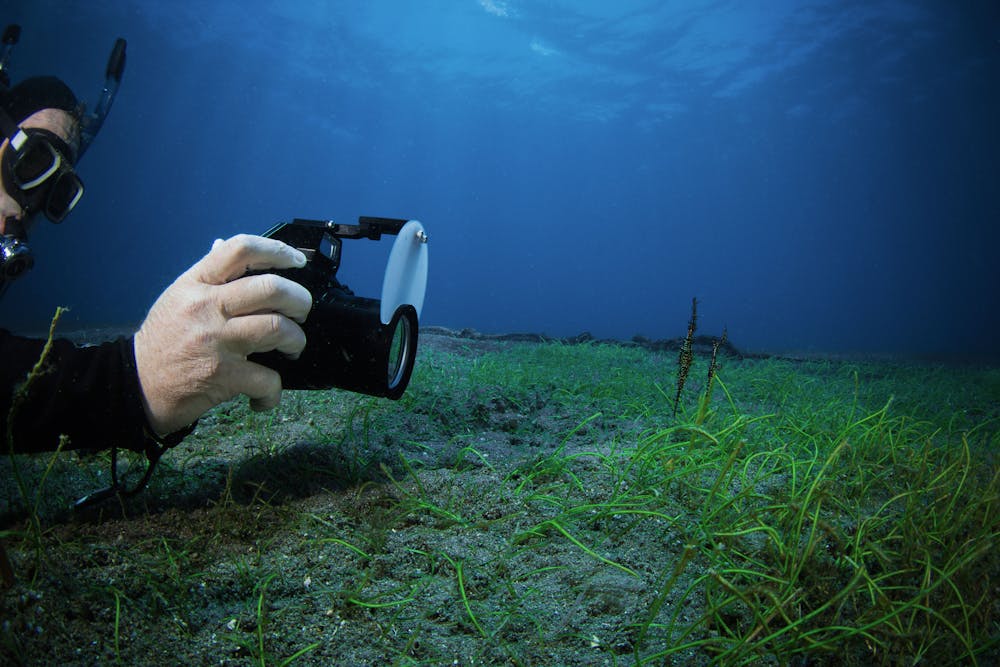 A researcher photographing a ghost pipefish.
© Luke Gordon
A researcher photographing a ghost pipefish.
© Luke Gordon
Aquariums all around the world have taken well-meaning precautionary action. Most of us will have seen the signs that prohibit the use of flash photography.
Similarly, a variety of guidelines and laws exist in the scuba-diving community. In the United Kingdom, flash photography is prohibited around seahorses. Dive centres around the world have guidelines that include prohibiting flash or limiting the number of flashes per fish.
While all these guidelines are well-intended, none are based on scientific research. Proof of any damage is lacking. Our research investigated the effects of flash photography on slow-moving fish using three different experiments.
What our research found
During the first experiment we tested how different fish react to the typical behaviour of scuba-diving photographers. The results showed very clearly that touching has a very strong effect on seahorses, frogfishes and ghost pipefishes. The fish moved much more, either by turning away from the diver, or by swimming away to escape the poorly behaving divers. Flash photography, on the other hand, had no more effect than the presence of a diver simply watching the fishes.
For slow-moving fishes, every extra movement they make means a huge expense of energy. In the wild, seahorses need to hunt almost non-stop due to their primitive digestive system, so frequent interruptions by divers could lead to chronic stress or malnutrition.
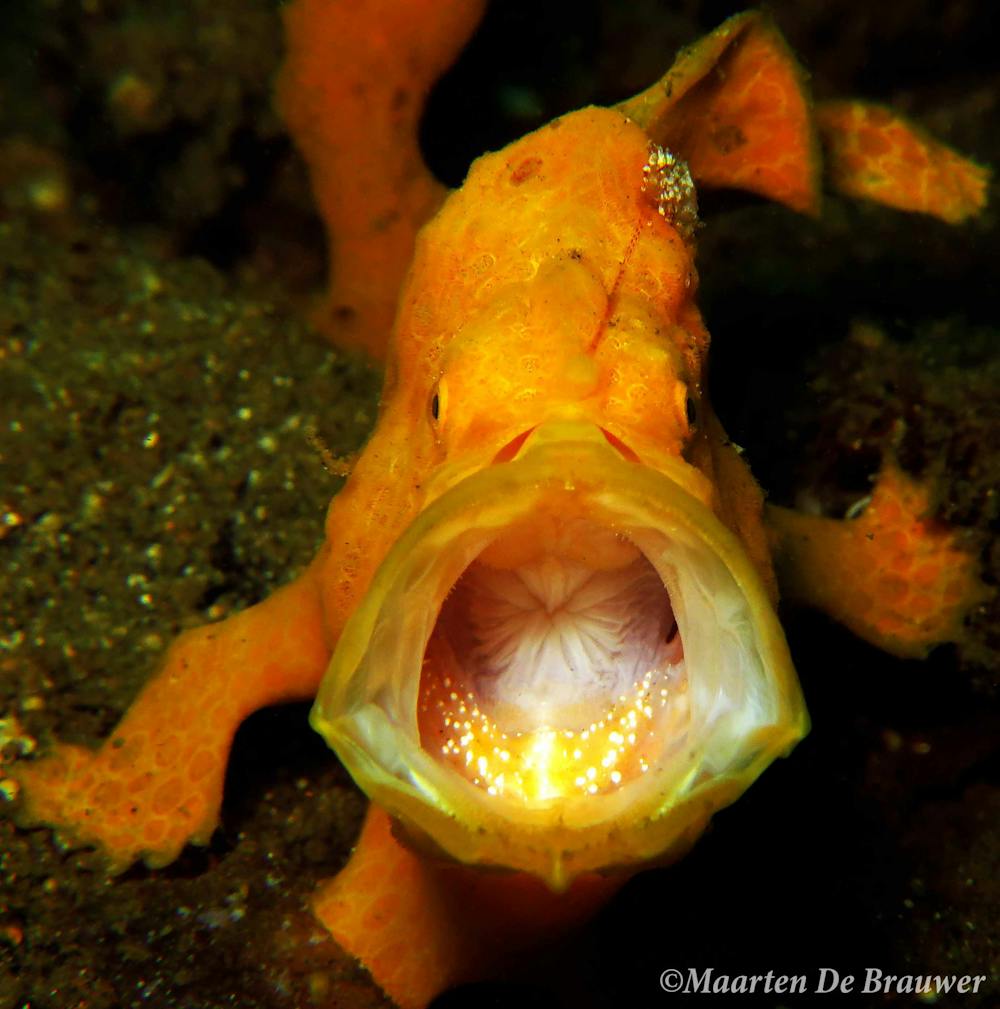 Researchers tested the effect of high-strobe flashes on frogfish.
Author provided
Researchers tested the effect of high-strobe flashes on frogfish.
Author provided
The goal of the second experiment was to test how seahorses react to flash without humans present. To do this we kept 36 West Australian seahorses (Hippocampus subelongatus) in the aquarium facility at Curtin University. During the experiment we fed the seahorses with artemia (“sea monkeys”) and tested for changes in their behaviour, including how successful seahorses were at catching their prey while being flashed with underwater camera strobes.
Read more: Now you see us: how casting an eerie glow on fish can help count and conserve them
An important caveat to this experiment: the underwater strobes we used were much stronger than the flashes of normal cameras or phones. The strobes were used at maximum strength, which is not usually done while photographing small animals at close range. So our results represent a worst-case scenario that is unlikely to happen in the real world.
The conclusive, yet somewhat surprising, result of this experiment was that even the highest flash treatment did not affect the feeding success of the seahorses. “Unflashed” seahorses spent just as much time hunting and catching prey as the flashed seahorses. These results are important, as they show that flashing a seahorse is not likely to change the short-term hunting success (or food intake) of seahorses.
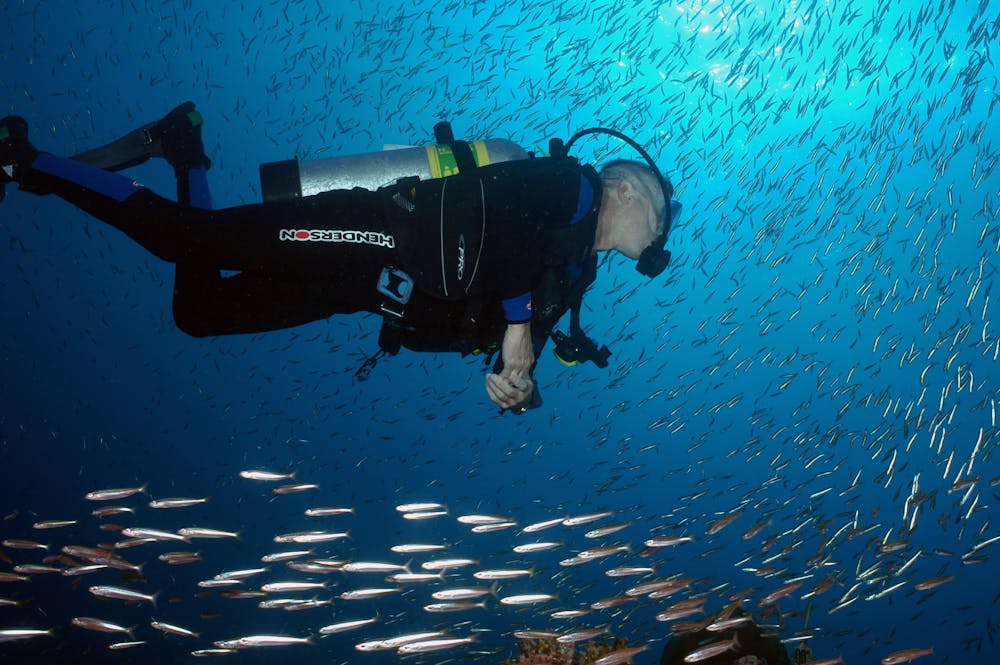 Scuba divers should always avoid touching animals.
sanc0460/Flickr, CC BY
Scuba divers should always avoid touching animals.
sanc0460/Flickr, CC BY
We only observed a difference in the highest flash treatment (four flashes per minute, for ten minutes). Seahorses in this group spent less time resting and sometimes showed “startled” reactions. These reactions looked like the start of an escape reaction, but since the seahorses were in an aquarium, escape was impossible. In the ocean or a large aquarium seahorses would simply move away, which would end the disturbance.
Our last experiment tested if seahorses indeed “go blind” by being exposed to strong flashes. In scientific lingo: we tested if flash photography caused any “pathomorphological” impacts. To do this we euthanised (following strict ethical protocols) some of the unflashed and highly flashed seahorses from the previous experiments. The eyes of the seahorses were then investigated to look for any potential damage.
The results? We found no effects in any of the variables we tested. After more than 4,600 flashes, we can confidently say that the seahorses in our experiments suffered no negative consequences to their visual system.
What this means for scuba divers
A potential explanation as to why flash has no negative impact is the ripple effect caused by sunlight focusing through waves or wavelets on a sunny day. These bands of light are of a very short duration, but very high intensity (up to 100 times stronger than without the ripple effect). Fish living in such conditions would have evolved to deal with such rapidly changing light conditions.
This of course raises the question: would our results be the same for deep-water species? That’s a question for another study, perhaps.
Read more: Genes reveal how the seahorse got its snout and became a great father
So what does this mean for aquariums and scuba diving? We really should focus on not touching animals, rather than worrying about the flash.
Flash photography does not make seahorses blind or stop them from catching their prey. The strobes we used had a higher intensity than those usually used by aquarium visitors or divers, so it is highly unlikely that normal flashes will cause any damage. Touching, on the other hand, has a big effect on the well-being of marine life, so scuba divers should always keep their hands to themselves.
Authors: Maarten De Brauwer, PhD-candidate in Marine Ecology, Curtin University
Read more http://theconversation.com/flash-photography-doesnt-harm-seahorses-but-dont-touch-108346


 Daily Bulletin


