

One in five NSW high school kids suffers "severe" deprivation of life's essentials
- Written by: Peter Saunders, Research Professor in Social Policy, UNSW
It’s tough for any high school student these days. Social media, the uncertainties of adolescence, trying to fit in - trying to figure out who you are.
Then imagine what it’s like for kids whose home life is dominated by money worries. Not enough cash to cover basic costs - constant squabbles over money. You’re forced to tackle school life without some of the essentials most of your friends take for granted.
Essentials like enough food, clothes to wear to school, the home computer you need for school work, money to pay for a school excursion all your mates are going on and a quiet place to study at home. That’s the troubled face of poverty worn by young people who should be able to smile broadly in a country blessed with lots of money and resources.
More than one million Australians are below the poverty line - so this is hardly a small problem.
Read more: New evidence suggests we may need to rethink policies aimed at poverty
We have just completed a study that, for the first time, has asked young Australians aged 11 to 16 about whether they are missing out on these things their friends enjoy. Usually their parents get asked the questions in these kinds of surveys, but we thought it was time to ask the kids. First, we conducted focus groups to understand what items young people think are essential to lead “a normal kind of life”.
Then we surveyed almost 2,700 students attending one of 52 NSW government high schools and 340 financially disadvantaged students participating in the Learning for Life program run by The Smith Family to find out who was missing out on what.
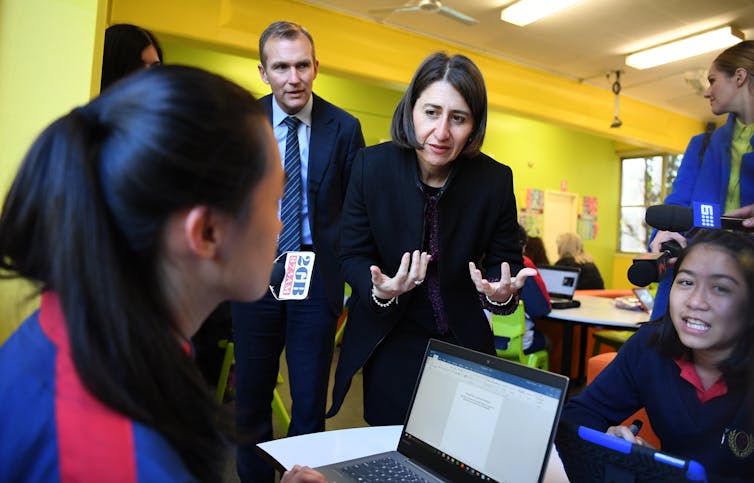 NSW Premier Gladys Berejiklian visits an all girls school in Kogarah in southern Sydney.
And the findings are bleak: nearly one in five students in the schools’ part of the survey (18.7%) and more than double that proportion (40.4%) in The Smith Family component, were suffering “severe” deprivation. We define that as missing out on three or more of the 18 essential items identified in the study.
Our findings indicate that most of these disadvantaged kids are missing out on items that lead to social exclusion - being the odd one out; the kid who’s wearing last year’s uniform, has got little or nothing for lunch, or can’t go on the school excursion or take music lessons after school.
Bob Hawke always polls well when former prime ministers are evaluated, but one of his most notable fails was a statement in 1987 that “by 1990, no Australian child will be living in poverty”.
Progress was made, but Hawke failed to meet his own three-year goal, and suffered a lot of political fallout.
And today, that broad goal seems even further away. Australia has 12 years to reach the poverty goals it agreed to when it signed up to the Sustainable Development Goals (SDGs) at the UN General Assembly in September 2015. Among other things, the SDGs require countries like Australia to reduce the poverty rates of all men, women and children by half by 2030.
The recent ACOSS/UNSW Poverty report suggests that it will be a very difficult ask. That report estimates that almost one in six children (17.3% or 739,000) were living below the poverty line in 2015-16. The percentage has declined slightly over the past 15 years, from 18.6% in 1999-2000, but the SDG goal is to reduce it to below 9% by 2030. Past practice indicates that we are nowhere near on track to do that. Policy will have to change radically if we are to get there – or even close – and that will involve governments doing more for children than just promoting “growth and jobs”, important though they are.
Read more: Australia bucks child poverty trend but the future looks a lot bleaker
The new child deprivation study has highlighted the need to better understand the nature of child poverty as part of the process of tackling it. A key component of the study’s approach is to involve children and young people in developing how poverty is identified, and to draw on data they provide to measure it.
This is a radical departure from conventional poverty studies, which rely on information provided by adults and estimate poverty among households. This means children are assumed to be poor if they live in poor households - but this assumption is rarely acknowledged and never tested.
The new approach places children at the centre and recognises their right to have a say in how poverty affects them, including by helping to develop the methods used to identify it. This involves two stages: a series of focus groups with young people designed to identify the items they need to live a “normal kind if life”; and a survey that asks a large sample of young people whether or not they have them. Those who do not have items they want are then identified as deprived.
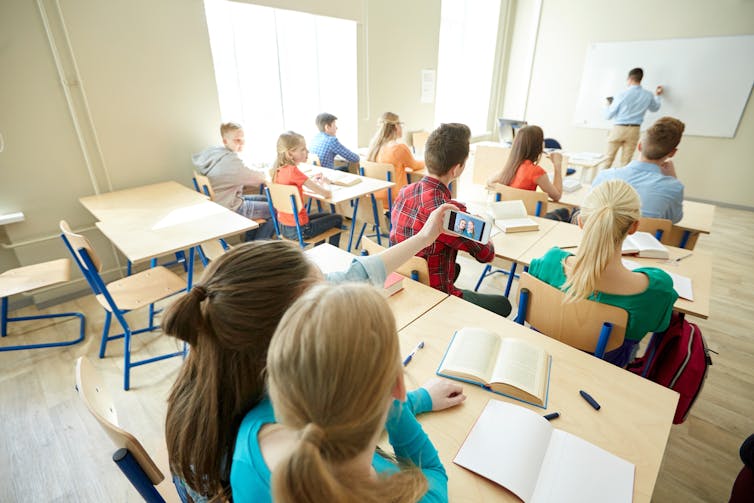 It can be tough for kids facing hardship at home to keep up with their studies - and to feel part of a group of friends.
Shutterstock
It can be tough for kids facing hardship at home to keep up with their studies - and to feel part of a group of friends.
Shutterstock
The survey respondents identified the list 18 items seen as essential for all by a majority of those surveyed. The list includes: three meals a day, a computer or other mobile device, clothes needed for school, going on school trips and excursions, a regular meal out with family and an annual family holiday away, even if that means just a few nights in a rented caravan at a nearby beach.
It also includes things that meet children’s needs for privacy like somewhere to study at home, but also features several school-related items and others that enhance the quality of their neighbourhood like access to public internet services, to local public transport and to a local park or green space. It provides a fascinating insight into what young people see as important in the different domains of their lives and their implicit understanding of the role of public as well as private provision of these basic items.
Read more: FactCheck: is poverty on the rise in Australia?
Across all the kids surveyed in our study, social exclusion (missing out on activities) was more prevalent than material deprivation (missing out on things).
Further analysis shows that those experiencing higher levels of deprivation (measured using a new child deprivation index) also reported lower levels of well-being across several dimensions, including life satisfaction, contentment (or happiness), feeling safe and being connected with family, friends and community.
There is an inverse relationship between the level of deprivation and the degree of satisfaction with, safety at, and engagement with school and schooling, and between deprivation and how well young people think they are doing at school, and (though weaker) the importance they attach to getting good marks in tests and exams. These latter findings suggest that deprivation undermines young people’s sense of well-being in school, their educational motivation and in some instances, their performance.
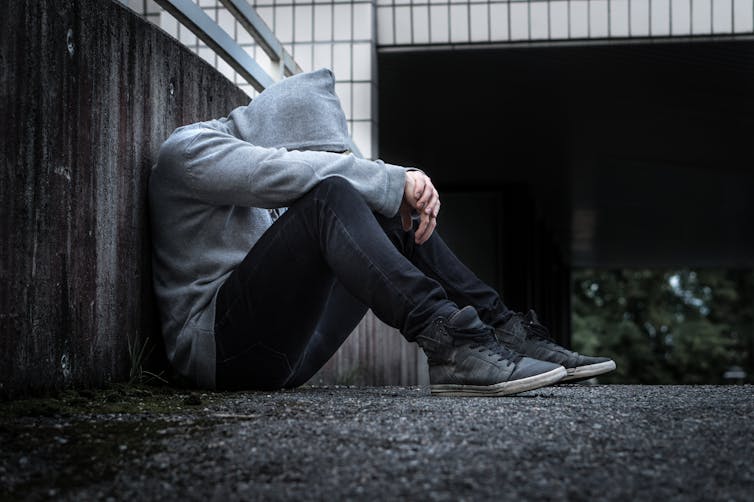 Deprivation during the school years can lead to low self-esteem, a sense of failure - and a greater likelihood the young person won’t reach full potential.
Shutterstock
Deprivation during the school years can lead to low self-esteem, a sense of failure - and a greater likelihood the young person won’t reach full potential.
Shutterstock
So those who are currently missing out could suffer long-term effects - once a young person feels like an outsider it can be hard to do well and catch up. Deprivation not only imposes immediate hardship and suffering but is an obstacle preventing young people from realising their potential. Its removal is a necessary step towards achieving equality of opportunity for all young people.
We can and should do better for our children and young people, and we will need to if the SDG commitment is to be reached. Addressing poverty at younger ages is the obvious place to start as this will have immediate and longer-term social and economic benefits.
Authors: Peter Saunders, Research Professor in Social Policy, UNSW


 Daily Bulletin


