

Innovation could just mean a better kind of co-operation
- Written by: Professor Lars Coenen, City of Melbourne Chair in Resilient Cities, University of Melbourne
It seems Australia’s experiment at being a world leader at “innovation” is over, with the abrupt departure of its champion, Malcolm Turnbull.
The then prime minister made headlines with his 2015 Innovation Statement, which sought to move the Australian economy beyond dependence on natural resource extraction into an “ideas boom”.
Read more: No clear target in Australia's 2030 national innovation report
But his replacement with Prime Minister Scott Morrison three months ago has seen innovation disappear off the government’s radar. Even the job of innovation minister was scrapped – to the consternation of the tech and start-up sectors.
Where does this leave us? Not poised to make the most of the 21st century, according to the Global Innovation Index, which last year ranked Australia a lowly 76th in terms of innovation efficiency.
But we cannot afford to turn our back on innovation. Our major sustainability problems – transitioning energy, future-proofing cities, reducing carbon emissions – need us to move past “business as usual”.
Rethinking innovation
As my research on innovative cities and regions in Europe and Australia shows, we urgently need to rethink what innovation is and how to go about it.
Too often it’s framed in purely economic or technological terms. But innovation should be much more than a buzzword or a techno-fix.
Our economy faces some intractable sustainability challenges, which must be prioritised. We’re struggling to stay within a safe climate envelope – despite (or even because of) technological advances. Around the world, social polarisation is deepening, even in cities that rank highly on livability and innovation indices.
We need a notion of innovation based on solving problems collectively, with solutions that are relevant to society – not just to economists.
What does this look like? We need to combine scientific and technological solutions with expertise from the social sciences and humanities, and to that mix we need to add real-world lessons from practice-based knowledge and experimentation.
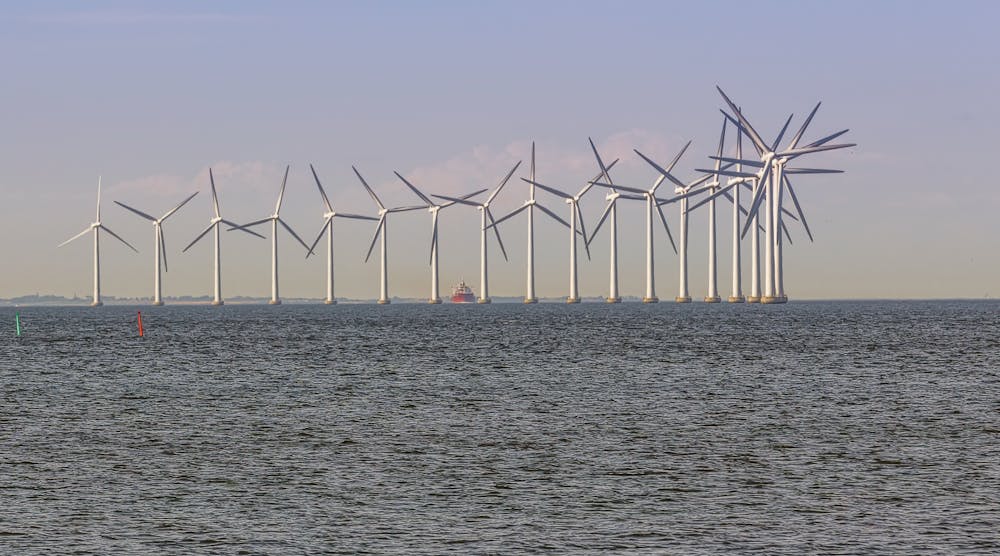 Wind turbines located off the coast of Copenhagen, Denmark.
Vadim Petrakov/Shutterstock
Wind turbines located off the coast of Copenhagen, Denmark.
Vadim Petrakov/Shutterstock
Consider the extraordinary success of wind power in Denmark, a small country which is a world leader on renewable energy. Denmark was an early mover in acting on the 1970s oil crisis and acknowledging – not ignoring – warnings of climate change.
The early development of wind turbines blended scientific expertise with farmers’ knowledge, with grassroots organisations involved too. New forms of partnerships were trialled between the private sector, government, universities and civil society organisations. The Danish government acted as an entrepreneurial state, which actively contributed to creating a market for wind energy.
Overall, the Danes took an approach of being resilient in a crisis and pursuing diversity of knowledge and cross-sector collaboration. It has paid off.
Innovation as collective problem-solving
So we need to have a broader understanding of what innovation really is: it’s collective problem-solving, not just something that’s done by heroic entrepreneurs. Even though there is no one-size-fits-all strategy, it will always be a messy process of trial and error, and it will always take time. Beware of politicians promising swift results.
The majority of innovation projects fail. Yet it is in the failures we find the interesting stories that we can learn from, as the brilliant Museum of Failure captures. We have to accept failure and share the lessons from it. This is a challenge for politicians, who tend to be risk-averse and preoccupied with cost.
Australia’s formal approach to innovation could use a shake-up, but since moving to Australia two years ago I’ve found plenty going on at ground level. I’ve been interested by the work of Farmers for Climate Action, who show how innovation in agriculture can be effective while largely flying under the radar.
Read more: Farmers' climate denial begins to wane as reality bites
Then there’s the Resilient Melbourne Strategy, which was endorsed two years ago and aims to help the city prepare for change and whatever the future may hold. My (Lars) research into the strategy demonstrates the challenge of combining citizen engagement with large corporations, elite universities and governments (which can operate in silos) – but we need these cross-sector partnerships to make innovation work.
Meanwhile, back in my former home town of Malmö in Sweden, a former shipbuilding factory has been transformed into an experimental, sustainable “maker space” bringing together technology, crafts, art and culture.
Tailoring innovation to a specific place – whether it’s Melbourne or Malmö – reminds us why we need innovation in the first place. Getting innovation right is particularly important for places coping with the potential loss of their major industry, like Australia’s coal regions. We can’t afford to get this one wrong.
This is an edited extract of the MSSI Oration 2018, given by Lars Coenen at the Melbourne Sustainable Society Institute on November 20, 2018.
Authors: Professor Lars Coenen, City of Melbourne Chair in Resilient Cities, University of Melbourne
Read more http://theconversation.com/innovation-could-just-mean-a-better-kind-of-co-operation-106856


 Daily Bulletin


