

How catching malaria gave me a new perspective on saving gorillas
- Written by: Marissa Parrott, Reproductive Biologist, Wildlife Conservation & Science, Zoos Victoria, and Honorary Research Associate, BioSciences, University of Melbourne
Conservationists are in a desperate fight to save the last of the world’s gorillas. Numbers of some subspecies are so low that organisations are literally saving the species one gorilla at a time.
A perhaps unlikely foe in this battle is human-borne disease, including malaria, which has the potential for transmission from people to gorillas via bites from female Anopheles mosquitoes. Central Africa, the home of the gorillas, is highly susceptible to this disease, driving poverty and desperation amongst its communities.
Read more: Curious Kids: Why do humans not have fur like chimpanzees and gorillas?
As human populations expand and deforestation increases, gorillas are brought into closer contact with people and the risk of disease transmission rises – with devastating effects.
Malaria infects people and our great ape cousins
 A male mountain gorilla in Virunga National Park.
Marissa Parrott/Zoos Victoria, Author provided
In 2012 and 2017, I was lucky to see the magnificent, gentle and intelligent gorillas up close in both Bwindi Impenetrable Forest in Uganda, and Virunga National Park in the Democratic Republic of Congo.
I learned about the vital work of Zoos Victoria’s partner, Gorilla Doctors, in the protection and veterinary treatment of gorillas.
Malaria is the biggest disease killer of humans of all time, having claimed billions of human lives. Roughly half of the world’s population is at risk, and around half a million people die from the disease each year.
While the effects of malaria on human communities are horrifying, the effects of this and other human-borne diseases on gorillas, with so few remaining, pose the threat of extinction.
Read more: How drones are helping in the fight against malaria
At least 10 species of malaria can infect gorillas, with three being the same or highly similar to those found in humans. In one study, more than 30% of gorillas were infected with malaria parasites. However, difficulties in studying the often remote and critically endangered gorillas means potential transmission pathways remain unknown. More research is required to determine the effects of this disease and how to protect gorillas in the future.
My own battle against malaria
Despite never feeling or seeing a mosquito bite, I learned about these issues first-hand when I caught malaria myself.
During my PhD, I taught practical classes on malaria, and it was this knowledge that led me to believe I was in trouble in 2017.
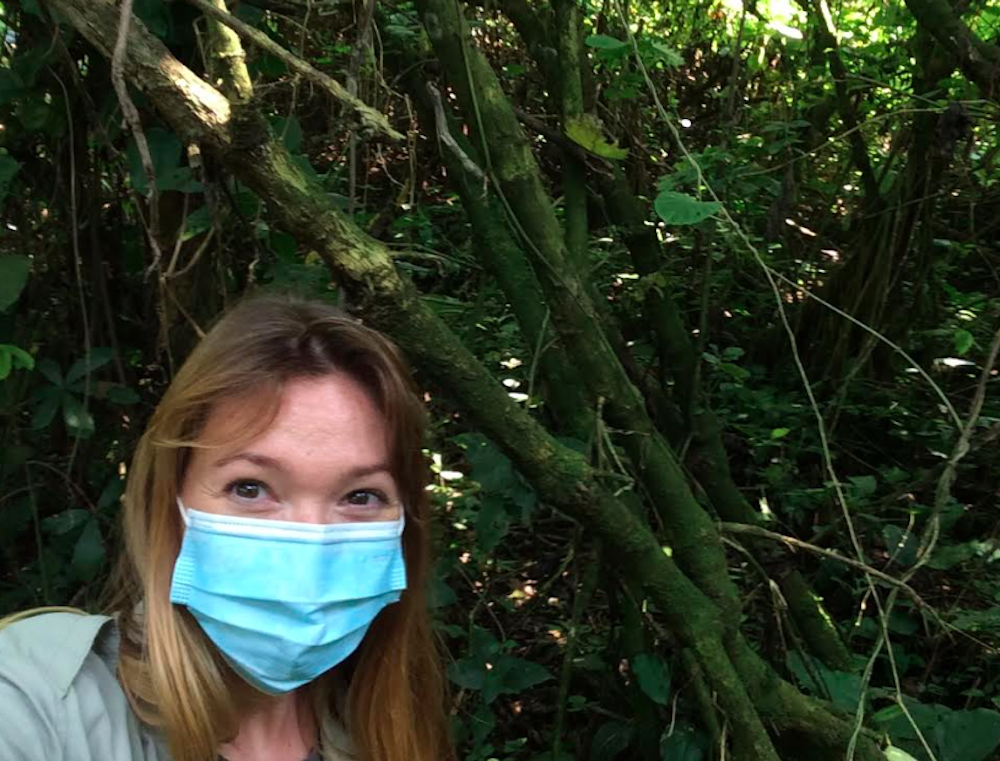 The author wearing a face mask to protect gorillas in Virunga National Park.
Marissa Parrott/Zoos Victoria
Despite taking malaria-prevention medication, I had encountered one of the few diseases found in both humans and gorillas: Plasmodium ovale, a parasite that appears to be growing a resistance to some medications.
My local Australian doctors had never encountered this species, and despite blood tests showing massive liver damage, I was not diagnosed for weeks. I spent a week in hospital, hooked to intravenous fluids, and left in a wheelchair.
The effects of malaria are horrific. P. ovale has a 49-hour life cycle, bursting in their millions out of blood cells to infect and multiply. The first sign is nerve pain – every touch feels like sandpaper – followed by a loss of circulation to your arms and legs, then crippling fevers, sometimes over 41℃. You shake so violently and uncontrollably that you tear your muscles. In the aftermath, your blood pressure drops, in my case close to half of what it should have been.
Malaria is also called “Blackwater Disease”, because your urine turns the colour of Coca Cola while your body excretes all your destroyed blood cells. On one hand this was fascinating to see. On the other, it was terrifying. I really needed those blood cells.
Read more: Why Kenya isn't winning the war against malaria in some counties
Twelve months on, I’ve been lucky with my recovery. We don’t know whether a gorilla infected with P. ovale would suffer the same symptoms, but I can’t fathom the fear a gorilla could feel with this crippling disease. Or the pain a mother could feel while watching her baby convulse with fevers. As with human children, malaria and other diseases are often most prevalent in younger gorillas.
To protect gorillas, you must protect people
Thankfully, there is hope. Gorilla Doctors monitor Eastern Lowland and Mountain Gorilla families deep in the jungles for signs of illness and injury. They deliver hands-on treatment for viral, parasitic and bacterial diseases, often via darts, or in severe cases under anaesthetic. They also support research, with PhD students studying a variety of diseases including malaria.
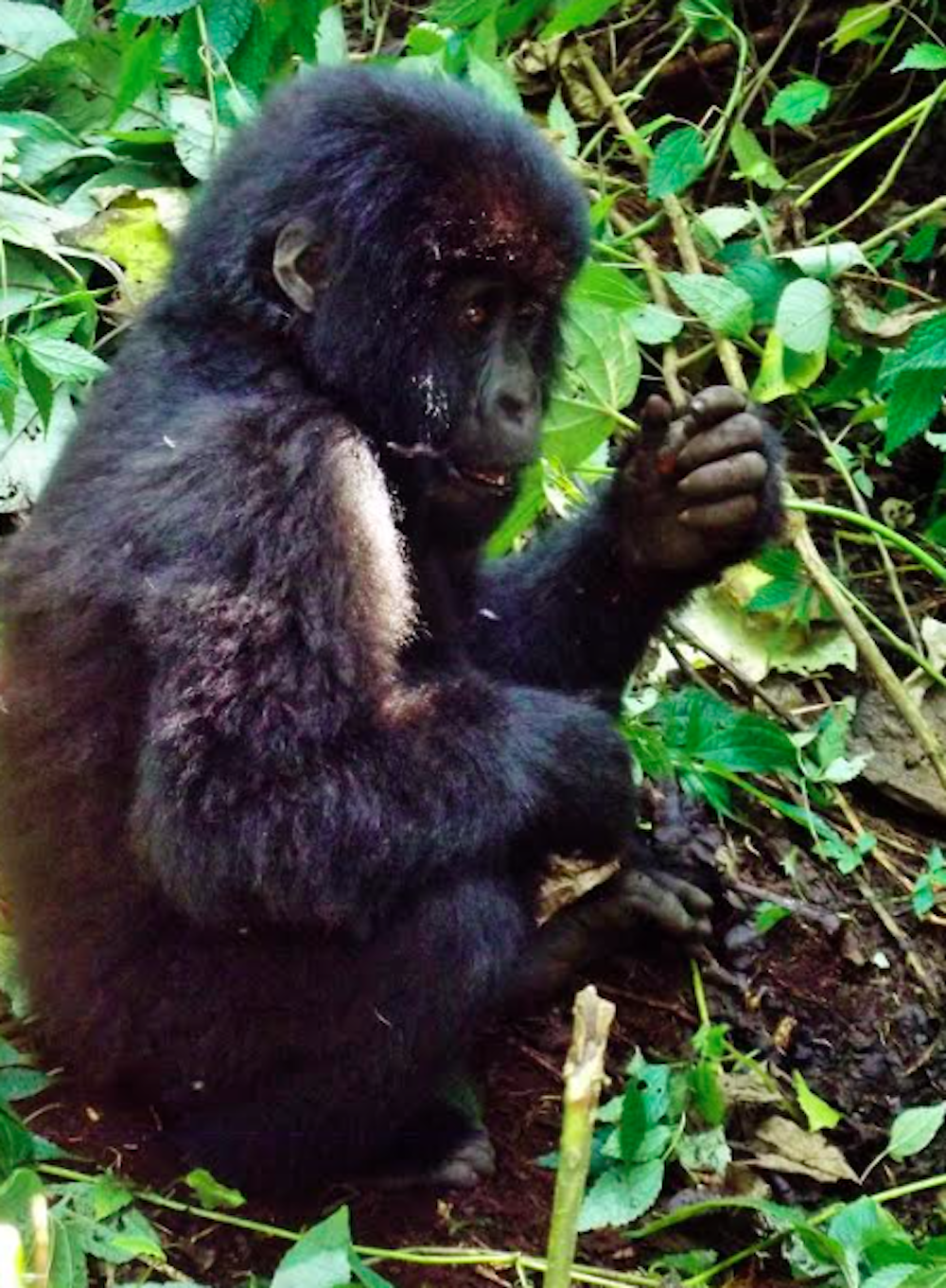 A young mountain gorilla in Virunga National Park.
ZoosVictoria/Marissa Parrott, Author provided
With such devastating diseases, the work of organisations to protect both local communities and gorillas is paramount. Ecotourism brings new people, and potentially new diseases in contact with gorillas. But it also brings crucial funding for the species and management of national parks. It is a delicate balancing act.
Studies suggest the greatest risk of disease transmission comes from local communities. Gorillas Doctors support One Health Initiatives for local communities and their domestic livestock. You cannot care for wildlife without caring for local communities and the health of staff who work in the national parks to protect the great apes.
Read more: The origin of 'us': what we know so far about where we humans come from
Visiting national parks and supporting well-run ecotourism brings much-needed income and attention to these areas, although you should see your doctor for appropriate malaria prophylaxis. Zoos Victoria also supports Gorilla Doctors’ work in the wild through their mobile-phone recycling program “They’re Calling on You”.
Support organisations to protect gorillas and the people who care for and live beside them.
Authors: Marissa Parrott, Reproductive Biologist, Wildlife Conservation & Science, Zoos Victoria, and Honorary Research Associate, BioSciences, University of Melbourne
Read more http://theconversation.com/how-catching-malaria-gave-me-a-new-perspective-on-saving-gorillas-103911


 Daily Bulletin


