

Climate change will reshape the world’s agricultural trade
- Written by: Luciana Porfirio, Research Scientist, Agriculture & Food, CSIRO | Visiting fellow at the Fenner School of Enviroment & Society, CSIRO
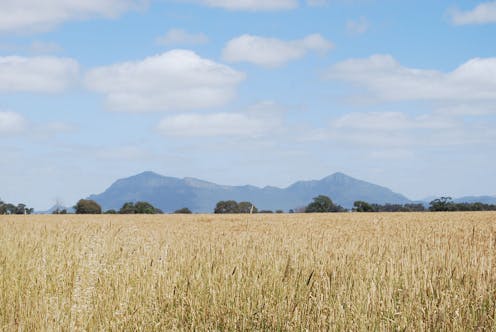
Ending world hunger is a central aspiration of modern society. To address this challenge – along with expanding agricultural land and intensifying crop yields – we rely on global agricultural trade to meet the nutritional demands of a growing world population.
Read more: How many people can Australia feed?
But standing in the way of this aspiration is human-induced climate change. It will continue to affect the issue of where in the world crops can be grown and, therefore, food supply and global markets.
In a paper published today in Nature Palgrave, we show that climate change will affect global markets by reshaping agricultural trading patterns.
Some regions may not be able to battle climate impacts on agriculture, in which case production of key commodities will decline or shift to new regions.
The challenge
The negative impacts of climate change on agricultural production are of great concern to farmers and decision-makers. The concern is increasingly shared by governments including those most hostile to the advancement of climate change mitigation.
Even the United States, which has opted out of the Paris Agreement, acknowledged at last year’s G7 summit that climate change was one of a number of threats to “our capacity to feed a growing population and need[ed] to be taken into serious consideration”.
The UN median population projection suggests that the world population will reach some 10 billion in 2050. Between 2000 and 2010, roughly 66% of the daily energy intake per person, about 7,322 kilojoules, was derived from four key commodities: wheat, rice, coarse grains and oilseeds. However, the most recent UN report on food security and nutrition shows that world hunger is on the rise again and scientists believe this is due to climate change.
Read more: World hunger is increasing thanks to wars and climate change
We must ask: what is the cost of adapting to climate change versus the cost of mitigating carbon emissions? And assuming that changes in climate and crop yields are here to stay, are we prepared for permanent agricultural shifts?
Disruptions and opportunities
Agricultural production is significantly affected by climate change. Our results suggest that global trade patterns of agricultural commodities may be significantly different from today’s reality – with or without carbon mitigation. This is because climate change and the implementation of a carbon mitigation policy have different effects on a regions’ agricultural production and economy.
Take the US, which in 2015 had 30% of the global market share of coarse grains, paddy rice, soybeans and wheat. We modelled production between 2050-59 under two scenarios: in a world 2℃ average temperature rise, and with a 1.5℃ increase. In both cases, the US market share would shrink to about 10%.
Read more: As global food demand rises, climate change is hitting our staple crops
China is currently a net importer of these commodities. If temperature increases by 1.5℃, we expect to see an increase in exports of some products, like rice to the rest of Asia.
(However, it’s worth bearing in mind that limiting warming would be very expensive for China, as it would need to absorb a costly technological transition to a low carbon economy.)
China’s story is different in the 2℃ scenario. Our projections suggest that climate change will make China, as well as other regions in Asia, more suitable to produce different commodities.
China’s economy will keep expanding, whilst the new climatic conditions create opportunities to produce other food commodities at a greater scale and export to new regions.
Our results also suggest that, regardless of the carbon policy scenarios, Sub-Saharan Africa will become the greatest importer of coarse grains, rice, soybeans and wheat by 2050. This significant change in Sub-Saharan Africa imports is driven by the fact that the largest increase in human population by 2050 will occur in this region, with a significant increase in food demand.
In our research Australia was aggregated in “Oceania” with New Zealand. The exports from Oceania to the rest of the world comprised about 1.6% of the total in 2015, which is dominated by wheat exports from Australia.
Our projections suggest that carbon mitigation policies would favour the wheat industry in this region. The opposite occurs without carbon mitigation: the production and exports of wheat are projected to decline due to climate change impacts on agriculture.
The benefits of mitigation
A recent report published by the European Commission about the challenges of global agriculture in a climate change context by 2050 highlights that
…emission mitigation measures (i.e. carbon pricing) have a negative impact on primary agricultural production […] across all models.
However, the report does not mention the technological costs to buffer (or adapt to) the effect of climate change on agriculture.
Our results suggest that the cost paid by the agricultural sector to reduce carbon dioxide emissions is offset by the higher food prices projected in the non-mitigation scenario, where agricultural production is significantly affected by climate change. We found that there is a net economic benefit in transitioning to a low carbon economy. This is because agricultural systems are more productive under the mitigation scenario, and able to meet the demand for food imposed by a growing population.
Read more: Australian farmers are adapting to climate change
Mitigating CO₂ emissions has the side benefit of creating a more stable agricultural trade system that may be better able to reduce food insecurity and increase welfare.
Changes in the agricultural system due to climate are inevitable. It is time to create a sense of urgency about our agricultural vulnerabilities to climate change, and begin seriously minimising risk.
Authors: Luciana Porfirio, Research Scientist, Agriculture & Food, CSIRO | Visiting fellow at the Fenner School of Enviroment & Society, CSIRO
Read more http://theconversation.com/climate-change-will-reshape-the-worlds-agricultural-trade-102721


 Daily Bulletin


