

A brief history of fake doctors, and how they get away with it
- Written by: Philippa Martyr, Lecturer, Pharmacology, University of Western Australia
Melbourne man Raffaele Di Paolo pleaded guilty last week to a number of charges related to practising as a medical specialist when he wasn’t qualified to do so. Di Paolo is in jail awaiting his sentence after being found guilty of fraud, indecent assault and sexual penetration.
This case follows that of another so-called “fake doctor” in New South Wales. Sarang Chitale worked in the state’s public health service as a junior doctor from 2003 until 2014. It was only in 2016, after his last employer – the research firm Novotech – reported him to the Australian Health Practitioner Regulation Agency (AHPRA), that his qualifications were investigated.
“Dr” Chitale turned out to be Shyam Acharya, who had stolen the real Dr Chitale’s identity and obtained Australian citizenship and employment at a six-figure salary. Acharya had no medical qualifications at all.
Cases of impersonation, identity theft and fraudulent practice happen across a range of disciplines. There have been instances of fake pilots, veterinarians and priests. It’s especially confronting when it happens in medicine, because of the immense trust we place in those looking after our health.
So what drives people to go to such extremes, and how do they get away with?
A modern phenomenon
Impersonation of doctors is a modern phenomenon. It grew out of Western medicine’s drive towards professionalism in the 19th century, which ran alongside the explosion of scientific medical research.
Before this, doctors would be trained by an apprentice-type system, and there was little recourse for damages. A person hired a doctor if they could afford it, and if the treatment was poor, or killed the patient, it was a case of caveat emptor – buyer beware.
But as science made medicine more reliable, the title of “doctor” really began to mean something – especially as the fees began to rise. By the end of the 19th century in the British Empire, becoming a doctor was a complex process. It required long university training, an independent income and the right social connections. Legislation backed this up, with medical registration acts controlling who could and couldn’t use medical titles.
Given the present social status and salaries of medical professionals, it’s easy to see why people would aspire to be doctors. And when the road ahead looks too hard and expensive, it may be tempting to take short cuts.
Today, there are four common elements that point to weaknesses in our health-care systems, which allow fraudsters to slip through the cracks and practise medicine.
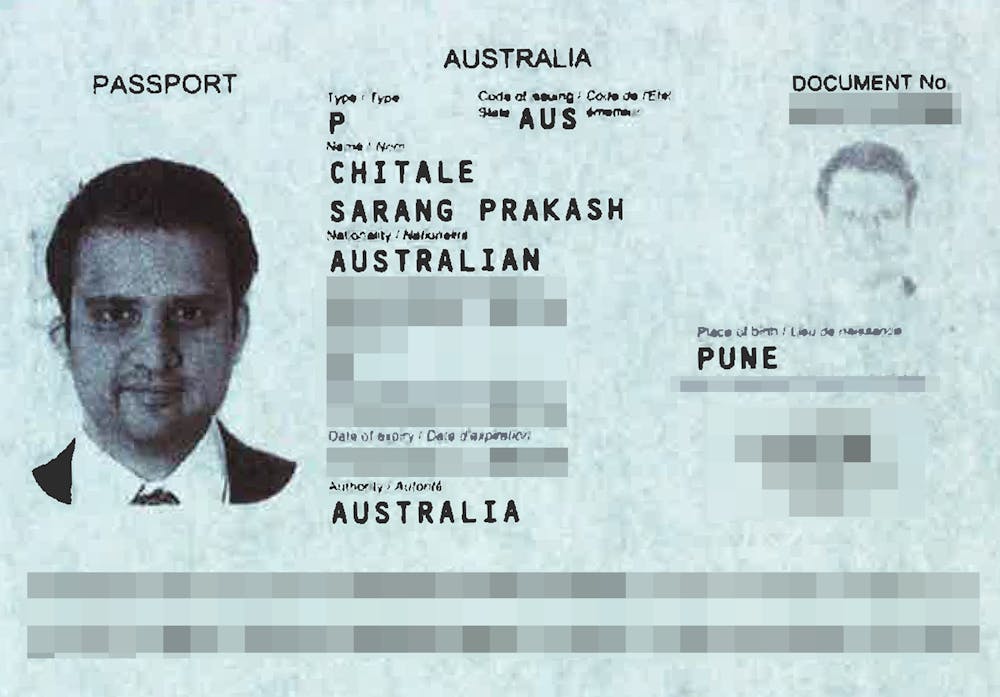 Shyam Acharya stole Dr Chitale’s identity to practise medicine.
AAP Images
Shyam Acharya stole Dr Chitale’s identity to practise medicine.
AAP Images
1. Misplaced trust
Everyone believes someone, somewhere, has checked and verified a person’s credentials. But sometimes this hasn’t been done, or it takes a long time.
Fake psychiatrist Mohamed Shakeel Siddiqui – a qualified doctor who stole a real psychiatrist’s identity and worked in New Zealand for six months in 2015 – left a complicated trail of identity theft that required the assistance of the FBI to unravel.
Last year, in Germany, a man was found to have forged foreign qualifications that he presented to the registering body in early 2016. He was issued with a temporary licence while these were checked. When the qualifications turned out to be fraudulent, he was fired from his job as a junior doctor in a psychiatric ward. But this wasn’t until June 2017.
2. Foreign credentials
Credentials from a foreign university, issued in a different language, are another common element among medical fraudsters. Verifying these can be time-consuming, so a health system desperate for staff may cut corners.
Ioannis Kastanis was appointed as head of medicine at Skyros Regional Hospital in Greece in 1999 with fake degrees from Sapienza University of Rome. The degrees were recognised and the certificates translated, but their authenticity was never checked.
Dusan Milosevic, who practised as a psychologist for ten years, registered in Victoria in 1998. He held bogus degrees from the University of Belgrade in Serbia – at the time a war-torn corner of Europe, which made verification difficult.
3. Regional and remote practice
It’s easier to get away with faking in regional or remote areas where there is less scrutiny. Desperation to retain staff may also silence complaints.
“Dr” Balaji Varatharaju fraudulently gained employment in remote Alice Springs, where he worked as a junior doctor for nine months.
Ioannis Kastanis had worked on a distant Greek island with a population of only around 3,000 people.
4. It’s not easy to dob
Finally, there are two unnerving questions. How do you tell a poorly trained but legally qualified practitioner from a faker? And who do you tell if you suspect something is off?
The people best placed to spot the fakes – other hospital and health-care staff – work in often stressful conditions where complaints about colleagues can lead to reprisals. If the practitioner is from another ethnicity or culture, this adds an extra layer of sensitivity. It was only after “Dr Chitale” was exposed that staff were willing to say his practice had been “shabby”, “unsavoury” and “poor”.
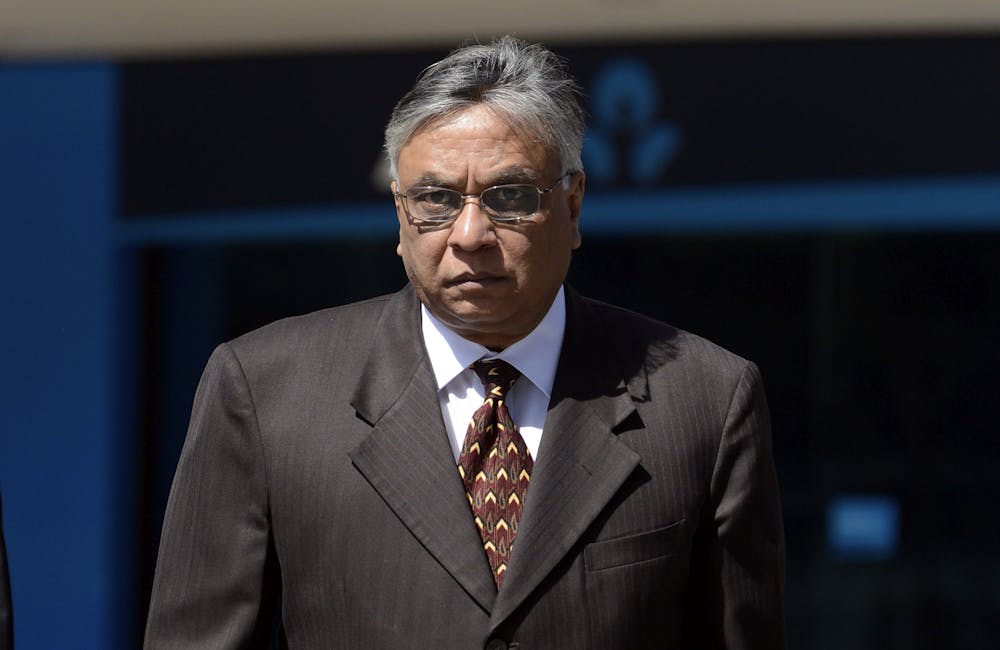 Qualified doctors, like former Bundaberg surgeon Jayant Patel, have also caused problems.
DAN PELED/AAP Image
Qualified doctors, like former Bundaberg surgeon Jayant Patel, have also caused problems.
DAN PELED/AAP Image
So, why do they do it?
The reasons for fakery are as diverse as the fakers. “Dr Nick Delaney”, at Lady Cilento Children’s Hospital in Brisbane, reportedly pretended to be a doctor to “make friends” and keep a fling going with a security guard at the same hospital.
On a more sinister level, there are possible sexually predatory reasons, like those of bogus gynaecologist Raffale Di Paolo. Fake psychiatrist Mohamed Shakeel Siddiqui said he only did it to help people.
There are also the less easily understood fakers, like “Dr” Adam Litwin, who worked as a resident in surgery at UCLA Medical Center in California for six months in 1999. Questions only began to be asked when he turned up to work in his white coat with a picture of himself silk-screened on it: even by Californian standards, this was going too far.
So how do we stop this happening?
Part of the problem is our cultural dependence on qualifications as the passkey to higher income and social status, making them an easy target for fraudsters. Qualifications only reduce risk, but they can’t eliminate it. Qualified doctors can also cause havoc: think Jayant Patel and other bona fide qualified practitioners who have been struck off for malpractice, mutilation and manslaughter.
Conversely, no one complained about “Dr Chitale” in 11 years. The only complaints Kastanis received in 14 years were from people who thought his Ferrari was vulgar. The German junior doctor had an excellent knowledge of mental health-care procedures and language – obtained from his time as a psychiatric patient.
Most of these loopholes can be closed with time and patience. What would help is if hospital and health-care staff felt sufficiently supported to report their suspicions to their employer, rather than to their colleagues. This would foster a more open culture of flagging concerns about fellow practitioners without fear of formal or informal punishment. It might also uncover more “Dr Chitales” before anyone is seriously harmed.
Authors: Philippa Martyr, Lecturer, Pharmacology, University of Western Australia
Read more http://theconversation.com/a-brief-history-of-fake-doctors-and-how-they-get-away-with-it-94572


 Daily Bulletin


