

Russian Olympic doping saga shows need for a radically different approach
- Written by: Jack Anderson, Professor of Sports Law, Melbourne Law School, University of Melbourne
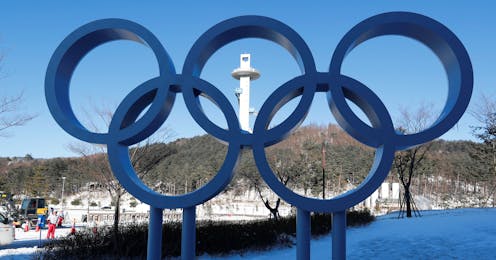
Sport, and particularly the International Olympic Committee (IOC), needs a new approach to doping – one in which it frankly and independently interrogates what went wrong and uses that analysis to secure the future.
Mistakes have been made to the extent that doping scandals have dominated the build-up to the 2018 Pyeongchang Olympics. This is one of the IOC’s marquee events, and the financial viability of the Olympic “movement” depends on it.
The background to the latest scandal is easily explained. But the lessons that need to be learned are not so simply analysed.
Background to the saga
Allegations of a Russian state-sponsored doping conspiracy at the 2014 Sochi Olympics prompted the World Anti-Doping Agency (WADA) to commission an investigation by Canadian sports lawyer Richard McLaren. His report fed into the IOC’s investigation of the Sochi Olympics and its own disciplinary process.
This all led to the IOC’s decision in December 2017 to suspend the Russian Olympic Committee with immediate effect.
Read more: Russia's humiliating ban from the Winter Olympics is the right move to protect integrity in sport
Nevertheless, the IOC also decided it would still be open to inviting individual Russian athletes to compete in Pyeongchang. But this would be under strict conditions that, if met, would only allow them to participate under a separate designation of “Olympic Athlete from Russia”.
An IOC panel appointed to oversee this process initially reviewed applications submitted by 500 Russian athletes – 111 were refused almost immediately. It now looks as if 169 Russian athletes will compete in Pyeongchang.
The IOC disciplined a separate tranche of 43 Russian athletes. These athletes had to forfeit the medals they won at Sochi and received life bans from future Olympics. But 39 of them appealed to the Court of Arbitration for Sport (CAS) and 28 were successful. The court held there was insufficient evidence to establish they had committed anti-doping infractions.
Although the court’s mandate was to consider the individual appeals and not to determine whether there was systemic doping at Sochi, its decision was a bad defeat for the IOC.
With 169 Russians permitted to go to Pyeongchang by its own review panel plus the 28 cleared by case, it could be said there are now 197 holes in the key pieces of evidence relied upon by the IOC – the McLaren report and that of Russian whistleblower Grigory Rodchenkov.
Also, the Russian press has interpreted the CAS decision annulling the medal forfeiture as meaning that Russia is reinstated in first place on the unofficial Sochi Olympics medal tally.
Even in the CAS decision to uphold the findings of doping violations against the other 11 Russian athletes, the IOC’s victory was partial. These athletes had their life bans reduced to a ban for the duration of the Pyeongchang Games only.
After the CAS decision, IOC President Thomas Bach said reform may be needed to the way the court operates – as did WADA vice-president Linda Hofstad Helleland.
So, sport is now in a politically charged and totally conflicted situation. Its doping prosecutor (WADA) and the executive that governs sports policy globally (the IOC) have both said an inquiry is needed into the workings of sport’s judiciary. And that inquiry has been prompted by a CAS judgment that applied the anti-doping laws WADA and the IOC wrote, but with whose interpretation they now disagree.
The IOC has refused to invite the CAS-cleared athletes to compete in Pyeongchang. It seems to have suggested its rationale is twofold: it still has to get the full reasons for the CAS decision, and it has “additional information” on doping related to those athletes.
But this raises fresh questions about why this supplementary evidence wasn’t supplied to CAS and what exactly are the criteria used – as opposed to the evidence relied upon by the IOC in deciding whether to invite the athletes.
Some of those athletes are now (re)challenging the IOC and the carousel of Sochi-related appeals at CAS continues. It’s unclear if it will stop before the Pyeongchang Olympics begin on Friday.
What lessons can be learned?
The International Paralympic Committee comprehensively banned Russia – a move CAS upheld. The IOC did not do this; it pursued individuals. There are questions over whether it unnecessarily rushed that process (and its lawyers), and whether it had a contingency plan to respond to the worst-case scenario of losing at CAS.
In the long term, questions may well be asked of CAS and whether it has outgrown its current structures to the extent that a permanent, standing court is needed for sport.
More importantly, it must be asked whether the current anti-doping system, which has its origins in responses to the systemic doping of East Germany and others in the 1980s, is designed to pursue and punish instances of institutional or collective or team-mandated doping.
In addition, the system is premised largely on catching individual dopers. Maybe a better way to test the system’s integrity is for entities such as WADA, in conjunction with athlete representative bodies, to continuously and first to ask itself: what if we accuse someone in the wrong? What about a false positive?
If the anti-doping system is scrutinised in this way, it may well prompt uncomfortable questions about the scientific integrity and efficacy of current testing, the resources needed to independently prosecute doping, and the political will to do so.
And yet, if those questions are answered honestly and the necessary checks and balances are put in place, the anti-doping system would be strengthened – and the mistakes of the recent past would be confined to the past.
Authors: Jack Anderson, Professor of Sports Law, Melbourne Law School, University of Melbourne


 Daily Bulletin


