

What Australians Should Check Before Buying a Refurbished Phone
Buying a refurbished phone can be a practical way to replace a damaged device, equip a family member or access a better model without paying the price of a brand-new handset. However, a low advertised price should not be the only factor guiding the decision.
The condition of the phone, the testing completed before sale and the support available afterwards can be just as important as the model itself. Two listings for the same phone may represent very different purchases once storage, battery performance, cosmetic wear, accessories and warranty terms are considered.
A simple checklist can help Australian shoppers compare refurbished devices with greater confidence.
Start With What You Actually Need
Before comparing models, identify what the phone needs to do.
A person who mainly uses calls, messages, email, maps and banking applications may not need the latest flagship. Someone creating videos, playing demanding games or relying on a mobile hotspot may require stronger performance, more storage and better battery capacity.
Screen size can also affect everyday use. A compact phone may be convenient to carry, while a larger display can make reading, navigation and media easier. Camera quality may be essential for one buyer but less important for someone purchasing a work or backup phone.
Starting with these requirements makes it easier to avoid paying for features that will rarely be used.
Confirm What “Refurbished” Means
A refurbished phone is not necessarily the same as a device purchased through an informal private sale.
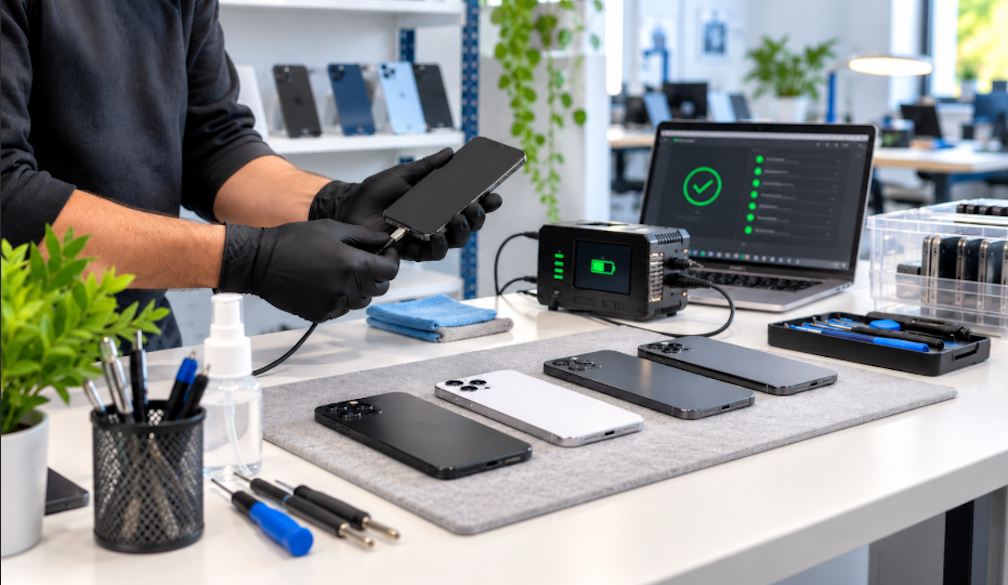
Private sellers commonly offer phones in their existing condition. They may not have the equipment or technical experience required to test every feature. A professional refurbishment process normally involves assessment, cleaning, resetting and testing, with repairs completed where required.
The word “refurbished” alone does not explain how extensive that process was. Buyers should look for information about the checks performed and the standard a phone must meet before being approved for sale.
A detailed guide to buying refurbished phones in Australia can help consumers understand the differences between condition, performance and seller support.
Read the Condition Grade Carefully
Condition grades usually describe a phone’s cosmetic appearance. A higher grade may have fewer visible marks, while a lower grade may show scratches, scuffs or wear around the edges.
Cosmetic wear does not always indicate poor performance. A phone with surface scratches may function correctly, while a cleaner-looking device could still have battery or charging problems if it has not been tested properly.
There is no single grading system used by every retailer. One seller’s “excellent” condition may not be identical to another seller’s definition. Read the full description and check whether the grade refers only to appearance or also includes functional requirements.
For buyers who intend to use a protective case, accepting some cosmetic wear can provide better value. Those purchasing a gift may prefer to pay more for a cleaner appearance.
Examine Battery Expectations
All rechargeable phone batteries lose capacity over time. That makes battery performance particularly important when buying pre-owned technology.
A battery that requires frequent charging may be manageable for someone who works near a power source, but unsuitable for a person who travels regularly or depends on navigation throughout the day.
Do not assume that refurbishment always includes a new battery. Some devices retain their original battery if it meets the seller’s required standard, while others may receive a replacement.
Look for clear information about how the battery has been assessed. If the listing does not explain the applicable battery standard, ask the seller before purchasing.
Check the Essential Functions
A phone should be assessed for more than its ability to power on.
Important functions include:
● Touchscreen response across the display
● Front and rear cameras
● Speakers and microphones
● Charging port and cable connection
● Power and volume buttons
● Wi-Fi and Bluetooth
● Mobile-network connectivity
● Fingerprint or facial authentication
● SIM or eSIM functionality
● Display brightness and colour
● Vibration and notification functions
Faults in these areas may not be obvious from product photographs. A retailer that explains its testing process provides more useful information than one that relies only on a broad description such as “working.”
Verify the Exact Model and Storage
Smartphone names can look very similar across generations. Variants from the same family may have different display sizes, cameras, processors, charging connections and network capabilities.
Confirm the exact model rather than relying on appearance alone. Buyers should also check whether the phone is an Australian version or an imported variant, particularly when compatibility with local networks or specific features is important.
Storage should reflect how the device will be used. Photographs, videos, applications and downloaded media can fill a lower-capacity phone quickly. Cloud storage can help, but it may not suit people who frequently work offline or prefer to keep files on the device.
Paying slightly more for suitable storage can be better value than constantly deleting files or replacing the phone earlier than planned.
Confirm Network Compatibility
Australian buyers should confirm that the handset is unlocked and compatible with their chosen mobile provider.
This is especially important when considering an older phone or an imported model. A device can appear to function normally while lacking support for a network feature the buyer requires.
Check whether the model supports the relevant 4G or 5G services and any other connectivity features used regularly. These might include Wi-Fi calling, NFC for contactless payments, Bluetooth accessories or dual-SIM support.
If the listing does not identify the exact variant, ask the seller for clarification before completing the purchase.
Look for Account Locks and Device Status
A refurbished phone should be reset and ready for a new owner to complete the normal setup process.
An iPhone should not remain connected to a previous owner’s Apple Account or display Activation Lock. An Android phone should not request the former owner’s Google credentials during setup.
Buyers should also expect the phone’s identification details to have been checked appropriately. Account locks or network blocks can make a device difficult or impossible to use, even when its physical condition appears excellent.
Purchasing through an established retailer provides a clearer point of contact if an unexpected issue appears.
Compare the Complete Purchase
The cheapest phone is not automatically the best-value phone.
Compare:
● Exact model and generation
● Storage capacity
● Cosmetic grade
● Battery expectations
● Testing process
● Included cable or accessories
● Warranty terms
● Returns procedure
● Delivery costs
● Customer support
A slightly more expensive device may represent better overall value when it includes documented testing and meaningful after-sales assistance.
Australian Consumer Law also provides consumer guarantees when products are purchased from a business. Written warranties provide additional support but do not replace rights that may apply under the law.
Test the Phone Promptly
When the device arrives, inspect and test it before transferring all personal information from the old phone.
Check the screen under good lighting and compare its condition with the description. Make a call, test the cameras, play audio through the speaker, record a short voice sample and connect to Wi-Fi and Bluetooth.
Confirm that the phone charges correctly and accepts the intended SIM or eSIM. Complete the initial setup to ensure it is not connected to a former owner’s account.
Keep the packaging and order information while completing these checks. If something does not match the listing, contact the seller promptly and follow the stated returns or support process.
Plan for the Old Phone as Well
Replacing a phone also creates a decision about the previous device.
If it still works, it may be suitable for resale, repair or reuse by another person. If it has reached the end of its usable life, it should be taken to an appropriate mobile-phone recycling program rather than placed in household rubbish.
Before passing on any device, back up important files, sign out of personal accounts, remove the SIM and memory card and perform a factory reset. Data preparation is important whether the phone is being sold, donated or recycled.
Choose Clarity Over Claims
The strongest refurbished-phone listings make it easy to understand what is being purchased. They identify the model, storage, condition, testing process and support available after the sale.
Shoppers can browse refurbished phones and devices to compare how different brands, model generations and condition options fit their needs.
The goal should not be to find the oldest phone or the cheapest listing. It should be to find a properly described device that performs the required tasks, fits the available budget and comes with a clear path for support.
A refurbished phone can be a sensible purchase when the buyer knows what has been tested and what to expect. Taking a few minutes to check the details before ordering can make the difference between a bargain and an avoidable problem.


 Daily Bulletin


