

Is Ducted Air Conditioning Worth It for Perth Homes?
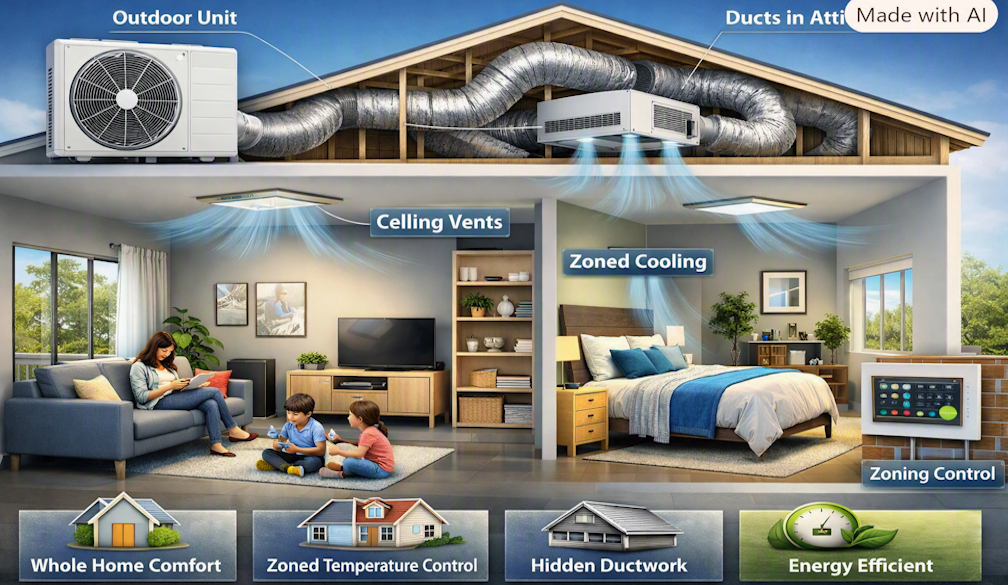
Not every Perth property is a good fit for ducted air conditioning, even though it provides whole-house comfort. Size, layout, insulation, occupancy, installation quality, zoning, operating expenses, and the frequency of heating and cooling needs for numerous rooms are the factors that determine a home's value.
What a Ducted System Actually Provides
AIn a typical reverse-cycle ducted system, a single outdoor unit and a single inside unit are linked by ducts in the attic. A return-air grille redirects conditioned air from inside the system, while conditioned air exits through wall or ceiling outlets.
Coverage is its primary selling point. Homeowners may condition several spaces over a single network, eliminating the need to install individual indoor units in each room. Because most of the gear is understated, it works well in spaces where exposed wall units would detract from the aesthetic.
The topic of whether ducted systems are premium is less significant for Perth families comparing ducted air conditioning installation in Perth. It comes down to whether the way the house is used corresponds with the whole-house control system.
When Ducted Air Conditioning Makes Sense
For multi-room setups, ducted air conditioning is usually a good investment. It might be convenient for families not to have to manage multiple units to maintain a constant temperature in different rooms, especially if they work, study, sleep, and host guests in different areas of the house.
This may work for:
- Houses with more than one story
- In new construction, ducts might be initially designed.
- Apartments with an open floor design that lead to bedrooms
- Homeowners in search of HVAC
- Owners who like understated machinery
- Locations where zoning can accommodate regular activities
Quiet, even comfort may be achieved with a well-designed system. Nevertheless, the performance is contingent upon commissioning, return-air location, outlet layout, duct design, and accurate capacity. Even temperatures cannot be guaranteed by ducting if the design is subpar.
When Split Systems May Offer Better Value
- You might not require a whole-house system if your home only has one bedroom and one living room. With individual split systems, you can cool only the rooms you need without wasting energy on the rest of the house.
- The effectiveness of air conditioners varies greatly, and there are several types, according to Australian residential guidelines. According to YourHome, many older homes have split systems that are more energy efficient than ducted systems.
- In cases where there is a lack of room on the roof, inconvenient access, or an unorthodox configuration that makes ducting difficult to install, a split system may be a better retrofit option.
- Use patterns determine the optimal choice. Split systems can be more cost-effective when only a few rooms require constant cooling, while ducted systems can be more convenient when applied to a large number of rooms.
Zoning Has a Major Effect on Value
- A home's zoning system can be utilised to create manageable sections, such as bedrooms, living rooms, home offices, or unused areas.
- Since not every space needs constant temperature control, this makes things more feasible. The Australian government has issued guidelines encouraging smart zoning and efficient operation, which include only cooling or heating the areas that are really in use.
- Appropriate design is more important than zoning. As areas open and close, the system has to work smoothly and securely. Controls, airflow, MRO, and pressure management should all be considered initially.
- Homeowners should enquire about the number of zones being considered and whether the layout takes into account daily habits.
Installation Cost Is Only Part of the Decision
There is typically more infrastructure and human resources required for a ducted installation compared to a single split system. Ductwork, outlets, electrical work, controls, ceiling access, return-air components, and building alterations are all potential items that might add to the cost.
Inadequate insulation, improper outlets, inefficient duct routing, or restricted commissioning might make the lowest quotation bad value. Ducts can be a performance killer, especially in hot roof areas, due to the heat they absorb.
A detailed overview outlining the project's limitations, electrical needs, zoning, outlet placements, controls, and capacity should be requested.
Understand Warranty Conditions Before Installation
You can only benefit from warranty protection if you fully grasp its terms and restrictions. There may be varying limitations for manufacturer coverage, artistry protection, spare-part warranties, and refrigerant-leak periods.
Make sure you understand the coverage, who is permitted to make repairs, if labour is included, and if regular service is necessary when examining air conditioning warranties. Homeowners should read the whole terms and conditions (including eligibility and yearly service requirements) of lifetime craftsmanship warranty.
In case a claim is necessary, it is important to keep invoices, model and serial numbers, commissioning documents, and servicing records.
Consider the Home Before Choosing the System
- There are several construction weaknesses that air conditioning cannot adequately fix. The cooling demand can be increased by factors such as inadequate ceiling insulation, lack of shaded windows, air leakage, and intense afternoon sunlight.
- Installers should think about things like floor space, ceiling height, orientation, insulation, windows, room use, and environmental factors before deciding on capacity. Since there is a large range in purchase cost and efficiency between units, the government advises on proper size.
- Reducing the required capacity and operating costs can be achieved by improving shading, closing gaps, or enhancing insulation. Regardless of the method used, these steps enhance comfort.
Questions to Ask Before Accepting a Quote
Ask the installer:
- Have the installer do it:
- How did they arrive at the necessary capacity?
- For what reasons is ducted a good fit for this design?
- How can we get the zones to work with our schedule?
- What insulation is used for the ductwork?
- How is the ductwork insulated?
- Is there a way to balance the airflow?
- Which controls are a part of it?
- What kind of maintenance is suggested?
- Under what circumstances do the various warranties come into play?
- What are the expected operating expenses?
Claims about system size or brand reputation are less important than specific replies.
Decide Based on Use, Not Prestige
When a home's usage patterns align with the duct system's coverage, zoning, aesthetics, and year-round management, the system becomes a sensible investment. When placed improperly or selected for spaces that seldom require frequent cooling, it is not a good investment.


 Daily Bulletin


