

Read The Times Australia

Daily Bulletin

How microplastics hurt the hidden helpers that keep our coasts healthy

  • Written by: Simon Francis Thrush, Professor of Marine Science, University of Auckland, Waipapa Taumata Rau

Walk across a mudflat at low tide and you might notice small, neat mounds of sediment scattered across the surface.

These so-called “chimneys” are the calling card of the humble bamboo worm (Macroclymenella stewartensis) which inhabits sandy sediments within New Zealand’s sheltered bays and estuaries.

Despite their hidden lives and small size – most measure just a few centimetres long – these worms have an outsized influence on the health of our marine environment.

But now there are troubling signs that microplastics – tiny but pervasive fragments of broken-down plastic – are disrupting the vital role the worms play, with potentially wider effects we are only just beginning to understand.

Hidden heroes of the seafloor

Over time, scientists have come to recognise the role bamboo worms and other tiny creatures have in bioturbation: a process essential to the functioning of coastal ecosystems.

When healthy, the worms burrow in the seafloor, enabling oxygenated water to enter deeper into the sediment. This, in turn, breathes life into the seabed.

How microplastics hurt the hidden helpers that keep our coasts healthy
The humble bamboo worm plays an outsized role in keeping coastal ecosystems healthy, through a process called bioturbation. Yuxi You, CC BY-NC-ND

The worms also feed on organic matter, helping regulate carbon and nitrogen in the sediment and surrounding waters. As they deposit small piles of waste, they provide nutrients for microscopic plants, supporting coastal food webs.

When these processes are disrupted, the impacts can ripple outward.

Nutrients can build up, increasing the risk of algal blooms that strip oxygen from the water. This can worsen conditions to the point where fish and other marine life can no longer survive.

How microplastics hurt the hidden helpers that keep our coasts healthy
This image shows surface signatures of bioturbation, in which tiny creatures such as bamboo worms burrow into muddy sediments, enabling the oxygenation and nutrient cycling that keeps coastal ecosystems healthy. Yuxi You, CC BY-NC-ND

Healthy marine sediments also act as a buffer against climate change by locking away carbon. When that balance is lost, sediments can instead release greenhouse gases such as nitrous oxide and methane.

How microplastics mess with marine life

Marine microplastics – fragments smaller than 5 millimetres from sources such as vehicle tyres, synthetic clothing fibres and degraded plastic waste – are now found from the tropics to Antarctica. Some estimates suggest there may be more than 170 trillion pieces in the world’s oceans today.

In New Zealand, scientists have been surprised to find them building up even in seemingly pristine marine environments, far from towns and major sources of pollution.

Their impacts are wide-ranging and still being uncovered.

Their small size makes them easy for marine organisms to ingest, often by mistake, where they can cause physical damage and leave animals malnourished. Microplastics can also carry toxic chemicals that interfere with reproduction and development, with these effects building up through the food chain.

When we look at how microplastics affect life on the seafloor, the picture becomes yet more complex.

In a recent study carried out at the University of Auckland’s Leigh Marine Laboratory, we found bamboo worms became less active when exposed to them.

It’s still not clear why. The worms may be ingesting plastic, absorbing chemicals from contaminated sediments, or simply finding less food if microplastics reduce algal growth.
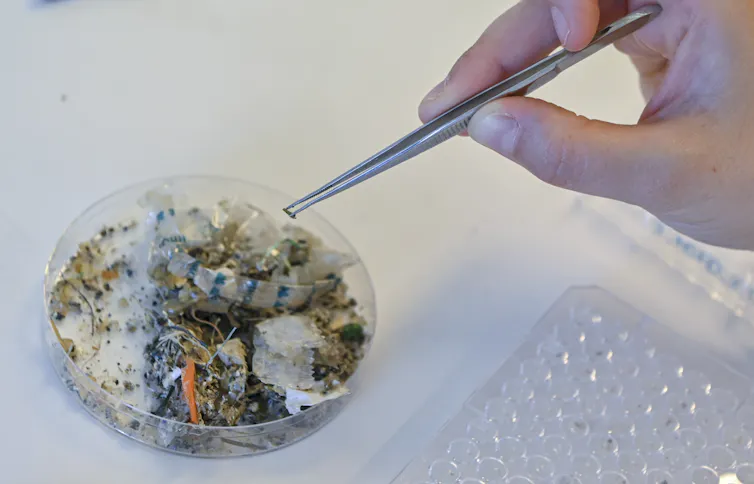
How microplastics hurt the hidden helpers that keep our coasts healthy
Marine microplastics are small fragments of plastic debris that measure less than 5 millimetres long. Milos Bicanski/Getty Images

What matters is that their behaviour shifts as microplastic levels increase – with potentially important implications for bioturbation and ecosystem health.

It might also be causing knock-on impacts for wider food chains, as seabirds and eagle rays feed on worms and other tiny creatures in the seabed.

A micro pollutant, a macro problem

While plastic continues to accumulate in the marine environment, some microplastics may break down in sediments over time. Even so, this is unlikely to offset the growing volume, meaning the overall burden continues to rise.

People can help tackle the microplastic problem by reducing the amount of plastic they buy, picking up plastic rubbish on the beach, supporting harbour clean up groups and buying clothing made of natural fibres.

Presently, there are no limits set for safe levels of microplastic pollution in New Zealand – and policies will be needed to manage the problem.

Clean coasts are highly valued by New Zealand communities, but the health of these environments depends as much on what lies beneath the surface as what is visible above it.

While attention often focuses on those “charismatic” species such as dolphins and penguins, the small organisms living in the seabed play an equally important role in keeping ecosystems functioning.

Authors: Simon Francis Thrush, Professor of Marine Science, University of Auckland, Waipapa Taumata Rau

Read more https://theconversation.com/how-microplastics-hurt-the-hidden-helpers-that-keep-our-coasts-healthy-280266

Business News

How Telematics Helps Australian Companies Improve Productivity

Operating a commercial fleet in Australia is a uniquely demanding endeavour. Between the sprawling urban sprawl of cities like Sydney and Melbourne and the immense, unforgiving stretches of the Outb...

Daily Bulletin - avatar Daily Bulletin

Inside the Icon: The BridgeMuseum Officially Opens at the Sydney Harbour Bridge

A bold new way to experience one of Australia’s most recognisable landmarks has arrived, with BridgeClimb Sydney officially opening the all-new BridgeMuseum.  Located inside the Sydney Harbour Brid...

Daily Bulletin - avatar Daily Bulletin

Is Your Brand Showing Up in AI Search? Most Melbourne Brands Aren't.

The New Front Door Nobody Told You About Something changed. Quietly. Without a press release. The way buyers find businesses in Australia has been rewired. Not replaced, rewired. Google isn't dead...

Daily Bulletin - avatar Daily Bulletin

How Australian Businesses Can Measure SEO ROI

SEO can feel vague when you are staring at a dashboard full of numbers that do not clearly connect to revenue. The key is to measure the right signals in the right order, then tie them back to outcome...

Daily Bulletin - avatar Daily Bulletin

How Commercial Roller Shutters Improve Site Security Without Slowing Operations

Security upgrades can be frustrating when they make everyday work harder. A door that takes too long to open, creates bottlenecks at shift change, or fails at the worst time can turn “better protectio...

Daily Bulletin - avatar Daily Bulletin

Why a Document Destruction Service Still Matters for Modern Businesses

Businesses generate large volumes of information every day, from staff records and contracts to invoices, reports and customer files. While attention often focuses on how documents are stored, the way...

Daily Bulletin - avatar Daily Bulletin

Bicycle Rack Safety and Space-Smart Storage

Bike storage problems usually show up as small annoyances first: tangled handlebars, scratched frames, and bikes that topple when you pull one out. Over time, those issues become safety risks, especia...

Daily Bulletin - avatar Daily Bulletin

How to Tell if a Childcare Centre Is a Good Fit for Your Child

Choosing childcare can feel like you’re making a huge decision with limited information. Tours are short, centres are often on their best behaviour, and your child might act differently in a new space...

Daily Bulletin - avatar Daily Bulletin

Car Import Timeline: What Usually Happens at Each Stage

Importing a car into Australia can feel confusing because multiple agencies and checkpoints are involved, and the timeline is shaped as much by paperwork quality as it is by shipping speed. The most u...

Daily Bulletin - avatar Daily Bulletin

The Daily Magazine

Gold Migration Lawyers in Liquidation: How the Closure Affects Your ART Appeal

If your appeal was with Gold Migration Lawyers, a recent change to how the Tribunal decides cases ...

The pressure cooker: life in urban Australia in 2026

Australian cities have always been demanding. Long commutes, rising housing costs, busy schedules a...

What Actually Makes a Good Criminal Lawyer in Melbourne

Most people only think about this question once. That is usually too late. Most people charged wi...

Why Working With A Chatswood Tutor Can Improve Academic Performance

Academic expectations continue increasing for students across primary school, high school, and senio...

Is It Worth Getting Solar Panels in Melbourne?

The real question is not whether solar works in Melbourne. It works. The question is what it is co...

How A Diploma Of Project Management Builds Practical Skills For Modern Work Environments

Developing the ability to plan, execute, and deliver outcomes efficiently is a key requirement in to...

How to Choose the Right Football for Every Level

Choosing a football may seem straightforward, but the right option depends on who will be using it a...

What to Ask a Wedding Photographer Before You Book

Booking a wedding photographer can feel deceptively simple: you like the photos, you like the vibe...

Why Stress Relief For Dogs Is Essential For Emotional Balance And Long-Term Wellbeing

Managing emotional health is just as important as physical care when it comes to pets, which is why ...