

The antisemitism debate is already a political minefield. The royal commission must rise above it
- Written by: Matteo Vergani, Associate Professor and Director of the Tackling Hate Lab, Deakin University
What we currently know about antisemitism in Australia is pieced together from a fragmented body of information produced by community organisations, researchers and law enforcement. And it is largely interpreted and translated to the public through news reporting.
Through this reporting, Australians have learned that organised criminal groups were involved in targeting Jewish communities and foreign actors also played a role.
At the same time, some data on antisemitic incidents released by security agencies has been incorrect. Other statistics produced by community organisations has been publicly challenged.
Researchers like myself have also produced data on antisemitic incidents, but this is limited in many ways.
In a nutshell, the picture of what constitutes antisemitism and how and why it has spiked in recent years is far from being clear.
This lack of clarity matters. Without a reliable understanding of what happened in the lead-up to the Bondi terror attack, which data can be trusted, and how different forms of antisemitism intersect, Australia cannot fully grasp how it reached a point where Jewish Australians were murdered at a public religious gathering.
Shedding light on this problem will be difficult, but it is essential to understand both the scale of the problem and how to respond.
Potential for more divisiveness
The royal commission established by Prime Minister Anthony Albanese is designed to address many of these unresolved issues.
As set out in its terms of reference, it will examine the nature and prevalence of antisemitism in Australia and assess how it can be more effectively addressed. It will also:
review the responses of security and law enforcement agencies
investigate what happened before, during and after the Bondi attack
develop recommendations aimed at strengthening social cohesion.
Social cohesion and national consensus are the stated end goals of the entire exercise. Yet, the context in which the commission is operating is highly volatile. There is a real risk that rather than repairing social cohesion, the process itself could damage it.
This risk comes from the heavy political pressure now attached to the royal commission and from the way some political actors are using it as a weapon in broader political battles, including attacks on the government.
The antisemitism debate is already a political minefield. And the commission has entered that terrain from its first day.
The decision to acknowledge the International Holocaust Remembrance Alliance’s definition of antisemitism in the terms of reference is likely to be used by some to delegitimise the commission altogether. Critics argue the definition can be used to silence legitimate criticism of Israel, while supporters say it draws a necessary line between political critique and antisemitic tropes.
At the same time, some politicians have questioned the appointment of Former High Court justice Virginia Bell to head the commission, which could also undermine the credibility of the inquiry.
As a result, the commission is already inflaming existing political tensions. This is deeply unfortunate because it makes the task harder for those who are genuinely focused on understanding antisemitism, responding to it effectively, and improving the safety and wellbeing of Jewish Australians.
Why the Christchurch royal commission was successful
Royal commissions carry strong symbolic weight. They are often implemented when something has gone badly wrong and the social fabric feels strained. The aim is to restore trust and provide a clear public account of what happened and why.
A useful point of comparison is the royal commission that followed the Christchurch terrorist attack in New Zealand. The inquiry led to wide-ranging reforms, including changes to firearms laws, counter-terrorism frameworks, approaches to social cohesion and inclusion, hate crime and hate speech legislation, and improved support for victims and witnesses.
It also contributed to the creation of the Christchurch Call to eliminate terrorist and violent extremism content online. This global initiative involving governments and technology companies has been successful in limiting the spread of terrorist and violent extremist material.
However, the political and social climate in New Zealand at the time was very different. There was a stronger sense of national unity and far less public contestation about what constituted hate. The attack was also not entangled with an ongoing and deeply polarising international conflict.
In Australia, the context is far more charged. The war in Gaza continues to divide public debate, regularly spilling into domestic politics.
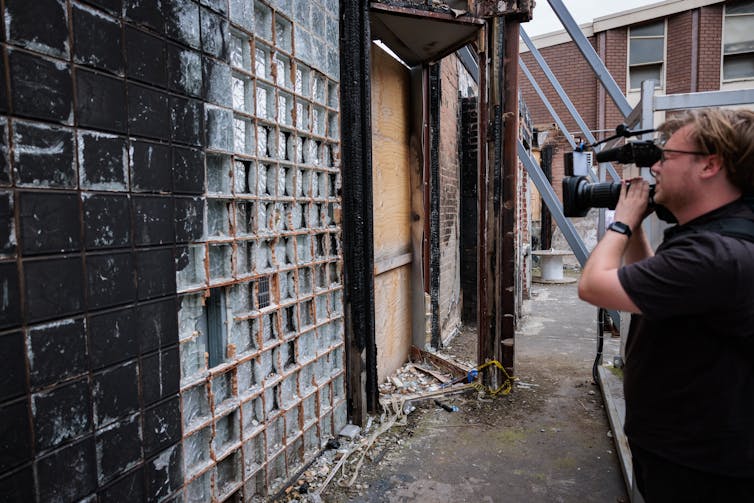
It’s worth noting antisemitic attacks have not stopped after Bondi. There was a firebombing less than two weeks later. This makes the task of using a royal commission to calm tensions and rebuild trust significantly harder.
Many pieces to the puzzle
Despite these difficulties, the commission matters now more than ever. Jewish Australians need answers, and the broader public deserves to understand what actually happened.
At present, the picture over what has caused rising antisemitism and the Bondi attack is confused. Public sentiment on the war, organised crime, foreign actors and terrorist ideology all appear to intersect, but how they connect remains unclear.
Different security agencies, researchers and community organisations hold different pieces of evidence. Without bringing these strands together, Australians cannot fully understand the problem, let alone work out how to prevent it from happening again.
The path ahead will be difficult and exposed to disruption. One obvious challenge is the risk of further attacks while the inquiry is underway. Any new incident would complicate the process.
If, for example, an attack occurred that was shown to involve formal training or links to a terrorist organisation, serious questions would arise about whether the commission’s terms of reference remain adequate, or whether additional investigative processes would be required.
The most important test will come at the end. The commission’s recommendations must be acted on, regardless of which party is in government. That follow-through is what determines whether a royal commission produces real change or becomes just a symbolic exercise.
Meeting this test will require political restraint and maturity. It will mean resisting the temptation to turn the commission into a tool for partisan conflict, and instead treating it as a shared national effort to protect communities and restore trust.
Authors: Matteo Vergani, Associate Professor and Director of the Tackling Hate Lab, Deakin University


 Daily Bulletin


