

What’s the difference between a home birth and a free birth?
- Written by: Hannah Dahlen, Professor of Midwifery, Associate Dean Research and HDR, Midwifery Discipline Leader, Western Sydney University
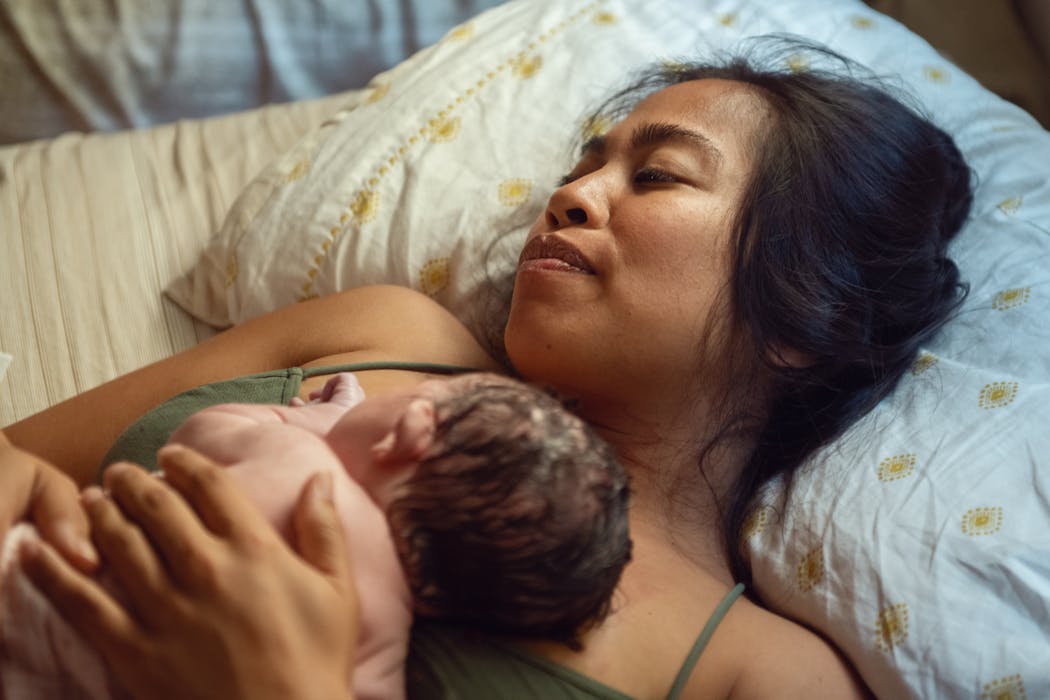
If you’re looking on social media for information and experiences of giving birth at home, you’ll find widely varied content.
On the one hand, you’ll find women who develop a relationship with their midwife over time and eventually have a “home birth” where they feel comfortable and safe.
Others choose to birth outside the medical system in a “free birth”. They might birth at home but feel compelled to forgo specialist skills and equipment.
While free births and home births sound similar, they come with very different potential risks.
What is a home birth?
Planned home births involve care from registered midwives. They care for women through the pregnancy, support them to give birth at home and continue this care for around six weeks following the birth.
Registered midwives either work privately or are employed by a hospital to provide home births.
Around 20 publicly funded home birth programs operate nationally for low-risk women who don’t live far from the hospital. Most set a maximum distance (time or kilometres) from the hospital so women can get there quickly if they need medical care or in an emergency.
Private midwives work for themselves and charge for care before, during and after a home birth. Women are able to get some money back from Medicare or through some private health funds.
Midwives are highly skilled and carry resuscitation equipment and medications to deal with emergencies, for instance, if the baby isn’t breathing or the mother is bleeding heavily.
What is a free birth?
When a woman chooses to have a free birth they make the decision to have a baby, usually at home, without a registered health professional such as a midwife or doctor in attendance. These are also called unassisted or wild births.
Those who plan a free birth may hire an unregulated birth worker or doula to support them at the birth. But they don’t have the training, regulation or medical equipment and skills needed to manage emergencies.
Women may have limited or no antenatal health care, so risk factors such as twins and breech presentations (the baby coming bottom first) aren’t detected beforehand and given the right kind of specialist care.
Free birth isn’t the same as when a baby comes too fast to make it to hospital. This is called being “born before arrival”.
Read more: What to do when the baby is born before you get to hospital
How common are home births and free births?
In 2023, 97% of women give birth in hospital. Of these, three-quarters birthed in a public hospital; the rest went private.
A small proportion of women gave birth out of hospital, including in birth centres (1.5%), at home (0.7%), or in other settings (such as being before arrival at a hospital) (0.7%).
There was a slight increase in the number of home births in recent years, from 923 (0.3%) in 2019 to 2,081 (0.7%) in 2023.
It’s unclear how common free birth is, as data is not collected. But there is some evidence free births increased during the COVID pandemic and this trend has continued.
Are home births safe?
The research shows that for women with low-risk pregnancies, planned home births attended by competent midwives (with links to hospitals) are safe.
Private midwives are required to book a woman into the nearby hospital and share information with the hospital at the start of a pregnancy in case medical care is needed at any time.
Midwives across Australia follow national referral guidelines and safety and quality guidelines from the Nursing and Midwifery Board about when to consult or refer women for medical care. Around 12-35% of women who plan to give birth at home will be transferred to hospital. Some midwives can continue to care for women who need extra medical support in hospital.
Women with risk factors are recommended to not give birth at home as there is a greater chance of needing extra medical care for her or her baby. Risk factors include being pregnant with twins, having a baby in a breech position, or having high blood pressure.
For low-risk women and their babies, there is no difference in the risk of death between planned home and hospital births.
However, compared with hospital births, women who plan to give birth at home have a lower chance of having an episiotomy (a surgical cut to the perineum), a perineal tear, significant blood loss, or an infection. They are less likely to be induced, have a caesarean section, or have a forceps or vacuum delivery.
Women who have a home birth more often report positive experiences than in hospitals and tend to make the same choice for the next birth. A home birth can also be healing for women who have experienced a traumatic birth.
Why would a woman choose to have a free birth?
The main reason women choose to free birth is a previous traumatic birth or feeling coerced to make certain choices, such as being induced or having an episiotomy or caesarean section.
Sometimes, women can’t access a midwife to attend them at home. For others, the cost is prohibitive.
Others are motivated by a strong belief in their own capacity to give birth without professional support, with social media influencers impacting these decisions.
The risks of free birth are primarily are due to not having a trained midwife in attendance and the lack of skills to detect complications and transfer to a hospital, or to manage complications at home.
If you choose to birth at home, it’s important to have a registered midwife supporting you during labour to make this option as safe as possible.
Authors: Hannah Dahlen, Professor of Midwifery, Associate Dean Research and HDR, Midwifery Discipline Leader, Western Sydney University
Read more https://theconversation.com/whats-the-difference-between-a-home-birth-and-a-free-birth-268883


 Daily Bulletin


