

Read The Times Australia

Daily Bulletin

NZ’s first marine reserve is turning 50 – the lessons from its recovery are invaluable

  • Written by: Conrad Pilditch, Professor of Marine Sciences, University of Auckland, Waipapa Taumata Rau
NZ’s first marine reserve is turning 50 – the lessons from its recovery are invaluable

New Zealand’s first legislated marine reserve, established 50 years ago around Te Hāwere-a-Maki/Goat Island north of Auckland, was also among the very first in the world.

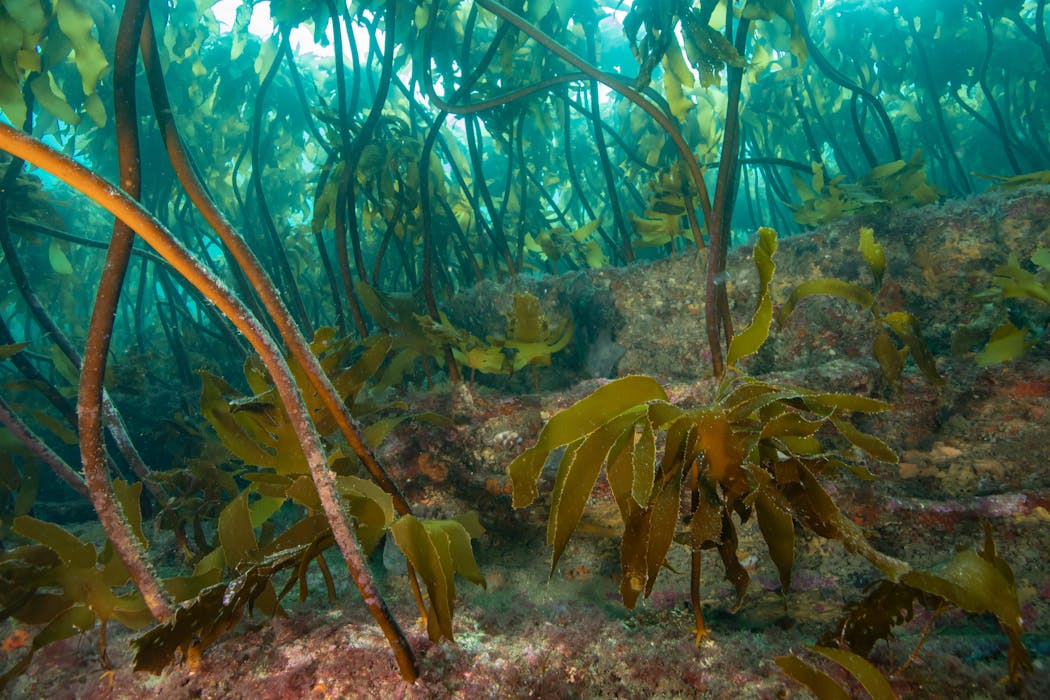
During the decades since then, marine scientists have been monitoring changes and tracking significant transformations in the ecosystem – from bare rocky reefs to thriving kelp forests.

Officially known as the Cape Rodney-Okakari Point Marine Reserve, the 556 hectares of protected waters and seabed became New Zealand’s first no-take zone in 1975.

Back then, very little grew on the shallow rocky reefs. It took almost three decades for kelp forests to reestablish following the slow recovery of crayfish and snapper stocks.

These predators play an essential role in keeping marine reef ecosystems healthy because they eat kina (sea urchins) which otherwise increase in numbers and mow down kelp forests.

Once crayfish and snapper were able to mature and grow, the kelp forests returned. Their recovery in turn provided a nursery for juvenile fish and many species came back.

We now see parrotfish, black angelfish, blue maomao, red moki, silver drummers, leatherjackets, octopus and several species of stingrays. Bottlenose dolphins and orca pass through occasionally.

A striped fish swimming in the Goat Island marine reserve.
Red moki are among the fish now seen in the marine reserve. Paul Caiger, CC BY-SA

The reserve features a far higher density of fish and other marine life than outside its boundaries. But despite the protection, fish are not as plentiful within the reserve now as they were in the late 1970s.

The ongoing changes within the protected area are helping us to understand the impact of commercial and recreational fishing.

Pressures from fisheries

In 1964, a decade before the marine reserve was established, the Leigh marine laboratory opened on the cliffs above it. Its first director, Bill Ballantine, was concerned that fish stocks were dwindling and marine ecosystems declining in the Hauraki Gulf and became a key force in pushing for the marine reserve to be set up.

But since 1975, Auckland’s population has exploded and recreational and commercial fishing pressures outside the marine reserve have increased markedly.

While crayfish numbers and sizes began to recover when the marine reserve was established, they have dropped again over the past ten years. And fish stocks in the reserve remain far below the levels that would have been present before commercial fishing began to intensify rapidly in the area during the 1950s.

We think this is because the reserve is too small and continues to be affected by the rise in commercial and recreational fishing in the Hauraki Gulf.

Large snapper and crayfish sometimes move out of the reserve and are caught. The outside areas aren’t replenishing the reserve because they are heavily fished.

An image taken half underwater, showing a research vessel on the surface and a diver below, exploring a rocky reef
Reef surveys are part of the ongoing research in the marine reserve. Paul Caiger, CC BY-SA

Recent research shows people can speed up kelp restoration in some places by removing kina, but large snapper and crayfish are still needed to maintain the balance long-term.

Another key discovery has been that the reserve’s many mature snapper produce about ten times more juvenile snapper than in unprotected areas of the same size.

About 11% of young snapper found up to 40 kilometres away from the reserve are offspring of snapper that live in the reserve. This “spillover effect” means the reserve is actually enhancing fisheries in the Hauraki Gulf.

Safeguarding the ocean

The Hauraki Gulf Tīkapa Moana Marine Protection Act, which comes into force this month, makes the Goat Island marine reserve about four times larger, extending the offshore boundary from 800 metres to three kilometres and significantly increasing the diversity of habitats protected.

The marine reserve has demonstrated the value of safeguarding patches of sea, but it has also shown that reserves need to be larger to better protect key species such as crayfish and snapper from fishing pressures.

It is also important to protect different types of habitat, in particular the soft-sediment seafloor ecosystems that comprise the bulk of the Hauraki Gulf. These ecosystems are high in biodiversity, support important fisheries, sequester carbon and process nutrients that maintain productivity. But they are vulnerable to seafloor disturbance.

An eagle ray resting on a sandy patch
An eagle ray rests on a sandy patch among the reef. These habitats now get more protection. Tegan Evans/Gemma Cunnington, CC BY-SA

As the impacts of climate change worsen, the historical records and understanding we have drawn from this marine reserve now act as an important baseline.

We know that restoring kelp forests in the reserve and elsewhere has made the area more resilient to climate change, while also contributing to carbon sequestration.

A diver exploring barren rocky reefs with kina
Unprotected areas outside the marine reserve are dominated by kina barrens because of a lack of predators such as snapper and caryfish. Paul Caiger, CC BY-SA

If kelp forests were restored in the Hauraki Gulf Marine Park, the plants would be worth about NZ$7.9 million in carbon credits, if they were valued in the same way as land-based forests.

About 350,000 people visit the reserve annually, mostly to snorkel, dive or take a glass-bottom boat trip to explore the abundance of life beneath the waves. A lot more places could look like this marine reserve if we managed our oceans better.

Authors: Conrad Pilditch, Professor of Marine Sciences, University of Auckland, Waipapa Taumata Rau

Read more https://theconversation.com/nzs-first-marine-reserve-is-turning-50-the-lessons-from-its-recovery-are-invaluable-268184

Business News

The Business Case for Choosing Australian Fabricators Over Imported Alternatives

For a long time, you might have defaulted to overseas suppliers when sourcing fabricated metal components for a project. The unit price was lower on paper, and the maths seemed straightforward. That...

Daily Bulletin - avatar Daily Bulletin

Australian organisations are relying on business continuity plans built for a far more predictable world

Tariff escalations, supply chain fragility, geopolitical events, and the ongoing threat of cyber disruption have reshaped the risk environment facing Australian organisations. The problem is that ma...

Daily Bulletin - avatar Daily Bulletin

How to Rent a Car for Uber in Melbourne: What Every New Driver Needs to Know

Starting out as an Uber driver in Melbourne is not as complicated as it sounds but getting the vehicle right is where most new drivers get stuck. Uber has strict requirements around vehicle age, condi...

Daily Bulletin - avatar Daily Bulletin

When Should You Speak to a Lawyer About a Legal Issue?

Legal issues can begin with a simple question, then become harder to manage once formal steps are involved. Many people wait until a matter feels urgent before seeking guidance, even though earlier ...

Daily Bulletin - avatar Daily Bulletin

The strategic rise of Bali as Australia’s next essential healthcare support hub

As Australian healthcare providers grapple with unprecedented operational bottlenecks, a new nearshore model is quietly transforming patient care delivery. Forward-thinking organisations,  including...

Daily Bulletin - avatar Daily Bulletin

Cost Savings and Benefits of Using Used Pallets in Logistics

In today’s competitive logistics and supply chain industry, businesses are constantly looking for ways to reduce operational costs without compromising efficiency and reliability. One of the most prac...

Daily Bulletin - avatar Daily Bulletin

How Fulfilment Services in Australia Help Businesses Scale Efficiently

The growth of e-commerce and modern retail has transformed customer expectations. Consumers now expect fast shipping, accurate order processing, and seamless delivery experiences regardless of where...

Daily Bulletin - avatar Daily Bulletin

Practical Ways Australian Workplaces Can Reduce Operating Costs

Reducing business costs doesn’t always mean cutting staff, shrinking services or making the workplace feel bare-bones. In many cases, the smarter savings are hiding in everyday operations: the light...

Daily Bulletin - avatar Daily Bulletin

Executive Recruitment Solutions That Help Organisations Secure Exceptional Leaders

Leadership has a direct impact on organisational performance, employee engagement, strategic growth, and long-term success. Businesses operating in increasingly competitive environments require experi...

Daily Bulletin - avatar Daily Bulletin

The Daily Magazine

What Happens After You Lodge a BYDA Enquiry? The Step Most Excavation Projects Miss

Every excavation project in Australia — from a backyard deck footing to a multi-storey commercial bu...

How to Choose the Right Dentist on the Gold Coast

Finding a dentist you trust is one of those decisions that quietly affects your health for years, ...

The Hidden Engineering Problem Inside Australia's Older Housing Stock

A significant share of Australian homes were built for a way of living that no longer exists. Houses...

DIY Rodent Control Vs Professional Help: When Is It Time To Call The Experts?

Rodents are one of the most frustrating pest problems for Australian property owners. Rats and mic...

Lighting Shop in Perth: How The Right Lighting Can Transform Your Home And Business

The right lighting can completely change the look, feel, and functionality of any space. Whether it ...

Traffic Light System Solutions For Safer And More Efficient Traffic Management

Modern cities and growing communities rely heavily on effective traffic management to ensure safety...

Gold Migration Lawyers in Liquidation: How the Closure Affects Your ART Appeal

If your appeal was with Gold Migration Lawyers, a recent change to how the Tribunal decides cases ...

The pressure cooker: life in urban Australia in 2026

Australian cities have always been demanding. Long commutes, rising housing costs, busy schedules a...

What Actually Makes a Good Criminal Lawyer in Melbourne

Most people only think about this question once. That is usually too late. Most people charged wi...