

The global race is on to secure critical minerals. Why do they matter so much?
- Written by: Amir Razmjou, Associate Professor, Edith Cowan University
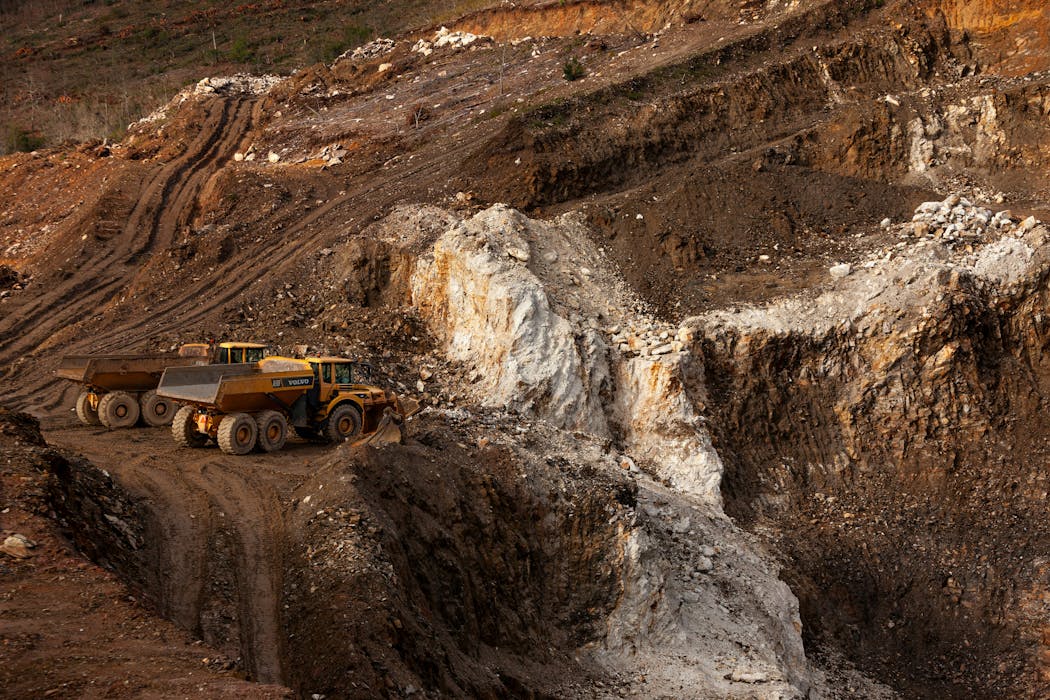
Critical minerals are having a moment. Prime Minister Anthony Albanese is at the White House to talk up Australia’s rich deposits with President Donald Trump. China, which has a global stranglehold on rare earth elements, recently imposed new export restrictions, much to Trump’s annoyance.
It’s clear there’s an era of global competition underway. Critical minerals are essential for manufacturing advanced technologies, such as artificial intelligence (AI), electric vehicles and renewables. And governments everywhere are racing to secure a future supply.
Australia holds vast reserves of lithium, rare earths, cobalt and tungsten. This presents both a golden opportunity and a looming challenge.
What, exactly, are critical minerals? And what advantages might they offer to Australia?
What are they?
Critical minerals are the raw materials used to manufacture objects like mobile phones, wind turbines and weapons. They underpin the technologies of the next industrial age, from lithium-ion batteries to F-35 fighter jets.
There’s no single list of critical minerals, as countries have their own definitions of what is essential. The Australian government describes them as elements essential for modern technologies, the economy and national security with supply chains vulnerable to geopolitical risk.
In Australia, the 31 minerals and rare earths defined as ‘critical’ include lithium, magnesium and zirconium. Rare earths are heavy metals used in electrical and magnetic components. These elements aren’t truly rare in the Earth’s crust but occur in low concentrations, making them difficult and expensive to extract.
Geoscience Australia has mapped extensive deposits of critical minerals across the continent. Accessing them could position Australia as a key supplier to global clean-energy industries.

A booming industry
Australia’s current Critical Minerals Strategy sets out a plan to move from simply mining and extracting these minerals to going further to refine, process and manufacture them.
This is backed by initiatives such as the $4 billion Critical Minerals Facility to support projects aligned with the strategy. This also includes a new 10% production tax credit for onshore refining.
Together, these policies form a strong foundation for stimulating domestic mineral processing and investment. But their effectiveness will depend on how quickly they can translate into operational projects.
These are already emerging. Mining companies such as Arafura Rare Earths and Alpha HPA are developing chemical processing plants for magnet materials and high-purity alumina. The CSIRO-led [Critical Minerals Research and Development Hub] is pioneering new refining technologies that will enable domestic production of high-value materials. Australia’s technical capability, long seen as lagging behind its geological advantage, is catching up.
Yet most of Australia’s critical minerals are still exported in raw form. Domestic processing and refining remain limited, while high energy costs and workforce shortages constrain growth. Australia still relies on overseas processing, which limits the economic benefit from its resources.
Extracting critical minerals has a considerable environmental footprint. Producing one tonne of lithium generates 15–20 tonnes of CO₂ and consumes 77 tons of fresh water. The government needs to invest in sustainable technologies with minimal environmental impact.
A tightening global race
The urgency to act has intensified amid escalating US–China trade tensions. In recent weeks, China imposed tighter export controls on rare-earth materials and magnet technology, forcing foreign firms to seek special approval to export items that contain even trace Chinese content.
In response, President Trump announced a 100% tariff on Chinese imports from next month, a move designed to decouple US supply chains from Chinese dominance.
This geopolitical shift presents both a risk and an opening for Australia. Washington is accelerating investment with Australian miners to diversify its supply chains away from China.
Canberra, for its part, is exploring a Critical Minerals Strategic Reserve, an investment initiative that would see the federal government acquire agreed volumes of critical minerals from commercial projects, selective stockpiling and offering preferential access to allied buyers.
Global energy giants are turning their focus to critical minerals. With such deep-pocketed players entering the field, the pace toward commercial-scale extraction technologies is set to accelerate dramatically. Australia must keep up if it wants to stay ahead in the race.
Authors: Amir Razmjou, Associate Professor, Edith Cowan University


 Daily Bulletin


